Los Angeles County, California
TV mounting and installation in Los Angeles
TV mounting across Los Angeles, on drywall, plaster and lath, brick or steel stud. Tell us the screen size, the wall and your neighborhood, and you get a price for the visit before anything is drilled. Shelves and the rest of the list can go on the same visit.
The price in writingAgreed before anything is scheduled
One visit, several jobsThe drive costs the same either way
No surprise when we arriveThe number holds unless the wall says otherwise
Across Los Angeles CountyFrom the Valley to the South Bay
What the job looks like
TV mounting and installation, close up
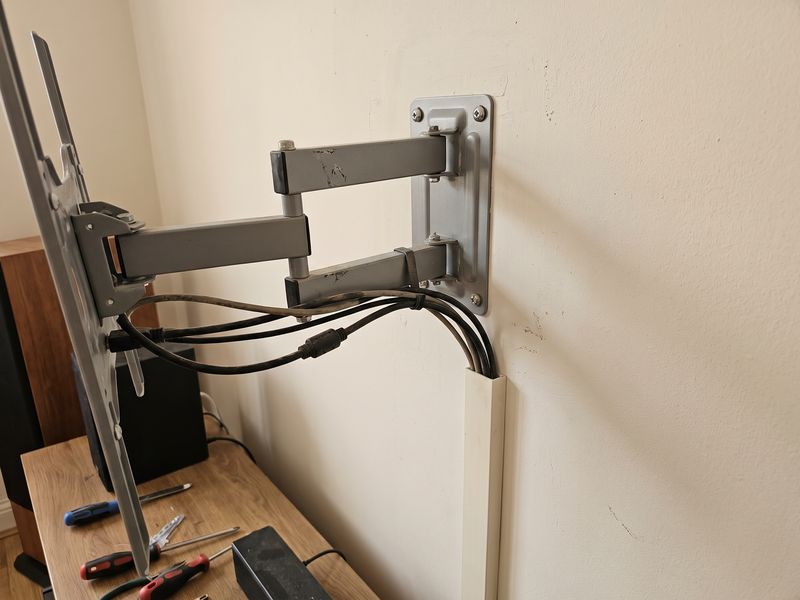
The cable run is the part people forget. It gets decided before the bracket goes up, not after. 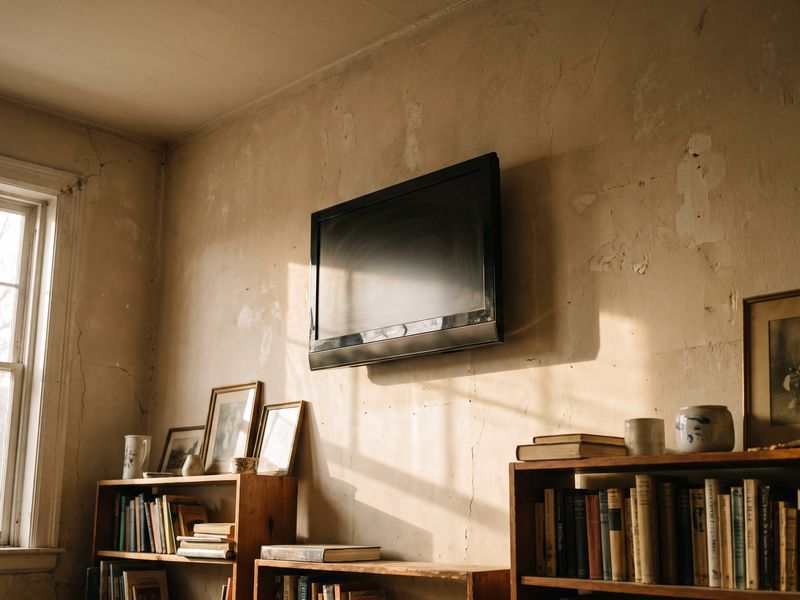
On plaster and lath the screws go into located framing, not into the plaster itself. 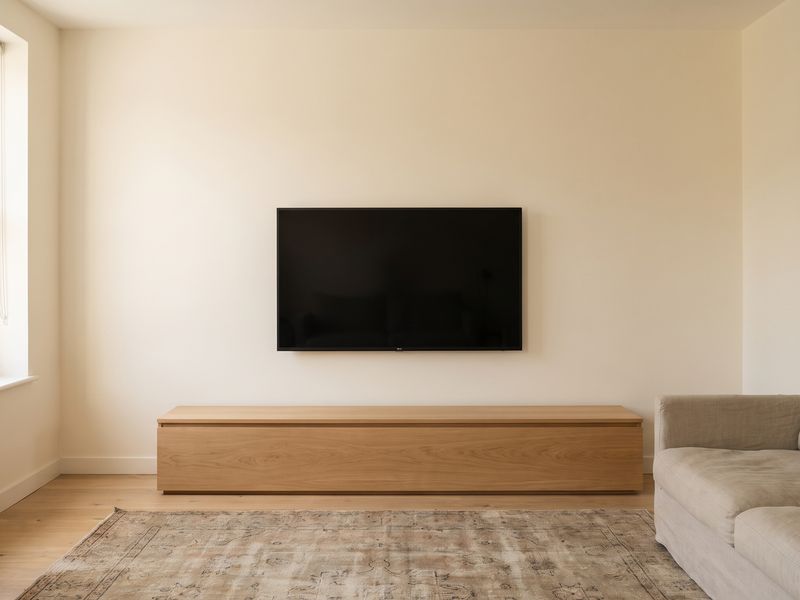
Level when you step back, and nothing hanging down the wall underneath it.


Maybe the TV has been leaning against the living room wall since you moved in, or the shelves are still in the box. Mounting it is a small job with a lot of ways to go wrong, and nearly all of them happen behind the wall. In a lot of Los Angeles houses that wall is plaster over wood lath, and plaster does not forgive a rushed bracket. The figures are further down this page, and what a visit costs sets them beside every other job.

What gets checked before anything goes on the wall
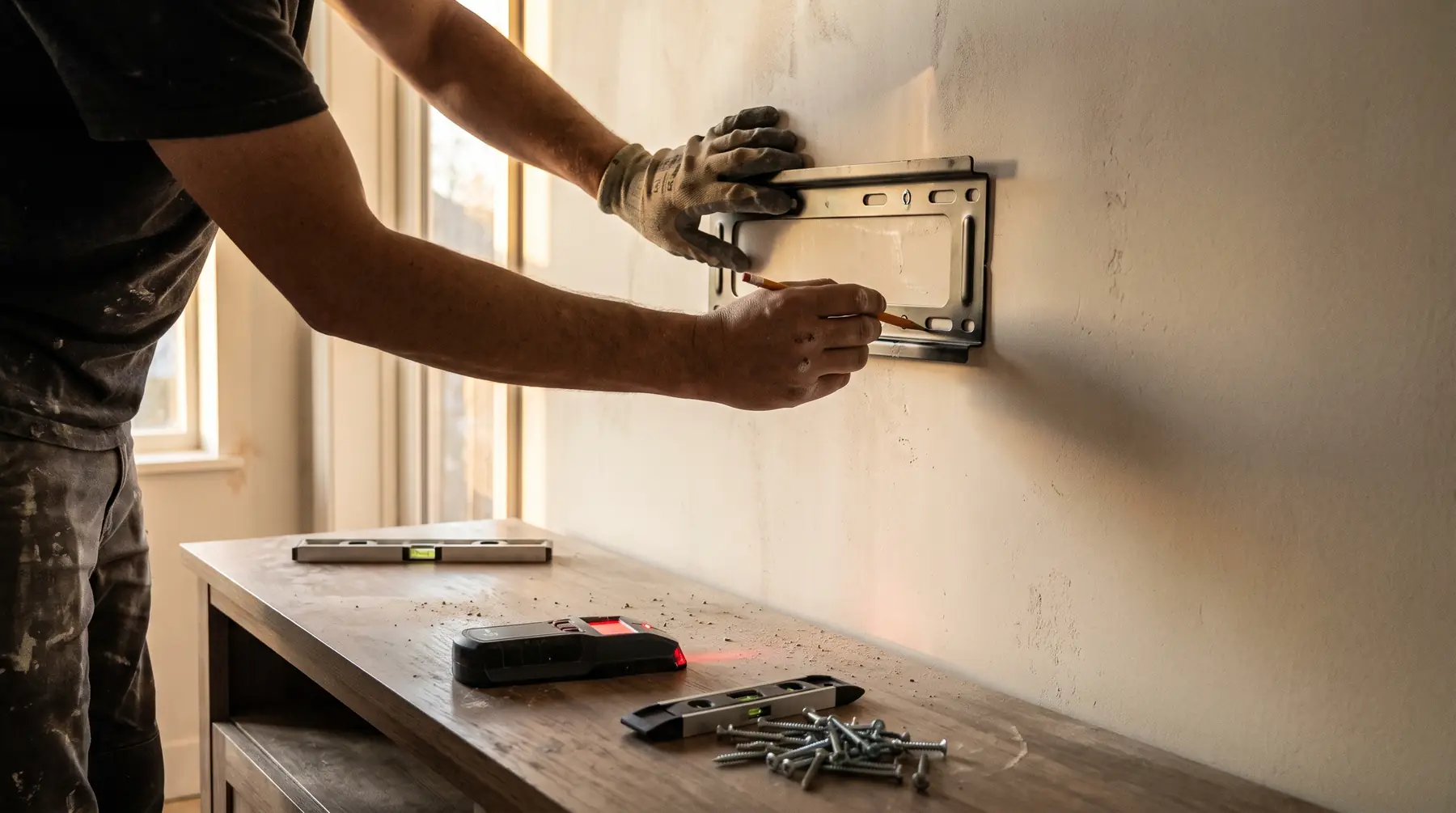
What the wall is made of. A lot of older LA housing is plaster and lath instead of drywall. Plaster is brittle. It cracks if you rush it, and the lath behind it holds nothing on its own. Studs in old homes sit at odd spacings too, and old full-dimension lumber reads badly on a cheap stud finder. So we find the real studs before drilling, and will often use a longer plate so the bracket spans two of them.
Concrete, brick and steel. Plenty of LA buildings have masonry walls or steel studs. Post-war apartments, converted lofts, newer condos. Each one takes a different anchor, and the wrong anchor in a steel stud is one of the more common reasons a mount works loose later. Tell us if that is your building. It changes the tools and the time.
Where the weight ends up. A 65-inch TV on a full-motion arm puts far more leverage on the wall than the same TV on a flat bracket. A long shelf full of books does the same thing. The bracket has to be rated for the load, and the wall behind it has to take that load too.
Mounting a TV over a fireplace
Over a fireplace the questions change. The screen sits higher than eye level, so a bracket that tilts down is usually worth it. The wall above it may be brick, block or a framed box, and each takes a different anchor. Tell us which you have, whether the fireplace gets used and how far the mantel sticks out.
Cables, outlets and the electrician line
Hiding the cables is usually the part people care about most. Dropping an HDMI cable inside the wall from the TV to a console below is normally straightforward, and we can do it.
Power is a different matter. A new outlet behind the TV, so no cord shows at all, is electrical work and belongs to a licensed electrician. Some people will run an extension cord inside the wall instead. That is not safe and it is not allowed. The usual middle path is an in-wall rated pass-through kit, which lets the existing cord run behind the wall down to a lower outlet without breaking any rules.
Wall-mounted shelving
Shelving is the same skill set and the same questions about the wall. Floating shelves are the fussiest. The whole load hangs off a hidden rod with no bracket under it, and in plaster they almost always have to hit a stud. Bracketed shelving is more forgiving and usually cheaper. Sometimes the look you want is fighting the wall you have, and we’ll tell you that before the holes go in.
What it tends to cost
These are estimates. We’ll give you a firm price before any work starts.
- Standard mount on a drywall stud wall$150–$300in labor
- Plaster and lath, brick, concrete or steel stud$250–$450since it’s slower work
- Hiding the cables in the walladd $100–$250
- A run of wall shelving$100–$250depending on length, wall type and whether it’s floating
Licensing, and why there’s no single number
Most TV mounting and shelving comes in well under $1,000. But price is only one of the conditions, and the rest depend on the job and on who’s doing it. It’s a fair thing to ask us straight out. A full media wall with framing and new circuits is a bigger job than this. That one needs a licensed contractor or electrician, and we’ll tell you so before anything gets booked.
What to have ready
- The TV and the bracket, if you’ve already bought them.
- A rough idea of the height you want. Sitting eye level is lower than most people expect.
- Clear access to the wall, and somewhere to set the TV down.
- If you rent or you’re in a condo, any permission your landlord or HOA needs to give.
What to tell us about the job
- Screen size, and flat mount or full-motion arm.
- What the wall is made of. Drywall, plaster, brick, concrete, or not sure.
- Whether you want the cables hidden, and where the nearest outlet sits.
- Any shelving going up at the same time, and your neighborhood.
That’s usually enough to price the job without guessing. If there’s shelving going up as well, or a couple of other small jobs that have been sitting on the list, send those too. One visit is almost always cheaper than three separate trips.
Where we work
Across Los Angeles County
What the walls are made of changes street by street in this city, and it changes the job.

Send us the list
However long it is. You get a price for the visit before anything is booked.