Los Angeles County, California
Squeaky floor, stair and tile repair in Los Angeles
Squeaky floor and stair repair across Los Angeles, plus lifting laminate and vinyl planks, cracked tile and thresholds. Tell us the flooring and the age of the building, and you get a price before anything is scheduled.
The price in writingAgreed before anything is scheduled
One visit, several jobsThe drive costs the same either way
No surprise when we arriveThe number holds unless the wall says otherwise
Across Los Angeles CountyFrom the Valley to the South Bay
What the job looks like
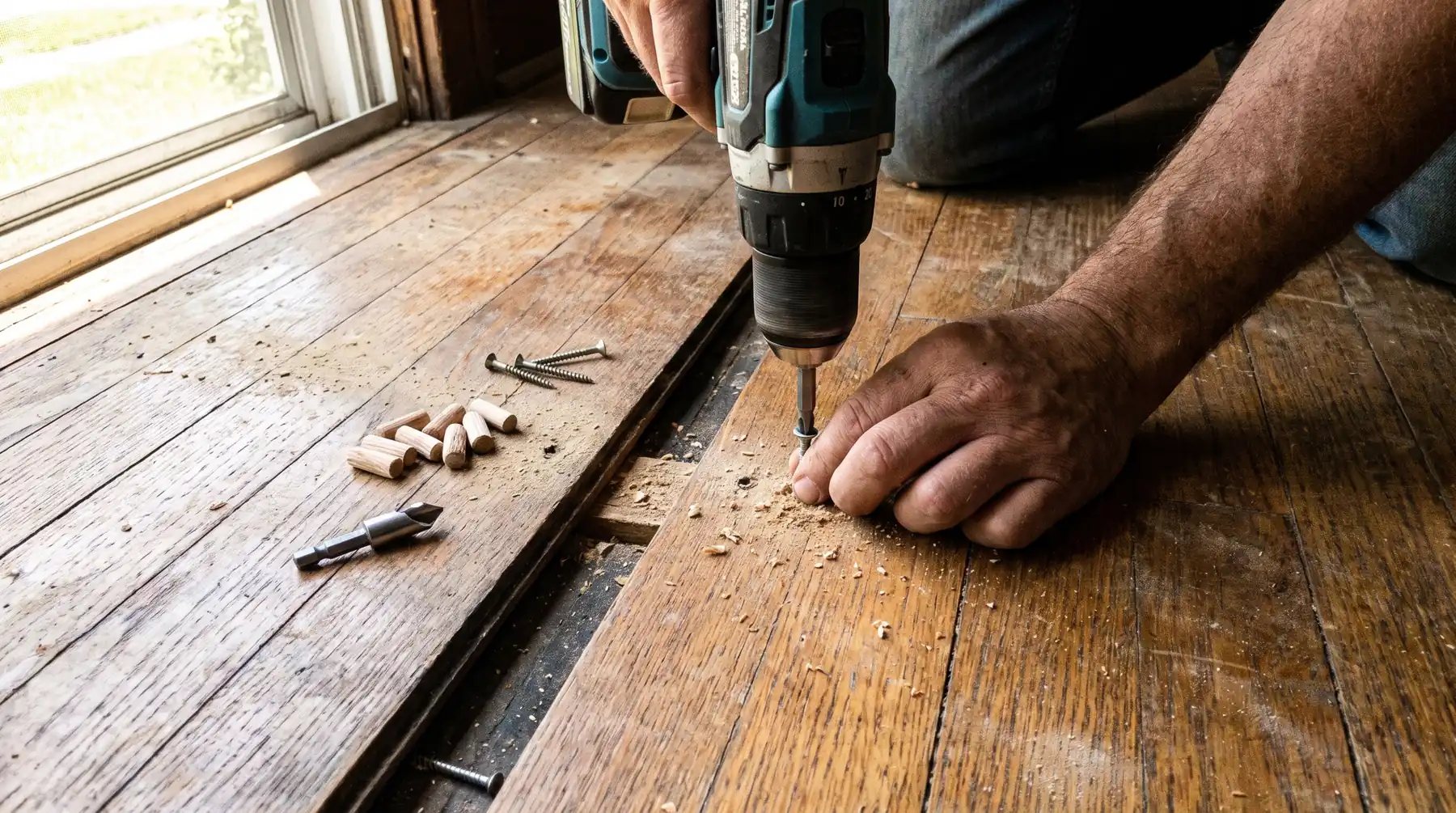
Squeaky floor, stair and tile repair, close up
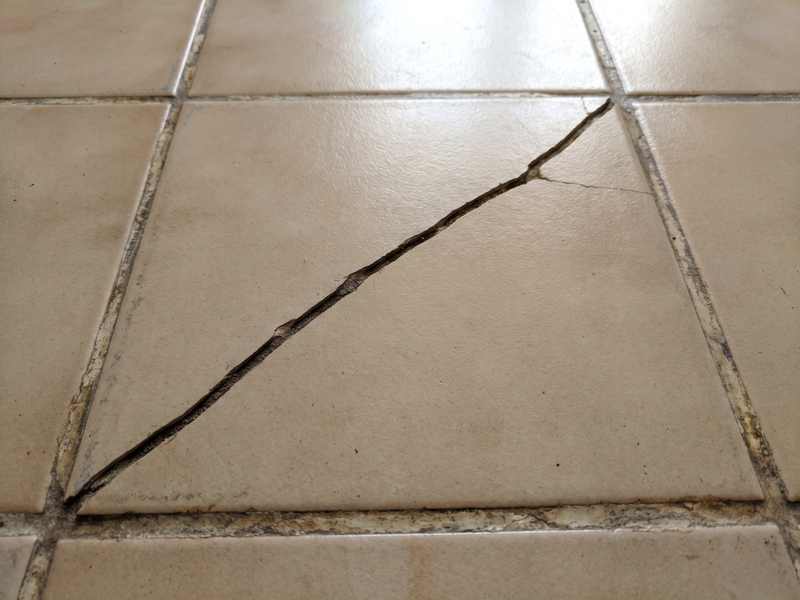
One cracked tile is a swap if there are spares in the garage. Matching a discontinued tile is the hard part. 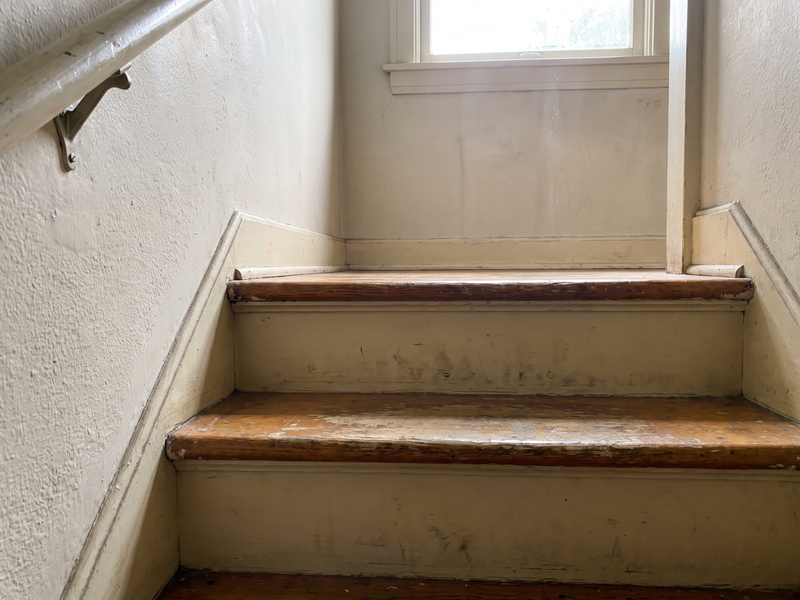
Stairs squeak where the tread has separated from the riser, and most of that is reachable from above. 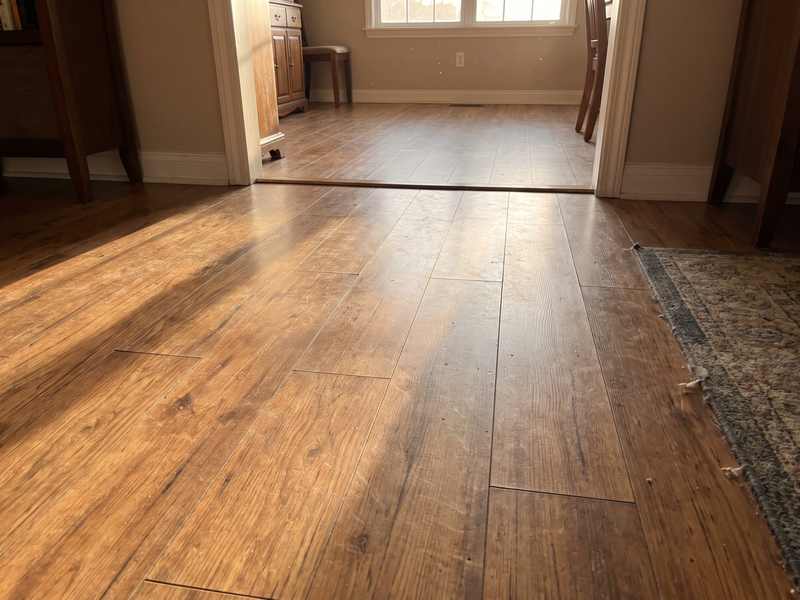
Flat, tight at the seams, and a strip where it meets the next room.


The board by the kitchen door has ticked for three years and you step over it without thinking. What fixes it is under the floor, and in Los Angeles that means a raised wood floor over a crawlspace or a concrete slab. A squeak on slab and the same squeak over a crawlspace are two different repairs at two different prices. Tell us which one you have, what the floor is, and the age of the house.

Why the age of the house decides the fix
LA floors come from every decade of the last century, and floors from each era fail in their own way.
Raised floors over a crawlspace
Bungalows from the twenties sit on piers that settle at their own pace, under a subfloor of diagonal boards that flexes far more than plywood. Two board ends rubbing at a joint is the most common squeak in this housing. The other is a subfloor nail that has worn its hole oversize, which ticks once per step and travels with you across the room. The first gets fixed from above and the second from below.
Post-war slab houses
Slab took over the tract housing from about the mid-fifties, though a 1948 or 1952 house in Van Nuys is as likely to be raised, so look for a crawlspace hatch before you assume. On a slab there are no joists to squeak: the noise is a floating floor over an uneven slab or adhesive that has let go, and moisture pushes up through those old slabs all winter. A cracked tile there is usually a slab crack coming through.
Apartments and condos with a concrete topping
Seventies and eighties buildings across Palms, Koreatown and North Hollywood usually have plywood over the joists and an inch of soft, chalky gypsum concrete on top for sound. Drive a squeak screw through gypcrete and you blow a crater around the head instead of pulling anything tight. The noise is the plywood underneath, and reaching it means cutting out topping that forms part of a rated assembly between two units.
What gets checked before you get a price
On a raised house the crawlspace answers more than an hour upstairs does. Joist size and spacing, damp ground, split joists, and whether the squeak can be reached from below at all. One person walking while another listens from underneath answers in five minutes what an hour upstairs won’t. On slab, a square of clear plastic taped down and read two days later says whether moisture will kill a glue-down repair.
Squeaks are also directional, so the floor gets walked both ways with blue tape on every noise. A straightedge over the tape separates a squeak from a dip, and three-eighths of an inch of dip in six feet is a joist problem wearing flooring.
Loose planks, cracked tile and the weather
Floating floors have to float
Laminate and most vinyl plank are laid loose with a gap around the perimeter so the field can move. When a plank lifts at the wall, or the floor peaks in a ridge across a room, that gap has been caulked solid or the baseboard nailed through the plank. Reopening it means shoe molding off around the whole room. Locking profiles are proprietary too, so a spare plank from the install often decides whether a repair is possible.
What Santa Anas and the rainy season do
Santa Ana air in the fall shrinks strip flooring, opens the seams and brings out squeaks that were silent all summer. December rain swells the boards back, so filling a gap at either extreme earns a callback, and by February the gap has often closed on its own.
Cracked and hollow tile
A crack running in a line across several tiles is the substrate moving. One tile with a spider pattern took an impact. Tap the field before anything else. A tile that answers hollow has let go of the bed underneath even if it looks fine, and the tiles around a crack usually answer hollow too, which is what decides whether you’re replacing one tile or six. Mudset tile has to be chiseled out, which is why a single tile in a 1950s bathroom costs what it does. Grout on a repair comes out close and never perfect.
Stairs
Start where the tread meets the riser. That joint is where most stair squeaks live, and the stringer end gets blamed for it. Old LA stairs were built with triangular glue blocks in that corner, and after ninety years the glue has failed and the blocks are in the dust below. Where the underside is open, new blocks go in from beneath and nothing shows on top. Closed in with plaster, everything happens from above and every fastener has to be hidden.
In hillside houses, when the same three treads squeak every winter and go quiet by summer, the stair is reporting on the foundation under it.
Overlay tread kits sold as a weekend project are awkward for a different reason. Half an inch on every tread leaves the landing where it was, so the first and last steps end up a different height from the rest, and an uneven step is the one people trip on.
Old layers, and paint older than 1978
Kitchens and baths in old LA houses have been re-floored three or four times and the layers are still down there. Fir, a quarter inch of ply, fifties vinyl tile, sheet goods, then whatever you stand on now. Nine-by-nine tile almost always dates a floor to before 1980, and the black brittle adhesive under it often holds chrysotile when the tile doesn’t.
Cutting, grinding and dry-scraping are what put fiber in the air. Leaving intact material alone and floating a new floor over the top is often the right answer, and it costs less. Lifting tile in a pre-1980 house means lab sampling first, and removal is a separately licensed trade.
Lead is the other one. In pre-1978 housing the federal lead-safe rules start at about six square feet of painted surface disturbed indoors, which is nothing. Resetting painted baseboard along one room passes it, and so does sanding painted risers, so the firm doing that work has to be certified.
What it costs
These are estimates. The same squeak costs one thing where a crawlspace can be reached and another under a closed stair. On stairs the first tread carries the setup, so more treads in the same flight come down per tread. You get a firm price before work starts.
- Squeaking floor, one to three spots$200–$550
- Squeaking stair treads$250–$700
- Replacing damaged or lifting laminate or vinyl planks$300–$850
- Cracked tile, one to four in a sound floor$300–$800
- Transition strip, threshold or reducer$175–$450per opening
- Stair tread replacement$350–$750per tread
When a license is required
Most squeak fixes, a few replacement planks, a handful of tiles, a threshold or a stair tread land under $1,000. Price is one condition out of several though, so it doesn’t settle the question alone. A subfloor patch is the one to watch, since materials push it toward four figures fast. Past the line sit joist work, leveling a room, cutting into a condo topping, and asbestos removal over 100 square feet. Those jobs need a licensed contractor.
What to tell us
Year built and neighborhood, and whether it is a house, a condo, or an apartment with a unit below. Slab or raised, or if you don’t know, whether there is a crawlspace hatch in a closet floor. What the floor is and roughly when it went in. Whether you still have leftover planks or tiles from the install, since that detail decides more repairs than anything else here.
Put blue tape on every spot and take one wide photo showing all of it, and a short video with the sound on, walking the squeak. Add the photo to the form and keep the video for when we call. Tell us when it started, whether it moves with the weather, and whether there has ever been a leak nearby, and you’ll have a firm price before a visit gets scheduled.
Where we work
Across Los Angeles County
What the walls are made of changes street by street in this city, and it changes the job.

Send us the list
However long it is. You get a price for the visit before anything is booked.