Skip to content
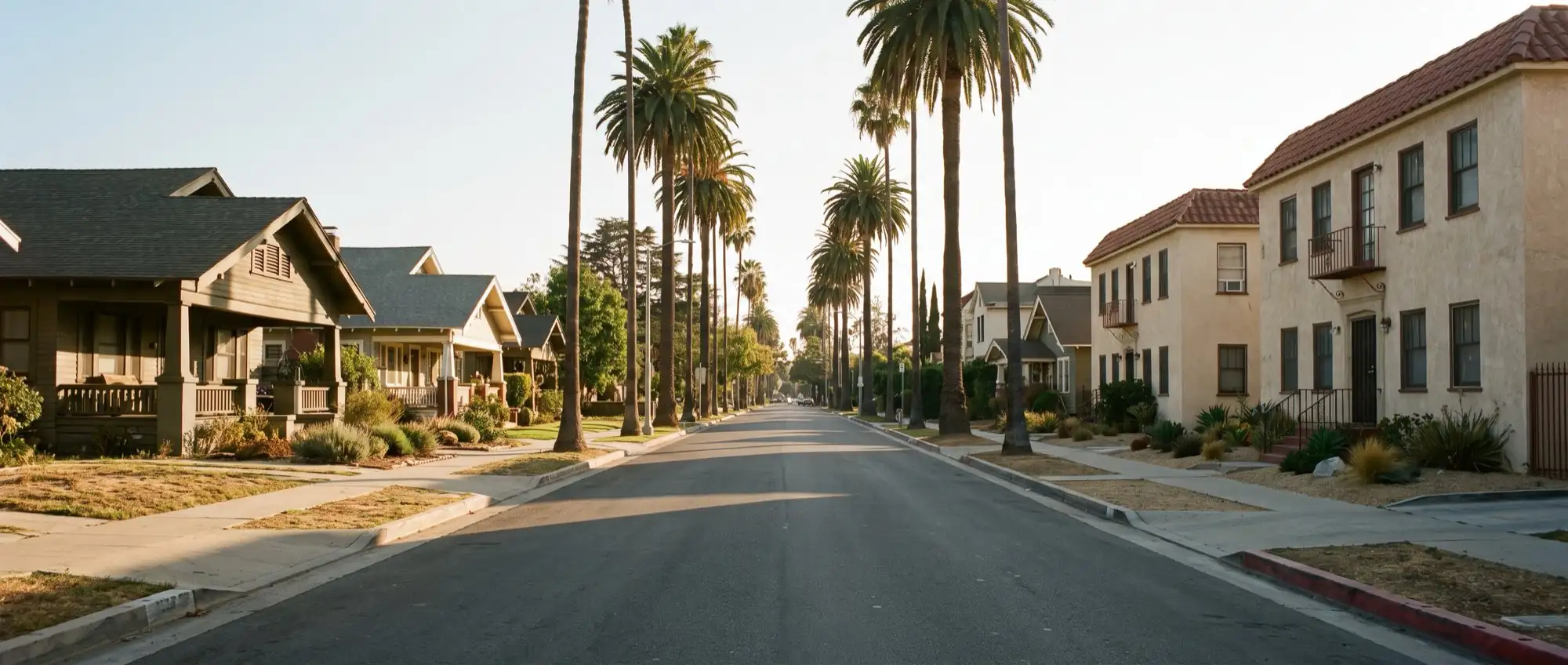
A residential street of older Los Angeles bungalows in afternoon light

Los Angeles County, California

Small handyman jobs in Inglewood

Two thirds of Inglewood rents, the median home went up in 1960, and thousands of houses sit under the LAX approach with program windows and doors nobody should be improvising on. Add a rent rule that moves forward a year every year, and the small-job list here has its own shape.

Best priceguaranteed

Fastand reliable

24/7available

10+experienced handymen

Handyman work in Inglewood is mostly small jobs in rented units and 1940s-to-60s houses: a TV going onto a wall nobody’s sure about, a bathroom door that stopped latching, a batch of anchor holes to fill before a move-out inspection. Tell us what’s on the list and you get a price agreed before anything starts. We work this part of the county and we know what’s behind the paint here.

Inglewood is a renters’ city with a solid owner core inside it. Of roughly 37,500 occupied homes, 23,934 are rented, about 64 percent. The other 36 percent are owned, almost all of that in the single-family blocks. The median home here was built in 1960, and about half the housing went up between the 1940s and the 1960s. So the walls are mostly one or two vintages, most people getting in touch are renting or managing a unit for somebody else, and the same short list of small jobs comes around again and again.

Two things here are unlike anywhere else we cover, and both change what a handyman should and shouldn’t touch: the LAX sound insulation work thousands of houses have been through, and a rent ordinance that moves forward every year instead of sitting on a fixed date. Both are further down the page.

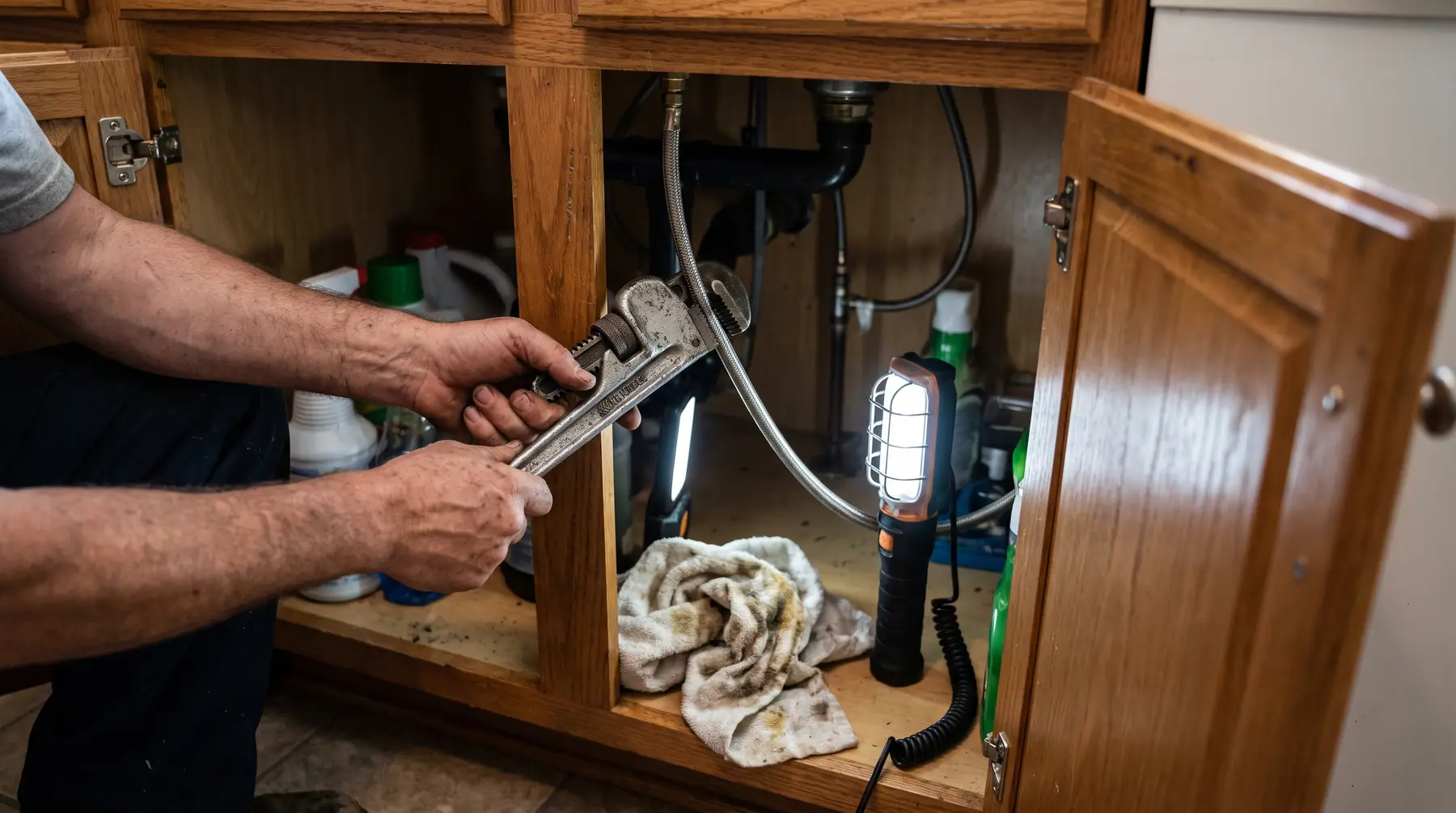
A driver going into a door hinge, one hand steadying the door
Detached houses of this era have had decades to settle, so the opening moved and the door did not. Most of the time that is a hinge, not a new door.

The detail below is here if you want it. You do not need any of it to send us a job.

What the walls are made of here

This decides whether a TV goes up in an hour or in three, so start here.

The 1940s stock: rock lath with a plaster skim

A big share of that 1940s-to-60s housing sits at the earlier end, and 1940s houses across Inglewood frequently have rock lath with a plaster skim coat over it. It looks like drywall until somebody drills. It’s harder, slightly deeper, a screw bites differently, and a hole saw wants to wander off line instead of cutting clean. For a patch it means building the repair up to the right depth, not setting a board flush and calling it done. None of that is difficult for someone who’s met it before. It’s a bad surprise for someone who hasn’t, which is usually how a small hole becomes a bigger one.

The 1950s and 1960s apartments: drywall over wood studs

The stucco fourplexes and courtyard apartment buildings through Morningside Park, Centinela and the Darby-Dixon blocks are the straightforward case: drywall over wood studs, standard spacings, anchors that behave the way the instructions say. If you live in one of these, most of the job menu is easy to price and quick to do. A bracket into two real studs and you’re finished.

The pre-war pockets: true plaster over wood lath

Near downtown Inglewood and up through North Inglewood there are older blocks where the wall is plaster over wood lath. That’s a different animal. Plaster is brittle and blows out in a cone if a screw goes in fast, the lath holds nothing on its own, studs sit at irregular spacings, and the old full-dimension lumber reads badly on a cheap stud finder. In this stock we go looking for real framing instead of trusting a beep, and we often span two studs with a longer plate. Patching is its own job too. Plaster filled with drywall compound alone tends to crack again inside a year, because the plaster around it keeps moving. There’s more on that on the drywall repair page.

The new buildings: concrete and metal stud

Everything that’s gone up around SoFi Stadium, the Intuit Dome and the transit line is concrete with metal-stud partitions. Nothing wrong with it, but it takes different hardware, and the wrong anchor in a steel stud is the most common reason a mount works loose six months later. Concrete needs the right bit and the right sleeve. Say which kind of building you’re in, because it changes the hardware, the price and how long the visit takes.

If you don’t know which of the four you’ve got, that’s fine. Tap the wall, tell us roughly when the building went up, and send a photo. Not sure is a fine answer.

If your house went through the LAX sound insulation program

Inglewood sits under the LAX approach, and thousands of homes here have been through the city’s Residential Sound Insulation program, run by Inglewood’s own department with FAA and Los Angeles World Airports grant money. It covers homes inside the noise contour around the airport, the 65 CNEL line on the FAA’s 2020 noise exposure map. The program retrofits exterior doors and windows, adds a ventilation system and does other treatments at no cost to the owner, aiming for at least a 5-decibel improvement inside the house.

Here’s why that matters for small jobs. Those doors and windows are an engineered assembly, not stock units from a big-box aisle. The seals, the glazing and the way the frame sits are all part of hitting that noise number. So a program window or door is not something to plane, shim, re-seal or weatherstrip by guesswork, however reasonable that sounds when a door starts dragging or a room gets drafty again. Generic foam tape on a sound-rated door usually makes the seal worse.

There’s a warranty question too. The installing contractor guaranteed the work for a period afterward, and the manufacturers issue their own warranties on the doors and windows directly to the property owner. If a program-installed unit has failed, the fix may sit with the program or the manufacturer and cost you nothing, and having a handyman work on it first can be the wrong move entirely. Call the city’s sound insulation department and find out where you stand before anyone else touches it.

None of that stops the rest of the list. Interior doors, walls, fixtures, faucets and gutters are all ordinary work in a treated house. Just say the house went through the program when you send the list, so the treated doors and windows stay off the job sheet.

The rent rule in Inglewood moves every year

This one catches people out, and it drives a steady amount of between-tenant work.

Inglewood’s Housing Protection Ordinance took effect in December 2019, originally for buildings of five or more units, and was amended in 2021 to cover most multi-unit buildings. Annual increases on covered buildings of five or more units are capped at 3 percent or the cost-of-living change, whichever is greater, with a different and higher formula for two-to-four unit properties.

The unusual part is the new-construction exemption. Instead of a fixed cutoff date, Inglewood uses a rolling 15 years from the certificate of occupancy. Because it’s measured from today and not from a date written into the ordinance, coverage moves forward every year. As things stand that means buildings finished before roughly 2010 are covered, and a building that’s exempt this year can be covered a few years from now without anybody changing the law.

Everywhere else we cover uses a frozen date. The City of LA’s rent stabilization ordinance covers buildings of two or more units with a certificate of occupancy on or before October 1, 1978. Santa Monica sits on April 10, 1979. Pasadena, Glendale and the unincorporated county sit on February 1, 1995. Inglewood is the one that moves. If you own or manage a newer building here, look up the year it stops being exempt instead of assuming.

Rules like this change, so check your own building with the city. For small jobs it comes down to this: covered units turn over, and turnovers generate a predictable punch list. A wall of anchor holes filled and touched up, a doorknob-sized hole patched and textured, a bathroom door that stopped latching, a tired faucet swapped before the next tenant walks in. If you’re turning a unit, say so. A whole-unit list is a different day’s work from one careful install in an occupied home, and knowing which one you need changes how we plan the visit.

Renting, owning, or managing

  • Tenants. Nearly two thirds of homes here are rented, so this is most of the small-job work in Inglewood. Get your landlord’s or manager’s yes in writing before anything goes into a wall, and say in your message that you’re renting. We can then keep the work reversible and tell you up front what patching it out at move-out costs.
  • Owners in the single-family blocks. This is where the outdoor half of the list applies. Gutter clearing, minor gutter repair, fence and gate repair, weatherstripping on doors that didn’t come from the program. It’s also where a fan or a fixture swap is your call and nobody else’s.
  • Landlords and unit managers. Say so up front. Access, timing and building rules all shift, and a between-tenant list is a different booking from one visit to an occupied apartment.

Parking, access and batching the list

Parking varies more here than in the dense parts of the county. On the single-family streets there’s usually a driveway and it’s a non-issue. Around the apartment blocks off Manchester, Market Street, La Brea, Centinela and Prairie it’s street parking and tuck-under carports, and on an event day near the stadiums whole stretches of the city change character for the afternoon. If your job lands on a game or concert day, tell us. It’s not a problem. It just helps to know before we set out.

Batching helps too. Loading a ladder, a hammer drill and a bag of anchors and driving out to you is most of the work before anything gets touched. That’s why a single nail hole is hard to book anywhere. Walk the place and write down everything. The TV, the curtain rails, the hallway mirror, the bathroom door that won’t catch, the holes the last tenant left. Send it as one job. One visit, one price.

The jobs that come up most in Inglewood

  • TV mounting and wall shelving. The most common ask in a renter-heavy city, and the one most affected by whether there’s rock lath, drywall, plaster or steel stud behind the paint.
  • Drywall and plaster repair. Anchor holes in a batch, doorknob holes, cracking in the older stock. On rock lath, matching the depth is half the job and matching the texture is the other half.
  • Interior door repair and adjustment. Settled frames, latches an eighth of an inch out of line, closet bifolds that jumped their track. Planing the door is usually the wrong first move.
  • Faucet, toilet and disposal replacement. Like-for-like swaps only. In housing this age, expect the angle stop behind the fixture to be seized. It’s the single most common surprise on older LA plumbing, and we carry the valve.
  • Ceiling fans and light fixtures. Swaps where a box and wiring already exist. A fan has to hang from a box rated for fan support, not a plain lighting box, and in the older houses two wires and no ground is common.
  • Picture, mirror and curtain hanging, flat-pack assembly, small carpentry, small painting. The steady background of any rental city.
  • Gutter clearing and minor gutter repair, fence and gate repair, weatherstripping and draft-proofing. Owner work, on the single-family blocks. Rain season runs October through March, so book gutters in September, before the first wet week of November. Weatherstripping comes with the program caveat above.
  • Floor repair. The 1940s and 50s houses were laid with oak strip over joists, and a lot of it is still down there under carpet somebody rolled over it later, so a squeak is the board working against a joist and it gets fixed from above, $200-$550 for one to three spots. In the fourplexes it’s more often laminate or vinyl plank lifting at a seam, or a threshold worn through by a run of turnovers. One to stop for: nine-inch tile under a kitchen or bathroom floor is a pre-1980 pattern, and the tile and the black mastic under it are a testing question, not a handyman job.
  • Grab bars and safety fittings. A bar is only as good as what it’s screwed into, so in the older blocks near downtown it means finding real framing or adding blocking, because plaster over wood lath holds a screw for a while and then lets go. Bathrooms in the 1940s and 50s houses are often mud-set tile over a mortar bed, which drills slower and runs $325-$650 for the first bar against $225-$450 in a standard wall. Most of the city rents, so get the owner’s yes in writing before anything goes in, and if the water heater in the garage isn’t strapped, California requires that it is, $175-$375.

Most of Inglewood predates 1978, so lead comes up

Homes built before 1978 may have lead-based paint, and with a median build year of 1960 that’s the large majority of the housing here. For work that disturbs painted surfaces, the federal RRP rule requires a certified renovator using contained work practices once the job disturbs more than six square feet of painted surface in a room, or twenty outside. Sanding a painted door and jamb, or cutting into a painted wall for a patch, is the sort of work that triggers it. Tell us the age of the house. That work needs a certified renovator on it, not a sander and good intentions.

What needs a licensed contractor

California has a narrow exemption for minor work, Business and Professions Code section 7048, and most people repeat it wrong. It applies only when the job is casual, minor or inconsequential in nature, the whole price for labor, materials and everything else comes to less than $1,000, and the work doesn’t require a building permit. The job can’t be split into smaller contracts to get under the number, and it can’t be part of a larger project. The exemption also drops away for anyone who advertises in a way that might suggest to the public they’re a contractor, or who employs another person to do or help with the work. Miss any one of those and the work needs a licensed contractor. The figure was $500 until 2025 and you’ll still see that number quoted all over the internet. It’s out of date, and a price on its own was never the whole rule.

Most of the jobs above are small enough that price alone wouldn’t be the issue. Some Inglewood jobs plainly are bigger: a whole unit repainted between tenants, several doors replaced at once, a run of gutter replaced instead of resealed. When a job runs past the exemption, on price or on a permit or on any of the other conditions, a licensed contractor takes it on, not the same visit with a bigger invoice. On fixture jobs the fixture price counts toward the total, so buying the faucet or toilet yourself is often what keeps a job under $1,000. If the work grows once somebody has seen it, we stop and tell you before going any further, and you get a fresh price with no charge for the look. And if you’d rather have a licensed contractor whatever the size of the job, say so when you get in touch. Ballpark numbers are on what things cost.

What we won’t take on in Inglewood

Saying no to things is more useful than claiming everything.

  • Electrical past a fixture swap. New circuits, a new outlet behind the TV, panel work, anything with scorching or a breaker that keeps tripping. Licensed electrician.
  • Plumbing past a like-for-like swap. Opening a wall or touching a shared line in a fourplex is not a handyman job, and in a rental it usually isn’t yours to authorize either.
  • Roofing, structural work, permits, HVAC, tree work, whole-house repaints and remodels. Real trades, none of them a two-hour visit.
  • Sanding or disturbing paint in a pre-1978 home without a certified renovator. Which, here, is most homes.
  • Building-wide maintenance contracts. This is single-visit work. One address, one list, one price. Ongoing maintenance across a portfolio of buildings is a different arrangement entirely.

If your job is on that list, send it over anyway and say so. We’d sooner point you at the right trade than take on something that shouldn’t be a handyman visit. And if it isn’t work we can cover on your block, you’ll hear back within about a day and know why. That’s how the rest of the county works too.

What to tell us when you get in touch

  • Your cross streets. North Inglewood, Morningside Park and the blocks by the stadiums are different jobs. Different walls, different parking, and building types with nothing in common. The neighborhood tells us more than the city name does.
  • Roughly when the place was built, or what it looks like: pre-war bungalow, 1940s house, 1950s or 60s stucco fourplex, or something new.
  • What the wall is, if you know. Rock lath, drywall, plaster, concrete, steel stud, or not sure.
  • Whether the house has been through the LAX sound insulation program, and whether the job involves one of those doors or windows.
  • Whether you rent, own or manage the unit, and who has to approve the work.
  • Parking and access, and whether it’s an event day near the stadiums.
  • A photo. It saves more back-and-forth than anything you can type.

That’s enough to price the job properly. Send us the list and you’ll get a price before any work starts, and nothing gets scheduled until you’ve agreed to it. Anything we find on the day, you hear about it before we carry on. More on how a visit runs is on the how it works page.

Where we work

The rest of Los Angeles County

What the walls are made of changes street by street in this city, and it changes the job.

Send us the list

However long it is. You get a price for the visit before anything is booked.

Send the listCall