Skip to content
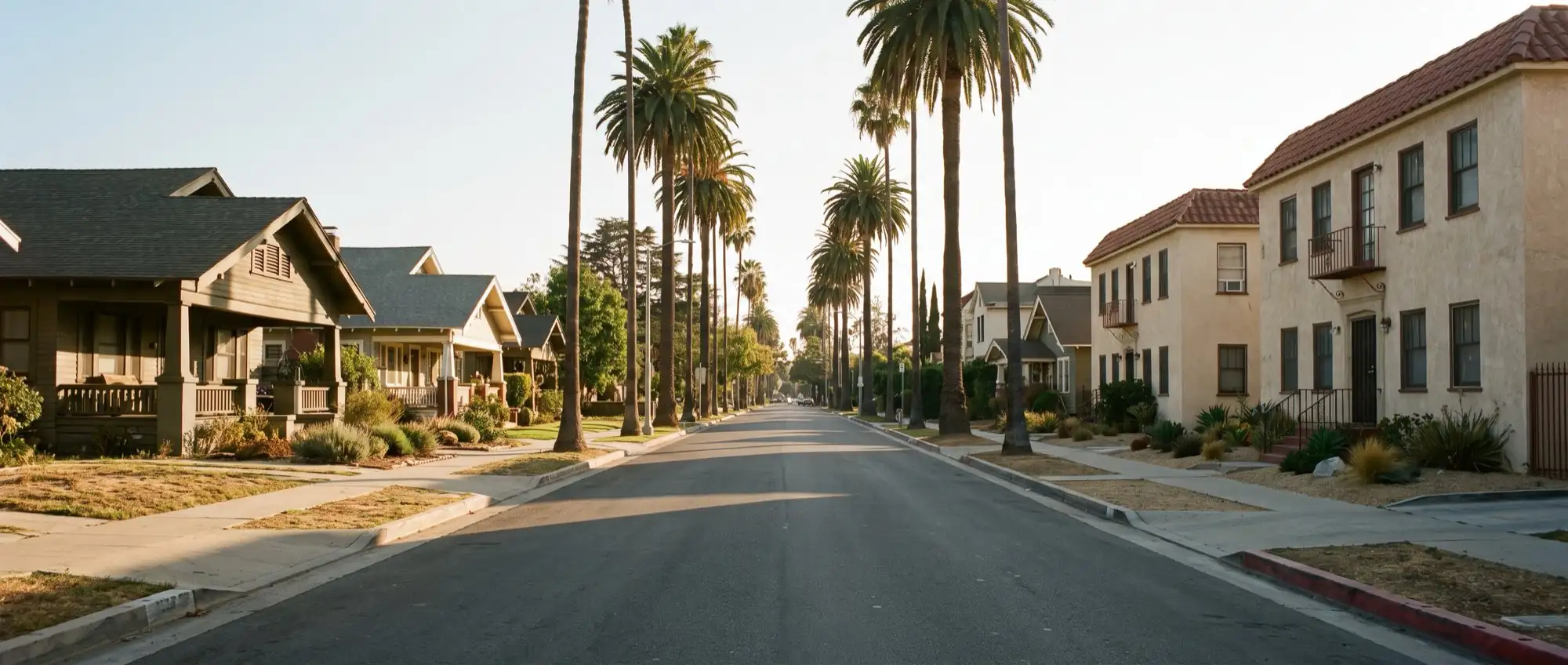
A residential street of older Los Angeles bungalows in afternoon light

Los Angeles County, California

Small handyman jobs in Pasadena

Bungalow Heaven, the apartment stretch along Lake and Los Robles, oaks that fill a gutter every autumn. Pasadena runs its own utility, its own permit counter and its own rent control, with a different cutoff date from the City of LA's. Tell us what's on the list and you get a price before any work starts.

Best priceguaranteed

Fastand reliable

24/7available

10+experienced handymen

Small jobs in Pasadena: a TV going up on a plaster wall, a door that stopped latching, a batch of anchor holes to fill before a tenant moves in. Tell us what’s on the list and you get a price agreed before any work starts. We know what’s behind a Craftsman wall.

Pasadena is its own city, and that matters here more than almost anywhere else we cover. Three things change the moment you cross the line. The electricity and the water both come from Pasadena Water and Power, a city-owned utility, so a meter, a service, a shut-off or a power question is a call to PWP. Not LADWP, and not Southern California Edison. Permits go through the City of Pasadena’s own building department, not LADBS. And since December 22, 2022 the city has had its own rent control, with a cutoff date that isn’t the one people know from Los Angeles. Most homeowners get all three wrong.

Then there’s the housing. Roughly 28 percent of it went up before 1940, and a good share of that is intact Craftsman. Plaster and lath, and on some blocks a landmark district on top of it.

A driver going into a door hinge, one hand steadying the door
Detached houses of this era have had decades to settle, so the opening moved and the door did not. Most of the time that is a hinge, not a new door.

The detail below is here if you want it. You do not need any of it to send us a job.

What’s behind the paint, era by era

The Craftsman bungalows, 1900 to 1930

Bungalow Heaven is the obvious example: more than 800 small Craftsman houses built between 1900 and 1930, made Pasadena’s first landmark district in 1989. Garfield Heights and the other early districts run the same stock, and so do plenty of blocks that were never designated at all. Lovely houses. Fussy walls.

Behind the paint is plaster over wood lath, not drywall. It’s harder, deeper and more brittle, it blows out in a cone if a mount goes up in a hurry, and the lath holds nothing on its own. Studs sit at irregular spacings, and the original full-dimension lumber reads badly on a cheap stud finder, which is how a bracket ends up anchored to air. We go looking for real framing instead of trusting a beep, and we’ll often span two studs with a longer plate. More on that on the TV mounting page.

Patching is its own thing too. Filling plaster with drywall compound alone tends to crack again within a year, because the plaster around it keeps moving. Plaster repair is a different job from drywall repair, it costs more than the drywall equivalent, and we’ll say so up front instead of afterwards.

Then the doors, which catch people out here more than anything else. Original openings in a 1912 bungalow aren’t standard sizes, so a stock slab often won’t fit, and the original hardware is long discontinued. Repair is usually the sensible answer. A sticking door in a settled frame is nearly always the frame moving, not the door being wrong. A door adjustment runs about $95–200 and a hinge repair and re-hang $120–250; the rest is on the door repair page.

One thing that isn’t a handyman conversation: if you own in a landmark district and the work is visible from the street, you’re into design review with the city. Different process, different timeline. Better to hear that up front than to find it out with a ladder already on your porch.

The 1940s and early 50s

A lot of what went up either side of the war is rock lath with a plaster skim over the top. It looks like drywall until somebody drills into it, then behaves like plaster. If your house is from that window, say so. It changes the anchor and it changes the patch.

The apartment belt: Lake, Colorado, Los Robles and the Playhouse District

Roughly 57 percent of Pasadena households rent, and most of that stock sits along Lake Avenue, Colorado Boulevard and Los Robles, and through the Playhouse District. Much of it is 1960s through 80s: drywall over wood studs, standard spacings, the easy case. A patch disappears, a bracket goes into a stud, and the price sits at the low end of every estimate on this site.

The newer podium buildings are the exception. Metal studs, and the wrong anchor in a steel stud is the most common reason a mount works loose a year later. Tell us which kind of building you’re in. It changes the anchor, and it changes how long the job takes.

Renting, owning, or turning a unit over

Most Pasadena jobs come from one of three people, and each one needs something slightly different.

  • Tenants. Get your landlord’s or manager’s sign-off before anything goes into a wall, especially a TV mount or a curtain rail. Say you’re renting, so we keep the work reversible and can tell you what patching would cost at move-out.
  • Owners. In a bungalow, most of our list is interior and nothing to do with design review. In a condo, the HOA sets the rules and most buildings want a certificate of insurance on file before anyone starts work. Ask what yours needs and mention it when you get in touch.
  • Landlords and unit managers. Read the next paragraph carefully, because the date is not the one you’re used to.

Measure H passed in November 2022 with 53.8 percent of the vote and is now Article XVIII of the Pasadena city charter, in effect from December 22, 2022. It covers multi-unit residential rentals built before February 1, 1995, somewhere around 24,850 units of pre-1995 multifamily stock, and it brought with it a Rental Housing Board, just-cause protections and relocation assistance. Note that date. February 1, 1995, not the City of LA’s October 1, 1978. A Pasadena landlord turning a 1985 building is covered where a landlord with the identical building in LA is not. Single-family homes and condos are treated differently again under state law.

In practice that means steady between-tenant work, and a predictable list of it: a wall of anchor holes filled in one batch, a doorknob-sized hole textured and painted, one room repainted, a bifold rehung, a tired faucet swapped before the next tenant walks in. A batch of nail and anchor holes is usually $150–300 for the visit; a doorknob-sized hole textured and painted runs $200–400. Say you’re turning a unit when you send the list in. A whole-unit punch list is a different visit from one careful install in an occupied home, and it should be priced as one job, not six.

Parking, access, and batching the small stuff

The bungalow streets are the easy half: driveways, a detached garage down a long drive, somewhere to put a van. The apartment blocks on Lake and Los Robles, and anything near Old Pasadena or the Playhouse District, are the other half. Permit blocks, meters, gated garages, and freight elevators you often have to book in a window.

Either way, batch it. Coming out with a ladder, a hammer drill and a bag of anchors takes real time before anything gets touched. That’s why a single nail hole is a hard thing to book. Walk the house, write down everything, and send it as one job. One visit, one price.

The jobs that come up most around here

  • TV mounting and wall shelving. The most common ask everywhere, and the one most affected by whether you’ve got plaster, drywall or steel stud behind you. On plaster or lath expect $250–450 against $150–300 for a drywall-and-studs mount.
  • Drywall and plaster repair. Anchor holes in a batch, doorknob holes, hairline cracking in the older houses. Texture matching is the hard half, not the filling.
  • Interior door repair and adjustment. Settled frames, latches an eighth of an inch out, closet bifolds off their track, and original bungalow doors that are better repaired than replaced.
  • Faucet, toilet and disposal swaps. Like-for-like only. In houses this old, expect the angle stop behind the fixture to be seized. It’s the single most common surprise on older LA plumbing, and we carry the valve.
  • Ceiling fans and light fixtures. Swaps where a box and wiring already exist. In pre-war houses it’s common to find two wires and no ground, and knob-and-tube or old cloth wiring is a stop-and-call-an-electrician moment.
  • Gutter clearing and minor gutter repair. In Pasadena this one earns its own section, below.
  • Picture, mirror and curtain hanging, flat-pack assembly, weatherstripping and caulking, small carpentry, small painting. The rest of the list, and it doesn’t grow past twelve.
  • Floor repair and squeaking boards. In the bungalows the floor is oak strip nailed straight to the joists, and after a century of dry summers the nail has lost its grip on the board, which is why the squeak moves under your weight and why it can usually be fixed from above without lifting the floor. A squeak in one to three spots runs $200–550. In the 1960s to 80s apartments along Lake and Los Robles it is more often laminate or vinyl plank lifting at the seams, $300–850, though 9x9 tile stuck down with black mastic in anything pre-1980 is an asbestos suspect and a stop-and-test job, not a handyman one.
  • Grab bars, handrails and home safety. Where a bungalow bathroom still has its original tile set in a mortar bed over wire lath, a grab bar is a different job from one into a modern tiled wall: $325–650 against $225–450 for the plain wall version. The bungalows also sit up on a raised foundation, so there are three or four steps to the porch, and the original detail is often a masonry pier or low wall where a hand wants a rail; a graspable handrail runs $400–950. With most of the city renting, alarms and a water heater strap get batched into a turnover visit, and California requires water heaters to be braced or strapped.

Oaks, sycamores, and why September beats November

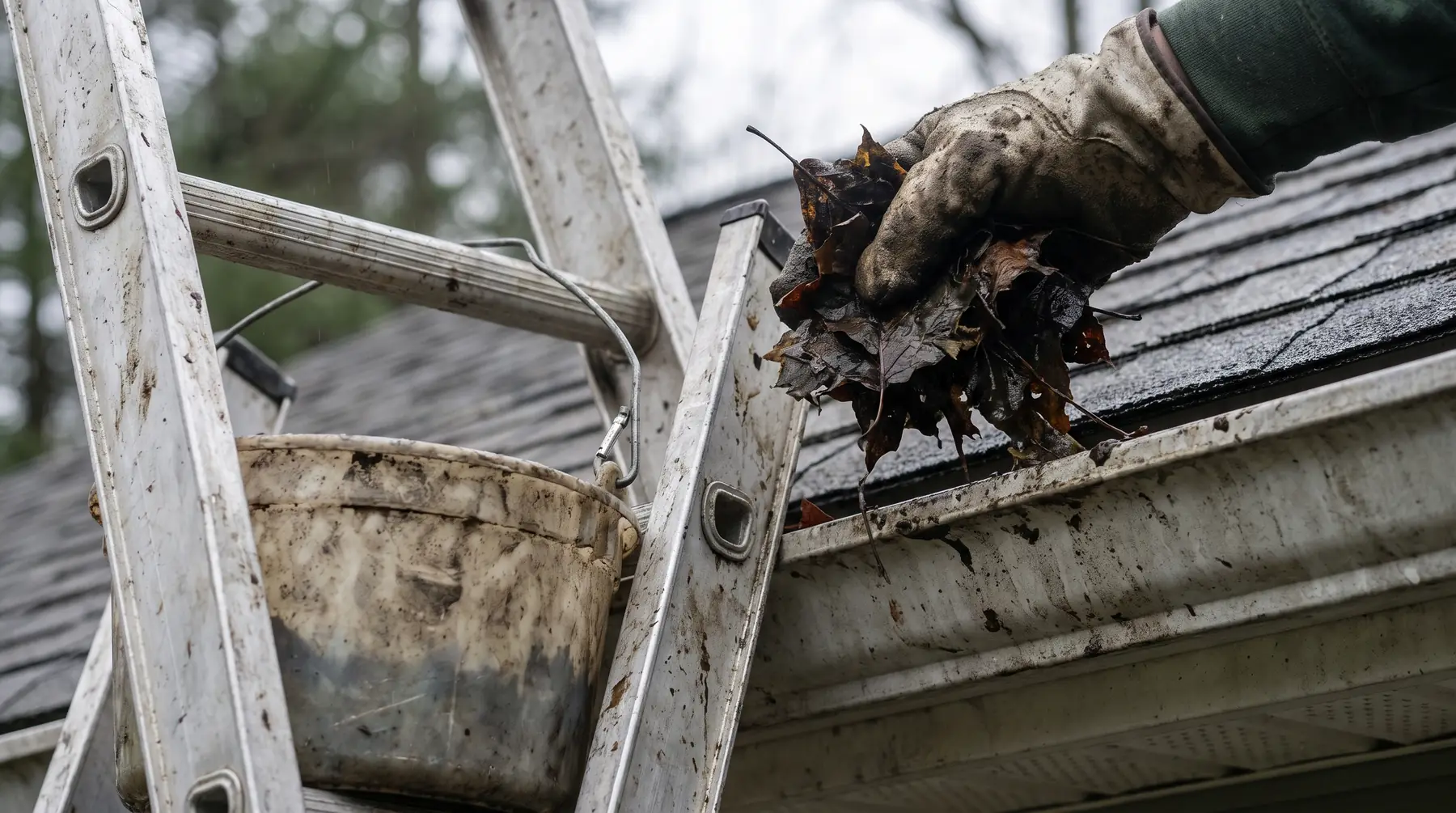
Gutters are usually the afterthought on a page like this. Not here. The older residential streets are lined with mature oaks and sycamores, they drop into your gutters every fall, and a bungalow with a low-pitched roof and wide eaves catches all of it. Rain season runs October through March.

So book it in September, before the first wet week of November. Everyone calls at once when the first storm lands, gutter work gets tight for a few weeks, and a September date is far easier to get than a November one. If a section is rusted through or pulling off the fascia, that’s replacement, not clearing, and depending on the run it can cost enough to put it past the exemption covered below.

Pre-1978 paint, which is a lot of Pasadena

Homes built before 1978 may have lead-based paint, and given how much of this housing predates 1940, that covers a large share of the city. For work that disturbs painted surfaces, the federal RRP rule requires a certified renovator using contained work practices once the job disturbs more than six square feet of painted surface in a room, or twenty outside. Sanding a bungalow door and jamb, or cutting into painted plaster for a patch, is the kind of work that triggers it. Tell us roughly how old the house is. On a pre-1978 house the job has to go to a certified renovator working with containment, and not to somebody with a sander and good intentions.

The license question

In California, construction work generally requires a CSLB contractor license. There is one narrow exemption, for work that is casual, minor or inconsequential. It is Business and Professions Code section 7048, and it only applies when every one of these is true: the total price for labor, materials and everything else is under $1,000; the work doesn’t require a building permit; the job hasn’t been split into smaller contracts to get under that figure; and it isn’t part of a larger project. The section also takes the exemption away from anyone who advertises in a way that might suggest to the public that they’re a contractor, or who employs someone else to do the work or help with it. So there is no simple price line here, and anyone who tells you there is one is giving you bad information.

Most of the jobs on this page are small, priced well under $1,000, and don’t involve a permit. Some Pasadena jobs are the other way: a whole unit repainted between tenants, several doors replaced at once, a long run of gutter replaced instead of resealed. When a job clearly runs past $1,000, or needs a permit, we’ll get a licensed contractor out to you instead. Not the same person with a bigger invoice. On fixture jobs, the fixture price counts toward the total, so buying the faucet or the toilet yourself is often what keeps the job under that figure. And if the work grows once we’ve seen it, we’ll stop and tell you before going any further. Ask whoever comes out whether they’re licensed, and for the number if they are. It’s a fair question, and you should get a straight answer.

What we won’t take on in Pasadena

Saying no to things is more useful than claiming everything.

  • Electrical past a fixture swap. New circuits, a new outlet behind the TV, panel work, anything with scorching or a breaker that keeps tripping. Licensed electrician, and the permit side is a City of Pasadena conversation.
  • Plumbing past a like-for-like swap. Re-pipes, slab leaks, opening a wall. Licensed plumber.
  • Roofing, structural work, permits, HVAC, tree work, whole-house repaints and remodels. Real trades, none of them a two-hour visit. Tree work especially, given what’s growing over these streets.
  • Sanding or disturbing paint in a pre-1978 home without a certified renovator. Covered above, and we hold to it.
  • Building-wide maintenance contracts. This is single-visit repair work, booked one job at a time. A standing arrangement across a portfolio of buildings is somebody else’s line of business.

If your job is on that list, send it anyway and say so. Pointing you at the right trade is more use to you than taking on something that belongs to a licensed electrician. And if it’s work we can’t take on in your part of Pasadena, you’ll hear that within about a day, with the reason, same as the rest of the county.

What to tell us when you get in touch

  • Your cross streets. A bungalow off Washington is a different job from an apartment on South Lake, and Pasadena is not one neighborhood.
  • Roughly when the house or building went up, or just what it looks like: Craftsman bungalow, postwar house, 1970s apartment, newer podium building.
  • What the wall is, if you know. Plaster, drywall, concrete, steel stud. Not sure is a fine answer.
  • Whether you rent, own or manage, and whether there’s an HOA, a landlord or a manager who needs to approve the work. If you’re in a landmark district, mention that too.
  • Parking and access, including whether an elevator needs booking.
  • A photo. It saves more back-and-forth than anything you can type.

That’s enough to price the job properly. Send us the list and you get a clear price before any work starts, and nothing goes ahead until you’ve agreed it. The full price ranges are on what things cost, and the step-by-step is on the how it works page.

Where we work

The rest of Los Angeles County

What the walls are made of changes street by street in this city, and it changes the job.

Send us the list

However long it is. You get a price for the visit before anything is booked.

Send the listCall