Los Angeles County, California
Small handyman jobs in Westwood, Los Angeles
Roughly 64 percent of Westwood rents, and in the North Village almost all of it turns over inside the same two or three weeks of September. Thousands of apartments inside half a square mile, all needing the same short list of jobs at once. Which is why the useful move is sending yours in August.
Best priceguaranteed
Fastand reliable
24/7available
10+experienced handymen
What goes on the list
The jobs, and what they look like done
Most visits are several of these at once. That is the whole economics of small work. The drive costs the same either way.
Small repairs and installs across Westwood: TV mounts, curtain rails, anchor holes patched and painted before a walkthrough, doors that stopped latching, flat-pack that arrived in three boxes. Tell us what’s on the list and where you are in the neighborhood, and you’ll have a price agreed before anything starts.
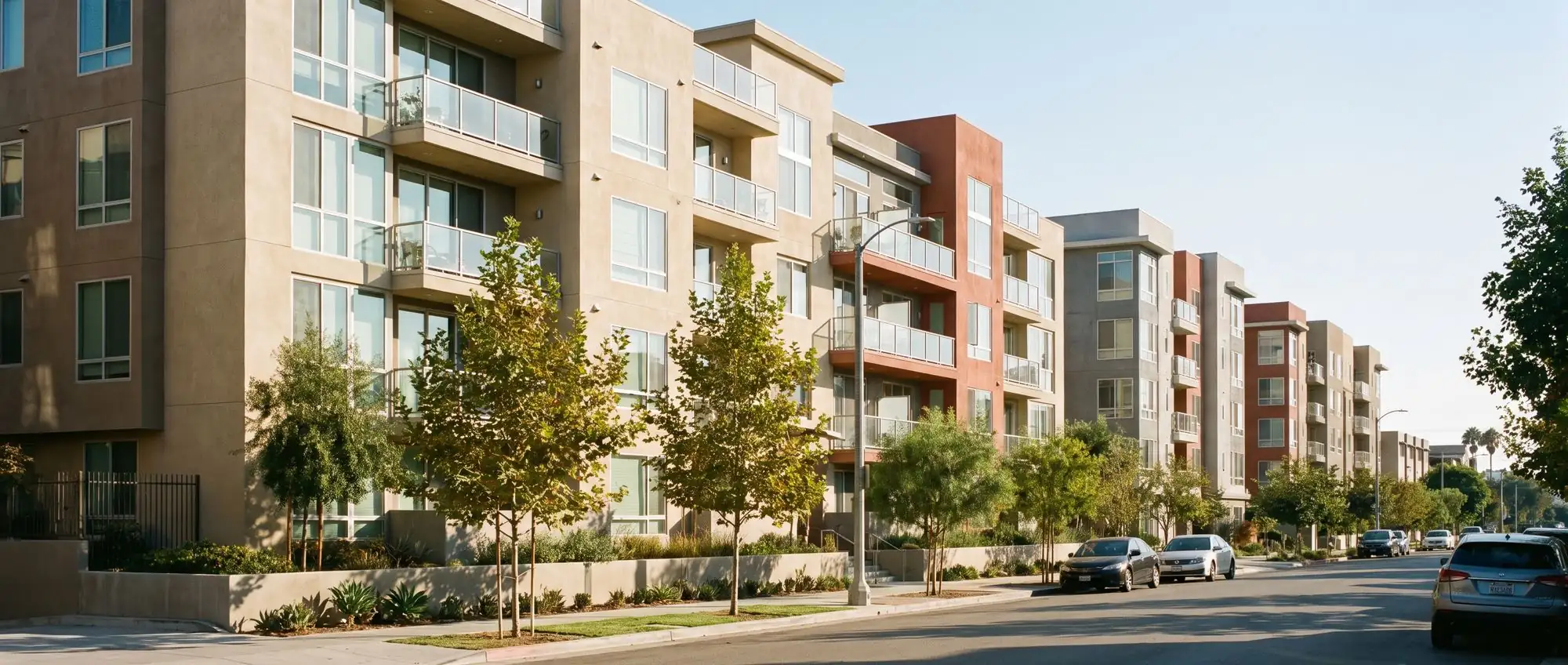
Westwood is roughly 64 percent renter-occupied, and that number hides how lopsided it is. North Westwood Village sits west of Gayley, north of Weyburn and east of Veteran, and it is one of the densest concentrations of apartments in the county, occupied almost entirely by UCLA students. South of the Village, the Wilshire Corridor towers are largely owned. North and west of campus, Little Holmby and Westwood Hills are houses from the 1920s and 30s. Three kinds of building in one small neighborhood, and three different walls. But the calendar is what sets Westwood apart from anywhere else we cover.

The detail below is here if you want it. You do not need any of it to send us a job.
Almost the whole neighborhood moves in the same two weeks
In most of Los Angeles, leases turn over on a rolling basis. Work bunches up a little at the end of the month, and that’s about the extent of the pattern. North Village doesn’t work like that. It runs on UCLA’s academic calendar. Fall quarter starts in the second half of September, so the great majority of leases in those blocks begin and end inside the same two or three weeks, with a smaller wave in June when the school year finishes. Thousands of units, inside about half a square mile, all changing hands at once.
Every job on our menu that comes with moving lands in those same two weeks. The TV that needs mounting. The curtain rails. The mirror in the hallway. The flat-pack bed that arrived in three boxes. The closet door that jumped its track when a suitcase went through it. And at the other end of the lease, a wall of anchor holes that has to be filled, spot-primed and touched up before a walkthrough.
So the most useful thing on this page is a piece of timing advice. Send the job in during August, not the week you move. Two weeks of notice in early September means we come out with time to spare and the right kit for your building, instead of squeezing the job into a gap on Thursday. Same in reverse for a June move-out. If the deposit inspection is on the 20th, send us the list in late May, not on the 18th. Hardly anyone books a handyman six weeks ahead of a lease start, so the people who do get the pick of the week.
Three parts of Westwood, three different walls
North Westwood Village: the easy walls, the hard parking
Most of the apartment stock in the North Village went up in the 1960s and 70s, after the area was rezoned for it. That’s good news for anyone drilling. Drywall over wood studs, standard spacings, brackets that go where a stud finder says they’ll go. A TV mount in a building like this is the straightforward version of the job, and a batch of anchor holes patches and paints without drama.
The wall is the easy part here. Getting to it is the problem. The Village runs on preferential permit parking and meters, and midday street parking near campus is near enough impossible, which is real overhead on a two-hour visit. If your building has a guest space, a visitor permit or a loading zone usable for half an hour, say so. Some of the newer buildings are tall enough to have an elevator with a booking window and a front desk that wants notice. Sort that out before the day, not on the morning.
The Wilshire Corridor: concrete, steel studs and a rulebook
The towers along Wilshire south of the Village started going up at the end of the 1950s and have not stopped since. These are concrete buildings with metal-stud partitions inside, and a partition looks like ordinary drywall until somebody drills into it. A wood screw into a thin steel stud feels tight on the day and works loose six months later. The wrong anchor in a steel stud is the single most common reason a mount comes off a wall. What it wants is the right toggle, rated for the load.
The newer towers may sit on post-tension slabs, with steel cable running through the concrete under load. Drilling a slab ceiling on spec is not a risk a two-hour job should take. We ask first and find another way to do it.
The Corridor also has some of the strictest building rules in the county: freight elevator reservations, a certificate of insurance naming the building, work-hour windows set by the HOA. None of that is a problem. It just means the booking is a different shape, and the front desk won’t let anybody up without that paperwork in hand. Mention the HOA when you get in touch.
Little Holmby and Westwood Hills: plaster over lath
North and west of campus the housing changes completely: 1920s and 30s Spanish and Colonial houses, most of it built between the twenties and the fifties. Behind the paint is plaster over wood lath, not drywall. It is harder and deeper than drywall, and brittle with it. Rush a mount and it blows out in a cone. The lath on its own holds nothing. Studs sit at irregular spacings, and old full-dimension lumber reads badly on a cheap stud finder. In these houses we go looking for real framing instead of trusting a beep, and will often span two studs with a longer plate.
Those frames have had a hundred years to settle. That is why doors here stick at the top of the latch side, or need a shove to catch. Openings are frequently non-standard too, so a door “replacement” is rarely a slab off a shelf. The door repair page covers what to look at before anyone reaches for a plane. Plaster also patches differently. A hole filled with drywall compound alone tends to crack again inside a year, because the plaster around it keeps moving. If your house is one of the old ones, say so. It changes what the job needs and how we go about it. More on the drywall and plaster repair page.
This is also the only part of Westwood where gutter clearing, fences and gates make sense as jobs at all. Rain season runs roughly October through March, so gutters get booked in September, not the first wet week of November. Three floors up in the Village, gutters are the building’s problem, not yours.
Renting in Westwood is its own thing
Student tenancies bring wrinkles that don’t come up much elsewhere. Units get sublet over summer. A lot of them come furnished, so what’s in the apartment isn’t yours, and damage gets shared four ways across roommates who won’t all be there in June. So “make it look like nothing happened” patch work is the bread and butter here: anchor holes in a batch, a doorknob-sized hole textured and painted, scuffs touched up before an inspection.
Two things to do before anything goes into a wall:
- Get the landlord’s or manager’s written yes. Not a verbal one from whoever answered the phone. A mount, a curtain rail and a heavy mirror are all holes in somebody else’s wall.
- Ask where the bracket lands and what the patch costs at move-out. We’ll tell you both before the drill comes out. Sometimes the answer changes where the TV goes.
If you own or manage the unit instead of renting it, say so up front. That changes the work, not just the timing. One careful install in an occupied apartment and a fast run through a whole-unit punch list are different days of work, and we plan them differently. And under the City of LA’s rent stabilization ordinance, any building of two or more units with a certificate of occupancy on or before October 1, 1978 is covered, which takes in a lot of the North Village stock.
Batching matters more here than almost anywhere. Between the parking, the permit blocks and the elevator bookings, a single nail hole is a hard thing to book. A whole apartment’s list isn’t. Walk the place and write down all of it. The TV, the two curtain rails, the mirror, the bathroom door that won’t latch, the bifold off its track, the anchor holes from last year’s tenants. Send the lot in as one job. One visit, one price, and it stops being an awkward ask.
The jobs that come up most here
- TV mounting and wall shelving. The most common apartment job there is, and the one most affected by whether it’s drywall, plaster or steel stud behind you.
- Picture, mirror and curtain hanging. September work, over and over. Heavy mirrors in plaster are their own small problem.
- Drywall and plaster repair. Anchor holes in a batch, doorknob holes, hairline cracking in the older houses. Texture matching is the hard half, not the filling.
- Furniture and flat-pack assembly. Beds, desks, shelving units. Bring the boxes, skip the weekend.
- Interior door repair and adjustment. Bifolds off their track in the Village apartments, settled frames and odd openings in the older houses.
- Faucet, toilet and disposal replacement. Like-for-like swaps only. In an older building, expect the angle stop behind the fixture to be seized. It is the single most common surprise on older LA plumbing.
- Ceiling fans and light fixtures. Swaps where a box and wiring already exist. A fan needs a fan-rated box fixed to framing, so in a tower, find out what the ceiling is before you buy anything.
- Weatherstripping, caulking and draft-proofing, and small painting. Touch-ups between tenants, one room, a ceiling.
- Floor and stair repair. Oak strip over joists in the Little Holmby and Westwood Hills houses, a century dry, so boards work against their nails and stair treads separate from the risers. In the Village apartments it is click-lock plank lifting at the seams after a rushed turnover install, plus thresholds and transition strips worn down by blocks that change hands every September. If there is 9x9 tile and black mastic under that plank in a sixties or seventies building, it is an asbestos suspect and not a handyman job.
- Grab bars and home safety. The Wilshire towers are largely owned, and a lot of those owners have been in the same unit for decades, so grab bars come up there more than the rest of Westwood’s rental stock would suggest. Behind a tower bathroom wall is usually concrete or a steel-stud partition with no blocking, and often mud-set tile on top, which runs $325 to $650 against $225 to $450 for a first bar on a straightforward wall. In the older houses it is more often a handrail on a stairway that never had one, and a water heater that California requires to be strapped at the upper and lower third of the tank.
Lead paint, and the pre-1978 question
Homes built before 1978 may have lead-based paint, and the federal RRP rule requires a certified renovator using contained work practices once the job disturbs more than six square feet of painted surface in a room, or twenty outside for work that disturbs painted surfaces. Sanding a door and jamb in a Little Holmby house will do it. So will cutting into painted plaster for a patch. Tell us roughly when the building went up. Pre-1978 changes who is legally allowed to sand or cut into the paint, and that is better settled before the visit than on the morning of it.
Licensing, and why it decides who you should hire
In California, a small job can be done without a CSLB contractor license, but the exemption is narrower than a price tag makes it sound. Business and Professions Code section 7048 covers work that’s casual, minor or inconsequential, where the total for labor, materials and everything else comes to less than $1,000, where no building permit is required, and where the job isn’t part of a larger project or split into smaller contracts to get under the number. The exemption is also lost by anyone who employs another person to perform or assist in the work, or who advertises in a way that might indicate to the public that they’re a contractor. So there’s no single price line to check. Under $1,000 is one condition out of several.
Nearly everything on the list above is small work in the few-hundred-dollar range. Price alone doesn’t settle what a job needs, though, so ask how the work is licensed before it starts. A TV mount on drywall studs runs roughly $150 to $300; the same mount into plaster and lath, concrete or a steel stud runs roughly $250 to $450, because it’s slower and takes different tools. A batch of nail and anchor holes is roughly $150 to $300 for the visit. Those are estimates. We confirm a firm price first, and there’s a fuller breakdown on what things cost.
In a neighborhood full of move-in shopping, fixtures are where the total climbs by accident. The price of the faucet, the toilet or the fan counts toward that $1,000 as well as the labor, so buying the fixture yourself is often what keeps a job small enough to stay under it.
A whole apartment repainted instead of touched up. Several doors replaced at once. When a job clearly runs past $1,000, or needs a permit, it needs a licensed contractor, not the same visit with a bigger invoice. If the work grows once we have seen it, we stop and tell you before it goes any further.
What we won’t take on in Westwood
It is more use to you if we say what we don’t do.
- Electrical beyond a fixture swap. New circuits, a new outlet behind the TV, panel work. Licensed electrician.
- Plumbing beyond a like-for-like swap. In a stacked apartment building, opening a wall or touching a shared line isn’t a handyman job, and usually isn’t yours to authorize either.
- Roofing, structural work, permits, HVAC, tree work, whole-house repaints and remodels. Real trades, none of them a two-hour visit.
- Sanding or disturbing paint in a pre-1978 home without a certified renovator. Covered above, and it applies to a lot of Westwood.
- Building-wide maintenance contracts. One homeowner or one manager, one job at a time. No standing maintenance across a portfolio of student buildings.
If your job is on that list, send it anyway and say so. We’ll point you at the right trade instead of taking on something that needs one. If it isn’t work that can be done well in your part of Westwood, you’ll hear that within about a day, and hear why. That is how the rest of the county works too.
What to tell us when you get in touch
- Your cross streets. Landfair and Strathmore is a different building from Wilshire and Comstock, a different wall, and a different parking problem. Westwood is not one neighborhood.
- Roughly when the building went up, or just what it looks like: sixties apartment block, Wilshire tower, or pre-war house.
- What the wall is, if you know. Drywall, plaster, concrete, steel stud. Not sure is a fine answer.
- Whether you rent, own or manage the unit, and whether a landlord, a manager or an HOA needs to approve the work first.
- Parking and access: guest space, permit block, front desk, elevator booking, which floor and whether there’s a lift to it.
- Your date, especially if it’s tied to a lease start or a move-out inspection.
- A photo. It saves more back-and-forth than anything you can type.
That’s enough to price the job properly. Send us the list. Everything on it, in one message. You’ll have a clear price before any work is scheduled. It costs nothing to ask, and if what you’ve described needs a licensed trade instead, you’ll hear that first. There’s more on the how it works page.
Where we work
The rest of Los Angeles County
What the walls are made of changes street by street in this city, and it changes the job.

Send us the list
However long it is. You get a price for the visit before anything is booked.