Los Angeles County, California
Faucet, toilet and garbage disposal replacement in Los Angeles
A faucet that drips no matter how hard you crank it. A toilet that runs half the night. A disposal that hums and does nothing. These are like-for-like swaps: the fixture is already there, and a new one goes in the same spot.
The price in writingAgreed before anything is scheduled
One visit, several jobsThe drive costs the same either way
No surprise when we arriveThe number holds unless the wall says otherwise
Across Los Angeles CountyFrom the Valley to the South Bay
What the job looks like
Faucet, toilet and garbage disposal replacement, close up
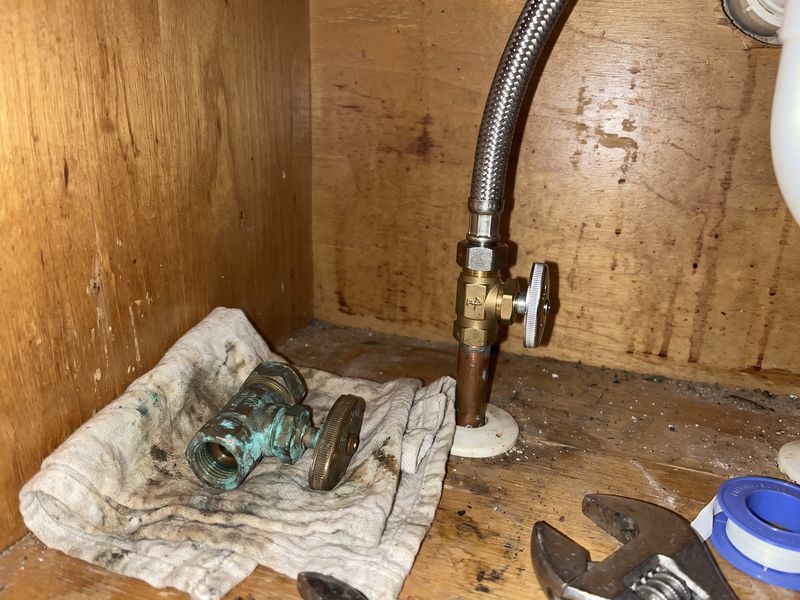
The angle stop behind the fixture decides this job. On older LA plumbing it is often seized. 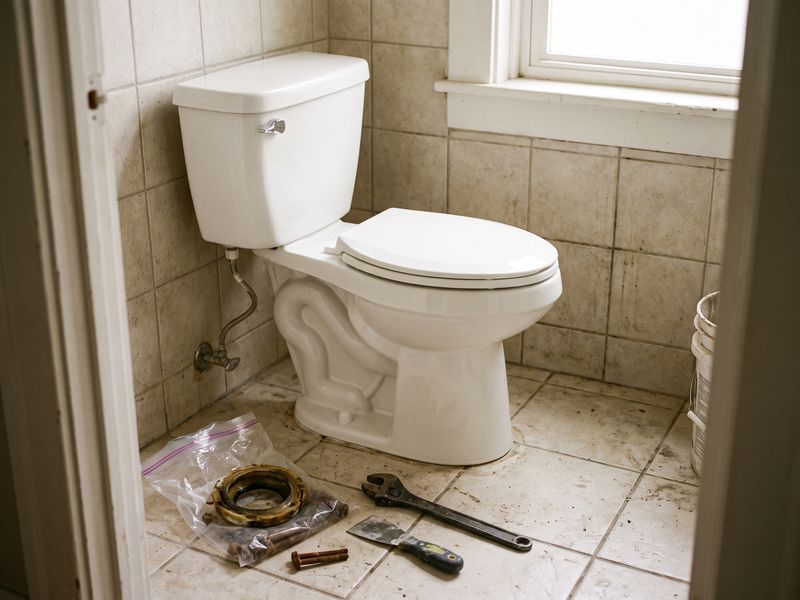
Like-for-like swaps only. If anything behind the wall needs opening up, that is a plumber. 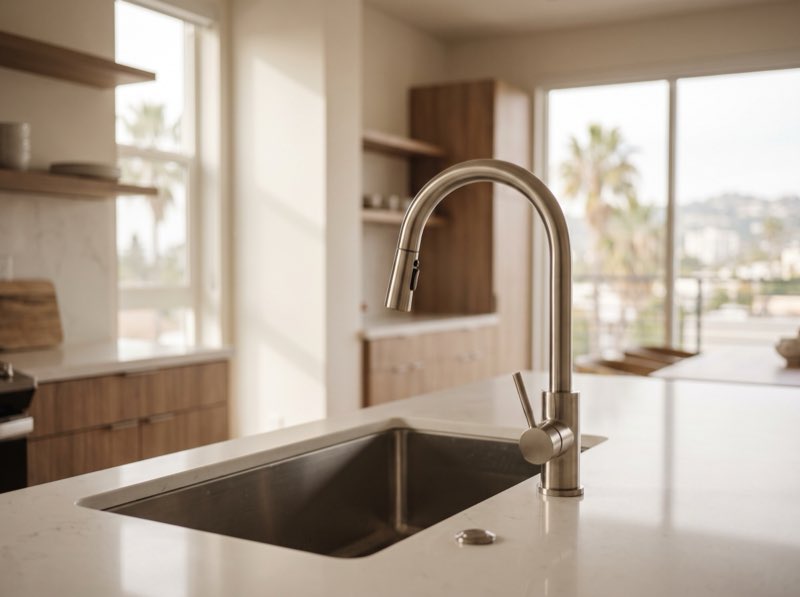
The old unit comes off and the new one goes in with new supply lines.


On paper these three swaps look like the same job. In an old Los Angeles house they behave nothing alike. The fixture is the easy part. Behind it sits an angle stop nobody has turned since the Eisenhower administration, or a cabinet you have to work in blind, or a flange under the toilet that no one has laid eyes on in forty years. That is what decides how long the visit runs. Tell us which fixture it is and roughly how old the house is, and we can put that in the estimate up front instead of halfway through.

What each job involves
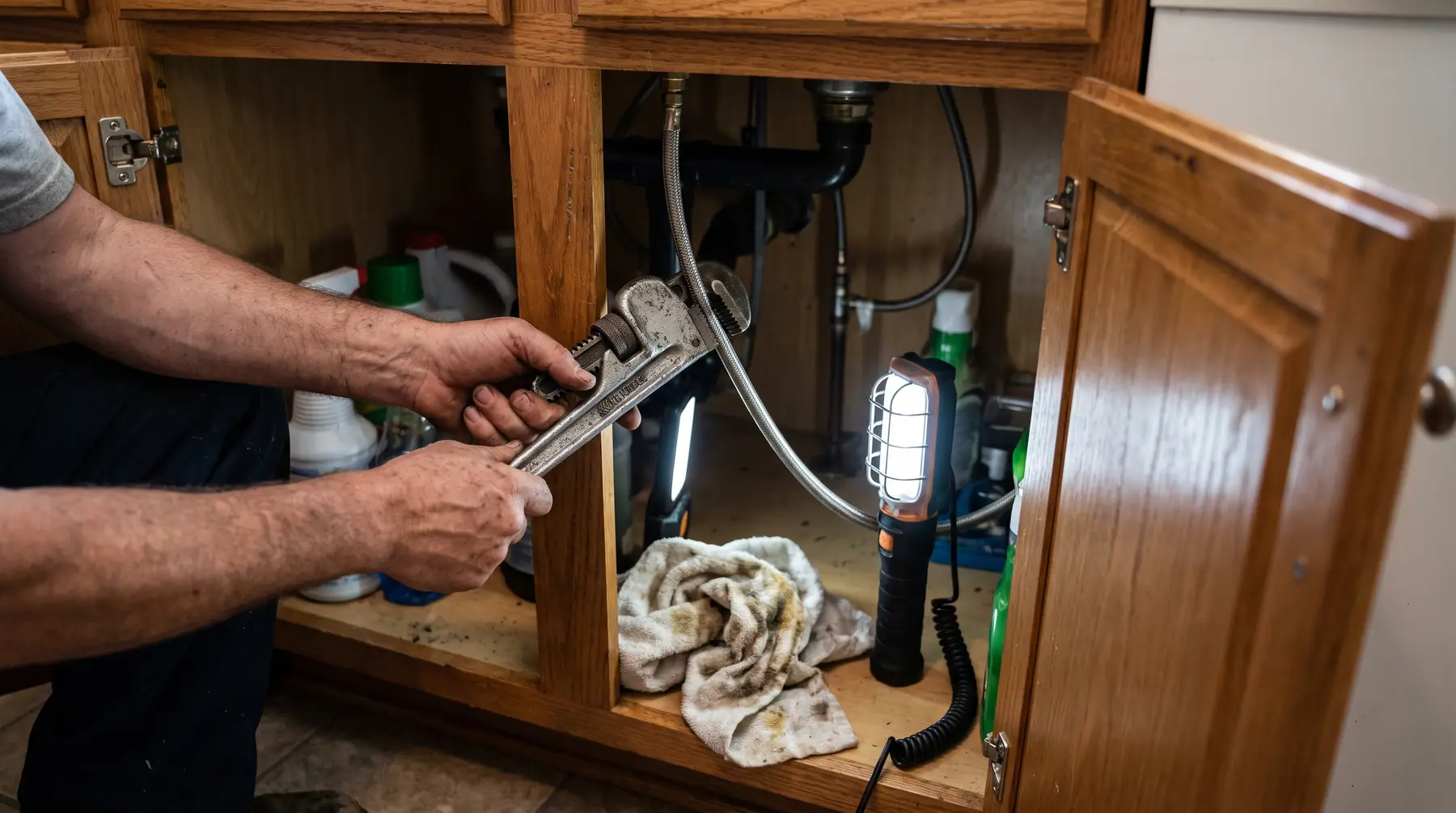
Faucet replacement. Kitchen or bath. The old unit comes off and the new one goes in with new supply lines. Most of the time goes on lying under the sink, working blind in a cabinet. It sounds like a twenty-minute job. It rarely is.
Toilet replacement. Water off, tank drained, old unit lifted out. New wax ring or seal, then the new bowl set and leveled. It gets watched for a while afterward to be sure the seal is dry. And the old toilet has to be hauled away.
Garbage disposal replacement. Usually the simplest of the three, as long as the new unit matches the old one and there is already a plug or a hardwired connection under the sink. If there isn’t, or the switch needs moving, that part is electrical work for a licensed electrician.
The shut-off valve nobody plans for
This is the surprise that comes up most often on older LA plumbing.
Every sink and toilet should have a small shut-off valve on the wall behind it, called an angle stop. In a house that is decades old and has never had one touched, that valve often won’t turn. Sometimes it turns and then weeps steadily from the stem. Sometimes it closes and still doesn’t seal. It is a $15 part that turns a one-hour job into a two-hour job, because the water then has to be shut off at the main and the valve replaced before the fixture can go in at all.
None of that is a disaster. We carry the parts for older houses. But it is why the estimate covers the fixture swap and names the valve as a possible add-on instead of pretending it can’t happen. If your house is pre-war and the valves have never been replaced, budget for it.
When these jobs need a licensed contractor
This matters more here than on most jobs, because fixtures cost real money and the fixture counts toward the total. Labor alone for a faucet or toilet swap sits well under $1,000. Add a $400 toilet, or a high-end kitchen faucet, and the combined job gets closer to it. Price is only one of the conditions though, so you can’t run it as a test on its own.
Buying the fixture yourself
Supplying your own is usually cheaper. The trade-off: if it arrives damaged or doesn’t fit the existing holes, that is on you, and any claim with the maker is yours to chase. If we supply it, we handle the fit and the return. Either way is fine. Decide before the visit is booked, though, because it changes the price.
When to call a plumber instead
- Water pressure is poor throughout the house, not just at one fixture.
- Several drains are slow at once, or the toilet backs up over and over. LA’s older sewer laterals and tree roots are a common cause.
- Water seeps around the base of the toilet, or the floor feels soft. That can mean a failed flange or a rotted subfloor.
- The supply pipes are galvanized steel and visibly corroded.
- Anything involves moving a pipe, a drain line, or the water heater.
Tell us if any of these are true before a visit gets booked. All of them are work for a licensed plumber, and sending a handyman to a sewer problem helps nobody.
What it tends to cost
Labor only, and these are estimates. The fixture is extra, and we confirm a firm price before starting.
- Faucet swap$150–$300
- Toilet swap, including hauling the old one$200–$400
- Disposal swap, like for like$150–$300
- Replacing a seized shut-off valveadd $75–$150per valve
Send us the fixture, the age of the house, and whether you are supplying the unit yourself. You’ll get a price for the visit before anything is scheduled. And if the shut-off valve turns out to be seized, you’ll hear the number for that before it gets replaced.
Where we work
Across Los Angeles County
What the walls are made of changes street by street in this city, and it changes the job.

Send us the list
However long it is. You get a price for the visit before anything is booked.