Los Angeles County, California
Furniture assembly and anti-tip anchoring in Los Angeles
Furniture assembly service across Los Angeles, from flat-pack and IKEA to wardrobes, beds, grills and playsets, plus anti-tip anchoring that holds in plaster. Send the model numbers and the age of the house, and you get a price for the visit before anything is scheduled.
The price in writingAgreed before anything is scheduled
One visit, several jobsThe drive costs the same either way
No surprise when we arriveThe number holds unless the wall says otherwise
Across Los Angeles CountyFrom the Valley to the South Bay
What the job looks like
Furniture assembly and anti-tip anchoring, close up
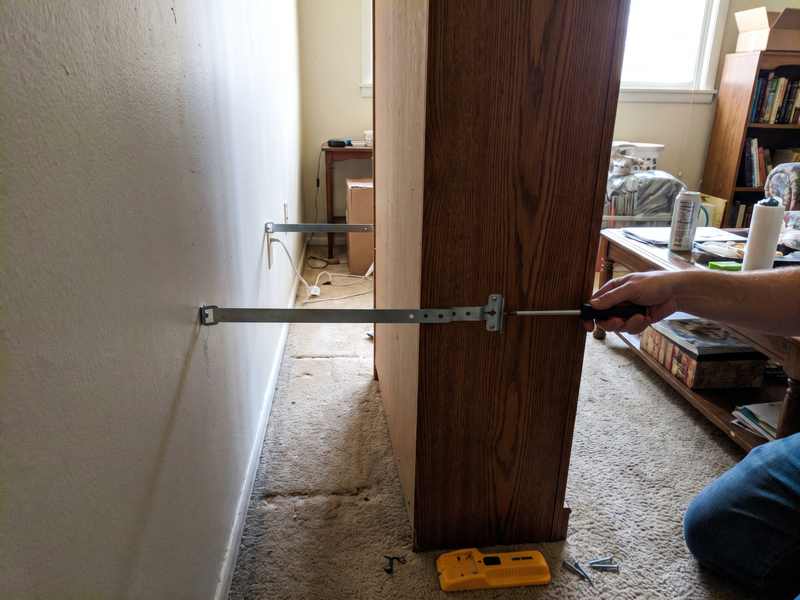
Tall furniture gets anchored back to the wall. In earthquake country that is not an optional step. 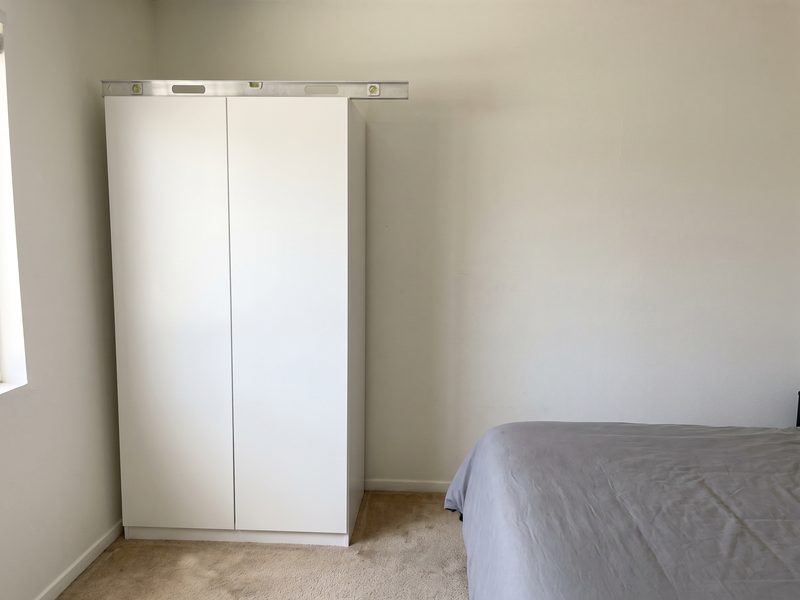
Doors that line up all the way down mean the carcass went together square. 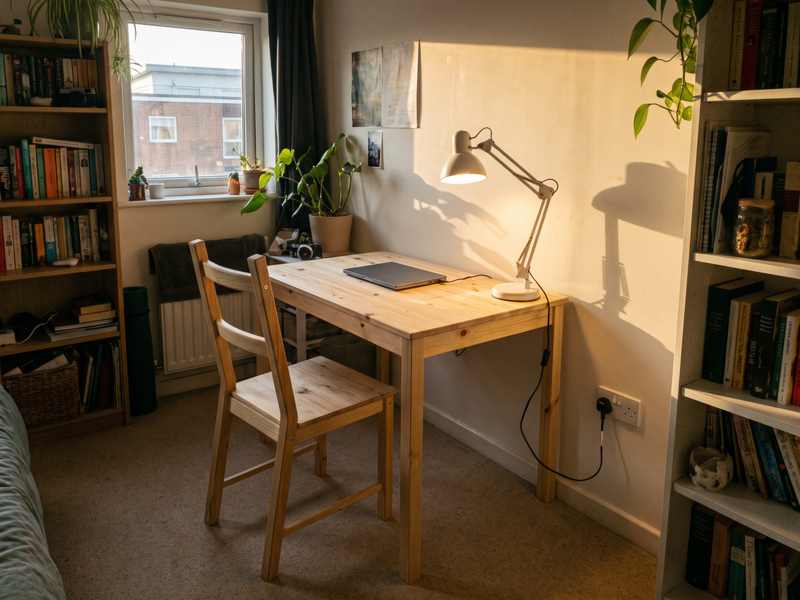
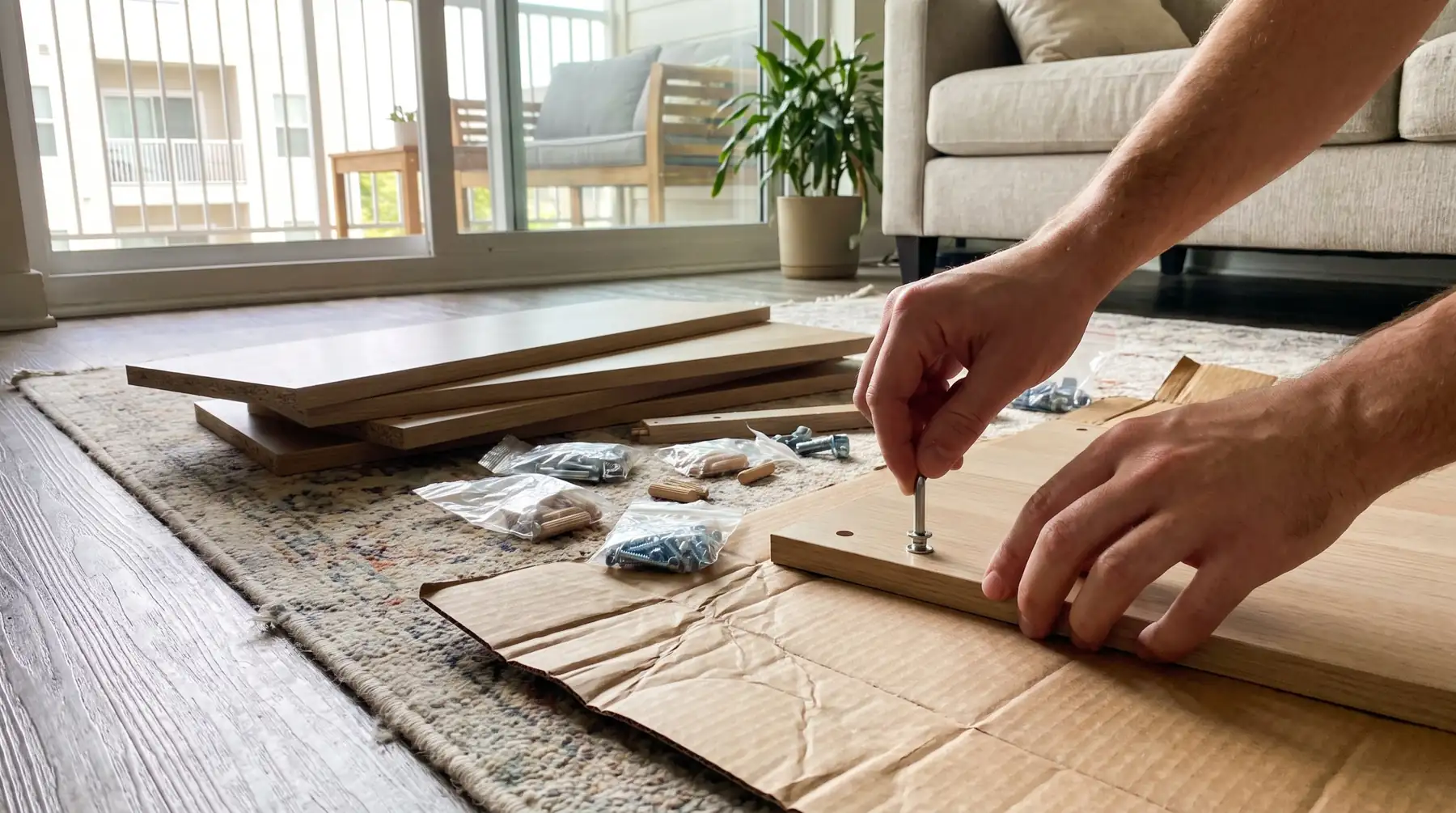
Built, leveled, moved where you want it, and the packaging taken away.


The boxes have been in the hallway for three weeks and the instructions have no words in them. Or it’s built and standing, and it rocks when your kid pulls a drawer out. Flat-pack furniture is built as a perfect rectangle, and very few Los Angeles floors are flat enough to receive one, which is why a wardrobe run put up by a careful amateur ends with doors that won’t line up. The rest of this trade is the wall, because what’s behind the plaster decides whether an anchor holds a loaded dresser or pulls out under a child.

What decides the price before anyone opens a box
A description doesn’t price a job. “IKEA wardrobe” is a $180 job or a $900 job depending on what’s in the cartons, so the model numbers matter. Ceiling height belongs in the message too. A 236 cm frame diagonals out to just about 96 inches, so under a postwar 8 foot ceiling it won’t tilt up at all and has to be built in place standing up.
Getting the boxes to the room
A three-bay wardrobe run is eight to twelve cartons at 40 to 90 pounds each. On a Mount Washington lot with a long public stair and no truck parking, that’s an hour of carrying before a single cam lock turns. Westside and Downtown buildings want a freight elevator booking and their own sign-off, which adds a few days before anyone can start.
What the wall is made of decides the anchor
Three-coat plaster over wood lath runs up to about 1935, and it’s still what’s behind the paint in most of the bungalow neighborhoods. The bit goes through about 7/8 of an inch of plaster before it finds the lath, and 1-1/8 to 1-1/4 inches of wall before it reaches the face of a stud. The screw in the box is usually 1-1/4 inches long with a plastic expansion anchor, so its whole length ends up buried in plaster, gripping nothing. The dresser feels solid. Then a kid pulls the top drawer open and hangs on it, and the anchor comes through the plaster.
The drilling matters too. Hit the plaster keys behind the lath with the hammer function on and a two-foot section lets go a year later, so it is a sharp bit at low speed. A stud finder reads the continuous lath as solid everywhere, so a magnet finds the rows of lath nails instead, and those line up on the studs.
Post-war stucco and the 1970s apartment stock
Late forties interiors are often rock lath under a plaster veneer, which gives hollow anchors poor bearing. A seventies apartment is the friendliest wall here, until the party wall turns out to be a double layer of board and the lag has to be longer to reach the stud. In the concrete high-rises Downtown and along the Wilshire corridor the partitions are thin steel, which takes a self-drilling screw into the flange backed up by a heavy toggle.
Renting, and older houses
Plenty of LA leases forbid wall penetrations, and tenants take that as a reason to skip anchoring a dresser in a kid’s room. Four quarter-inch holes patch in ten minutes at move-out, and every tension-mount alternative performs worse than a screw in a stud. In anything pre-1978 assume lead paint, so a vacuum at the bit and a damp wipe after.
Anti-tip anchoring that holds
New dressers and chests ship with an anti-tip kit in the box. The one that tips over in an LA house is usually older than that, or its kit went out with the cardboard, and the screw in any of those kits was never meant for plaster.
A loaded six-drawer dresser with the drawers pulled out is a lever, and those open drawers push the center of gravity past the front feet. A thirty-pound three-year-old standing on an open top drawer is enough, and ground shaking makes the math worse.
Almost everybody gets the strap wrong at both ends. The furniture end has to land on the frame of the carcass, not the thin hardboard back, which lets go at almost no load. The wall end goes into framing, which through lath and plaster means a lag of two and a half to three inches, not the short screw in the box. Where there’s no wood to reach, a heavy toggle is the fallback, and two of them still don’t equal one lag in a stud.
Floors that moved and walls that lean
Older houses here have been through 1971, 1987 and 1994, and in hillside rooms over cripple walls half an inch of fall across eight feet is ordinary. Set a square carcass on that floor and the doors hang crooked, drawers rub, and sliding doors roll open on their own. Level and shim the base first, get the top track flat, plumb the frames, hang the doors last, then scribe a filler to the wall. Cam-and-dowel joints have almost no resistance to racking, so a wardrobe forced into an out-of-square opening carries that twist permanently and feels loose within a year.
Grills, playsets and everything outdoors
Santa Ana gusts come hardest down the passes and canyons, and Sylmar, Santa Clarita and the Glendale foothills take the worst of it. Patio umbrellas, light kettle grills and half-built playsets are the casualties, so nothing partly assembled gets left standing overnight.
Playsets need real ground anchoring, because the stake kits in the box don’t hold in either soil this city gives you. Basin and Valley clay bakes too hard to drive a stake straight, and the decomposed granite in the foothill yards above Glendale, Altadena and Pasadena lets one pull straight back out. What lasts is concrete footings poured below grade and buried, or proper screw-in ground anchors on the legs. Leave clear ground around it, more in front of and behind the swings, and put a deep layer of wood fiber, sand or rated rubber matting underneath. Concrete, asphalt and packed bare dirt are the wrong surface under a playset.
Particleboard swells once it gets damp, so get the cartons off a garage slab the day they arrive. Two outdoor jobs sit past handyman scope whatever they cost: a gas drop for a built-in BBQ, and grading a yard to give a playset twelve to fifteen feet of level ground.
What it costs
These are estimates, and they assume you’re supplying the furniture and hardware. Stairs, hillside carry, elevator buildings and cardboard haul-off all move the number. You get a firm price before any work is scheduled.
- Single flat-pack item, dresser through TV console$120–$280per item
- Bunk or loft bed, built and anchored to the wall$220–$500
- Wardrobe run of two or three bays with doors and interior organizers$450–$1,100and at $1,000 or more it is licensed contractor work
- Anti-tip anchoring of furniture you already own$45–$120per piece, subject to the visit minimum
- Gas or charcoal grill assembly$130–$300
- Wooden playset on ground that is already level$600–$1,600and at $1,000 or more it is licensed contractor work
When a license is required
Single-item assembly, a bed, a grill and anchoring a few pieces sit well under $1,000. A multi-bay wardrobe run, a full playset install and a multi-machine home gym routinely land above $1,000. An outlet behind a TV is licensed electrician work and it needs a permit, so the exemption is gone before price comes into it. Work like that needs a licensed contractor, and we’ll tell you before anything is booked.
What to tell us
Send the order confirmation or the model numbers for every piece, how many boxes there are, and where they’re sitting right now. Add the year the house was built and the ceiling height in the room. Say whether the floor slopes. For anchoring, we need the number of pieces and whether there are young children in the house, because that changes the hardware.
Parking matters more than people expect, so mention a driveway, or where a van can stop. Say who’s taking the cardboard too, because a wardrobe run makes more of it than a blue bin holds in a week. Send that list and you’ll get a firm price before the visit is scheduled.
Where we work
Across Los Angeles County
What the walls are made of changes street by street in this city, and it changes the job.

Send us the list
However long it is. You get a price for the visit before anything is booked.