Los Angeles County, California
Interior painting, patching and touch-ups in Los Angeles
Interior painting and touch-ups across Los Angeles, from the patch after a repair to a whole room, a ceiling or a set of doors. Tell us the year the house was built and what you want painted, and you get a price before anything is scheduled.
The price in writingAgreed before anything is scheduled
One visit, several jobsThe drive costs the same either way
No surprise when we arriveThe number holds unless the wall says otherwise
Across Los Angeles CountyFrom the Valley to the South Bay
What the job looks like
Interior painting, patching and touch-ups, close up
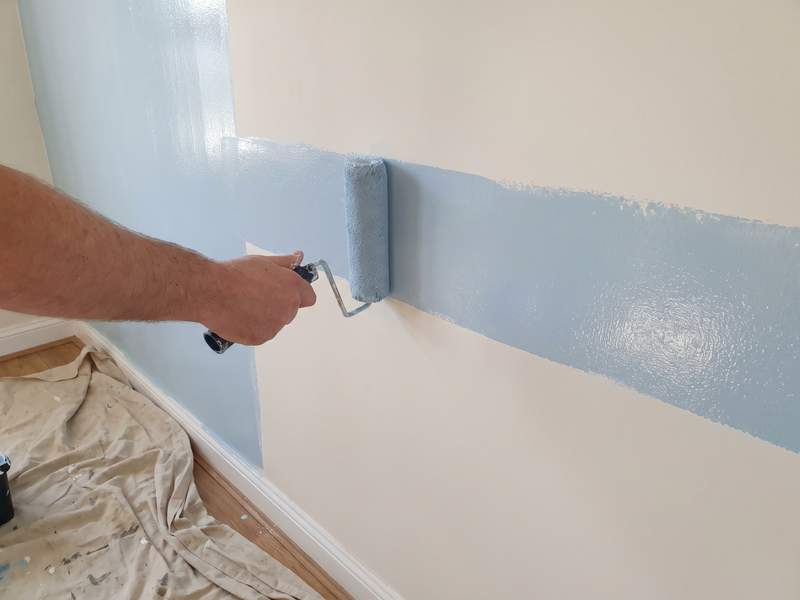
Keeping a wet edge is what stops a wall drying in stripes across the middle. 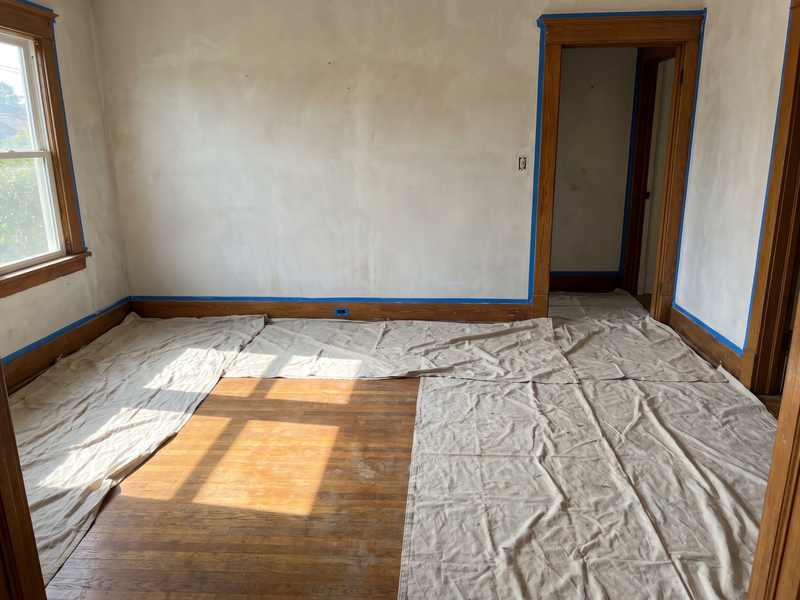
Masking and covering is real hours on a paint job, and it is the part that gets cut. 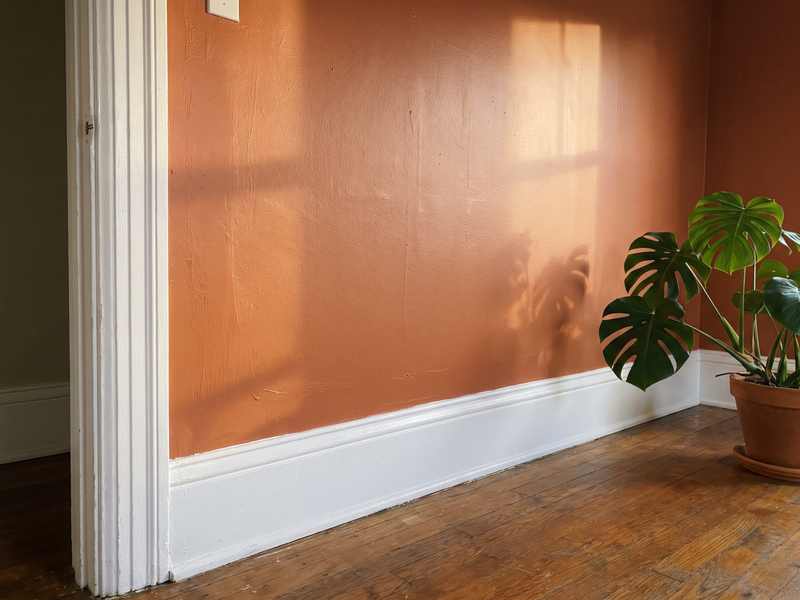
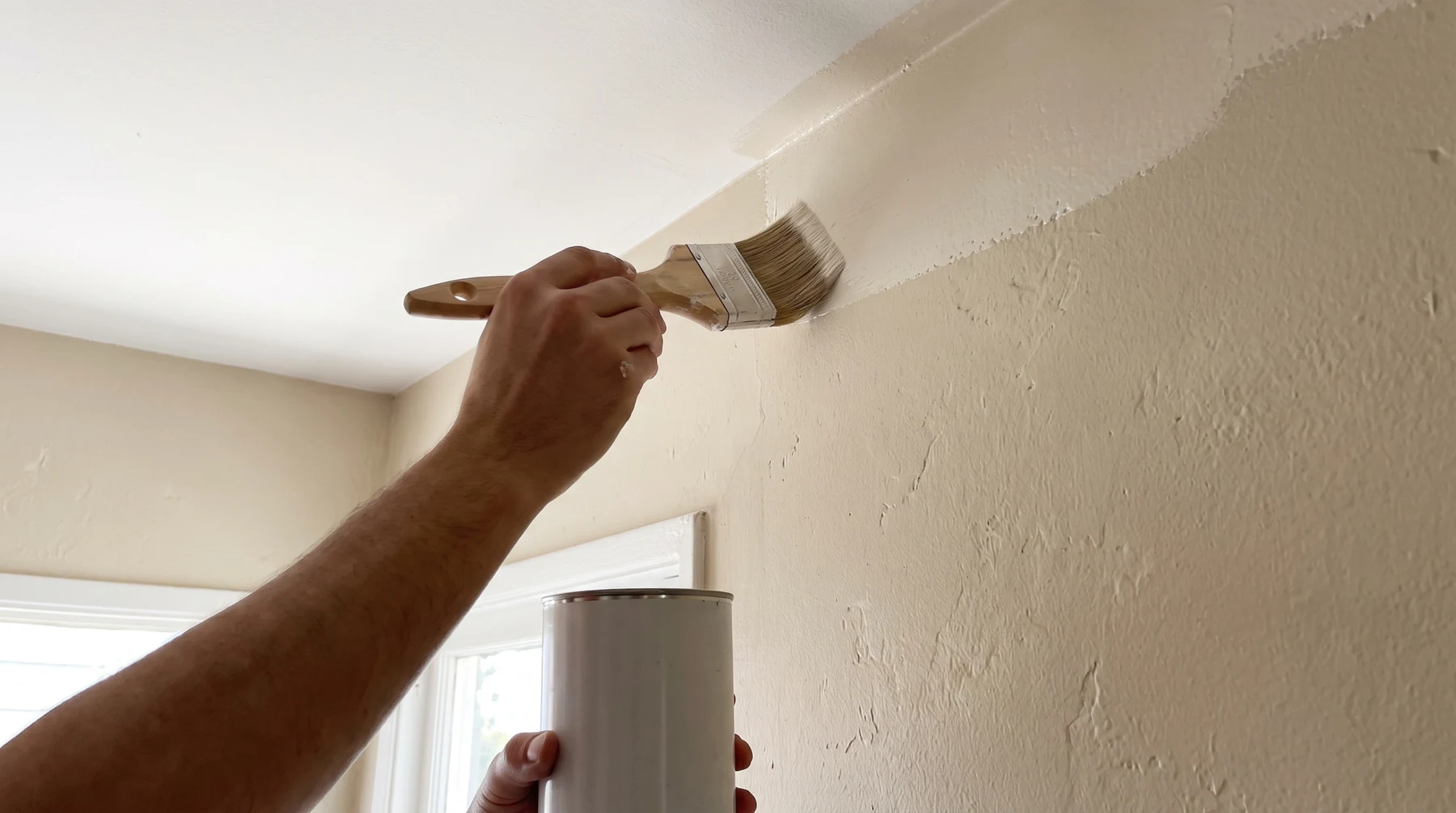
Two coats over a primed patch, and the repair stops being findable.


The plumber’s patch is done, and now there’s a pale rectangle on the wall you can see from the doorway. Paint is the trade where the mistake turns up after everyone has gone home. A patch that looked invisible the day it went on dries a different sheen by Saturday, and a ceiling repaint lets go in sheets three months later because nobody checked what was under it.

Why a touch-up almost never blends
Fresh joint compound is far more porous than a wall painted five years ago. Roll straight over an unprimed patch and it dries to a different sheen, a shade deeper than the wall around it. Painters call that flashing. Spot-prime the patch and it doesn’t happen.
Color is the other half. A formula off the old can in the garage matches a color that hasn’t existed on that wall in years, because sun and cleaning have faded what’s up there, and a store scan of the wall still misses the sheen. Coating the whole wall and breaking at the inside corners is what makes a patch disappear.
Ceilings and raking light
Low light travels across a ceiling from every window and shows up every hump, edge and sheen change. A patch that vanishes at 10am announces itself at 4pm. On a ceiling the break is the whole ceiling. Smoke and CO alarms come down, go in a bag and go back up at the end, because paint clogs the sensing chamber, and a ceiling repaint is often when somebody notices the alarm is stamped 2011.
What’s under the paint in an older LA house
Older LA houses have two different kinds of plaster wall: three-coat plaster keyed through wood lath up to about 1935, and two coats over gypsum rock lath from the mid-thirties into the fifties. Pull a switch plate and look at the cut edge. Drywall reads about half an inch, rock lath and plaster about three quarters, and three-coat over wood lath closer to a full inch.
Now press the wall around the damage. If a wood lath wall flexes, the keys behind it have snapped off, and painting over a field that moves puts the crack back within a season, so plaster washers go in before any filler. Rock lath has no keys to lose. When that one moves you’re chasing lath that has pulled away from the studs, and it gets screwed back before a trowel comes out.
Calcimine ceilings
Houses from about 1900 to 1940 often carry a chalk-and-glue distemper coating on the ceiling plaster. Latex grips it a few months, then releases in sheets the size of a dinner plate. Rub a damp white rag across it. If the rag loads up with white chalk, that’s calcimine, and it gets washed off or sealed with a calcimine recoater.
Pre-war trim and whatever is already on it
Interior casing, baseboard and picture rail in a 1910s or 1920s LA bungalow is Douglas fir, and it’s about as likely to be stained and clear-finished in shellac or varnish as it is to be enameled. Painted fir trim in these houses is often a later remodel, not the original. The prep splits on that. Waterborne enamel over aged oil gloss that hasn’t been sanded peels off with painter’s tape or a fingernail, and waterborne over old shellac is no better.
The alcohol test gets misread, because alcohol lifts shellac as well as latex, so clear-finished 1920s casing passes for latex and looks safe to recoat. Skip the guessing on any unknown aged finish: scuff-sand it and put down a shellac-based or bonding primer, which sticks over oil, shellac and old varnish alike. Finish in a waterborne alkyd, which levels close to the old oil paint and cures hard.
Stucco and small exterior work
Post-war tract stucco across the Valley and the South Bay chalks on the south and west walls, where decades of sun break the binder down. Wipe a dark rag down the wall: color on the rag means anything coated over it is sitting on powder, so the wall gets washed and conditioned first. White bloom near the base is salt left by water moving through, and painting over it hides a leak. A band of failed paint at knee height on the irrigated side is the sprinkler, and repainting it without moving the head puts the failure back inside a year.
The weather decides the day. Santa Ana air skins exterior latex over before it levels, a shaded wall has to be dry before the marine layer brings the dew back, and in the rainy months a fresh coat wants a couple of dry days behind it.
Lead paint before 1978, asbestos before 1980
Paid work that disturbs paint in housing built before 1978, which is a large share of what’s standing here, falls under the federal lead-safe rules once it goes past a small repair: about six square feet of painted surface in a room, or twenty outside. Past that line the work needs a lead-safe certified firm, a certified renovator on the job and containment, and on a small job that setup can cost more than the painting. It is the add-on at the bottom of the price list below.
Popcorn ceilings and pre-1980 texture
Ceiling texture, joint compound and 9x9 floor tile from before 1980 can contain asbestos. Coating a popcorn ceiling leaves the material where it is. Scraping, sanding or wire-brushing it is a different job under different rules, and it starts with a test, not a ladder.
How you coat one is a separate question from any of that. A roller on a ceiling that has never been painted grabs the aggregate and pulls it down in clumps, and you finish with a worse ceiling and pre-1980 material on the drop cloths. A virgin acoustic ceiling gets sprayed, a light mist coat first so the texture has something holding it before the wet coat lands. One that has already been painted once will usually take a roller.
What it costs
These are estimates. Sheen and color matching is where painting quotes go wrong, so nobody should price a patch without standing in front of the wall. You get a real price before any work is scheduled.
- Patch and paint after a repair, wall coated corner to corner$250–$650
- One bedroom, walls only, two coats$450–$950
- Ceiling only, one room$275–$650
- Interior door, both faces plus jamb and casing$125–$300per door
- Cabinet touch-up, a few doors and drawer fronts$350–$900
- Lead-safe setup on a small pre-1978 interior jobadd $200–$600
When a license is required
A single room, one ceiling, a few doors and jambs, or a patch after the plumber left will usually sit under $1,000. A whole-house interior, a full exterior, a sprayed kitchen, popcorn removal, or anything staged off scaffolding reaches $1,000 on labor alone, and needs a licensed contractor, usually a C-33. Lead containment pushes small jobs over too. And EPA certification is a separate question from the state license. A firm disturbing paint in a pre-1978 home needs it whether the job is $400 or $40,000.
What to tell us
Start with the year the house was built, since that decides lead, asbestos and how the prep has to be done. Then say what you want painted: walls only, walls and ceiling, trim, closet interiors, and how many doors, counting jambs and casings or not. Give the room dimensions and the ceiling height. If there’s a can of the old paint in the garage, the label on it beats any description of the color.
Photos help more here than on almost any other job. Add the clearest to the form and keep the rest for when we call. One wide shot per wall from the opposite corner, plus a close-up of every damaged spot with a tape measure in frame. If there’s texture or old repair work, take one along the wall with the light raking across it. Tell us whether the leak behind a water stain has been fixed, and whether a young child or a pregnant occupant lives in a pre-1978 house. Tell us that and you get a firm price before the visit is scheduled.
Where we work
Across Los Angeles County
What the walls are made of changes street by street in this city, and it changes the job.

Send us the list
However long it is. You get a price for the visit before anything is booked.