Skip to content
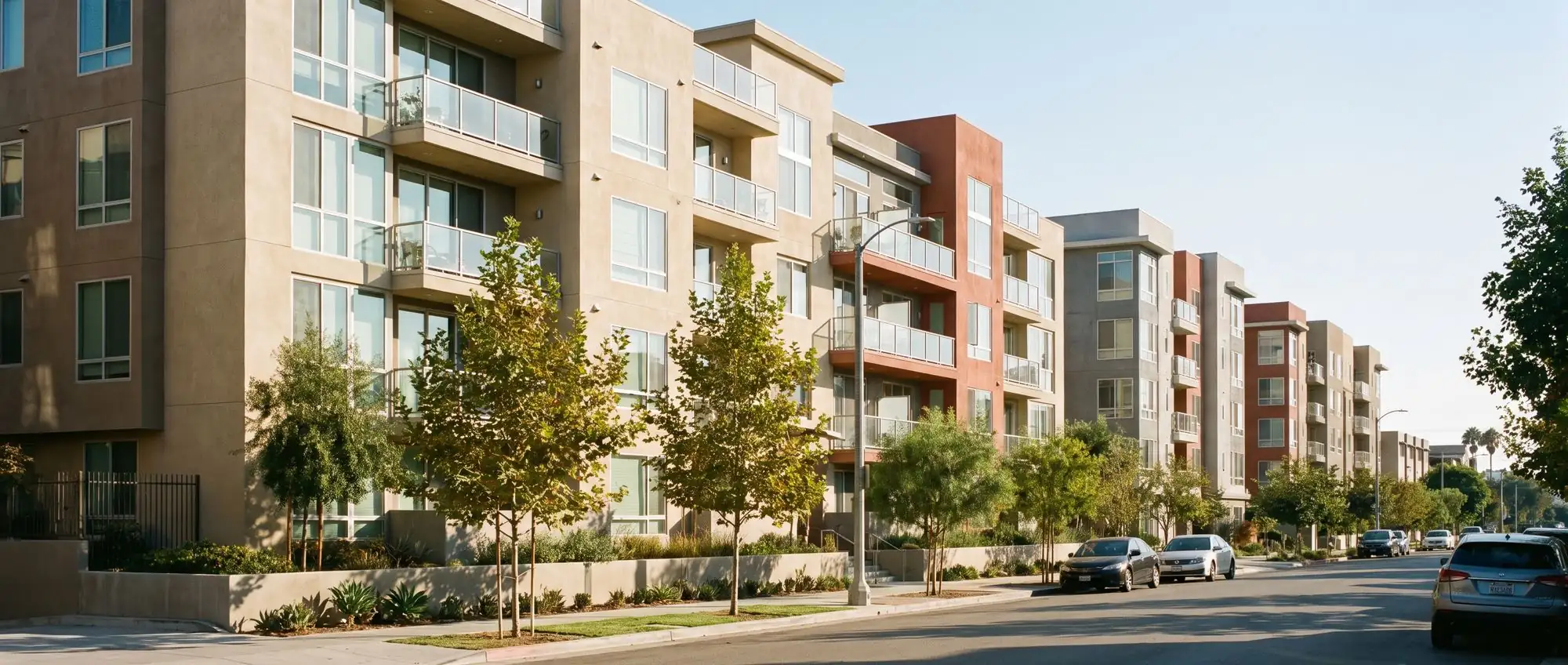
A Los Angeles street of mid-rise apartment and condominium buildings

Los Angeles County, California

Small handyman jobs in Downtown Los Angeles

Downtown is the one part of Los Angeles where the first question isn't what the job is. It's what the wall is made of. Brick, concrete, or metal studs hiding behind ordinary-looking drywall, and the answer changes the anchors, the tools, the time and the price before anyone picks up a drill.

Best priceguaranteed

Fastand reliable

24/7available

10+experienced handymen

Small jobs in Downtown lofts, apartments and condos: a TV on the wall, shelving and curtain rails, a patch before an inspection, the flat-pack that arrived flat. Send us the list and say which building you’re in, and we’ll price the visit before anyone starts drilling. Describe the job properly while you’re at it, because down here what’s behind the drywall is rarely what you’d guess.

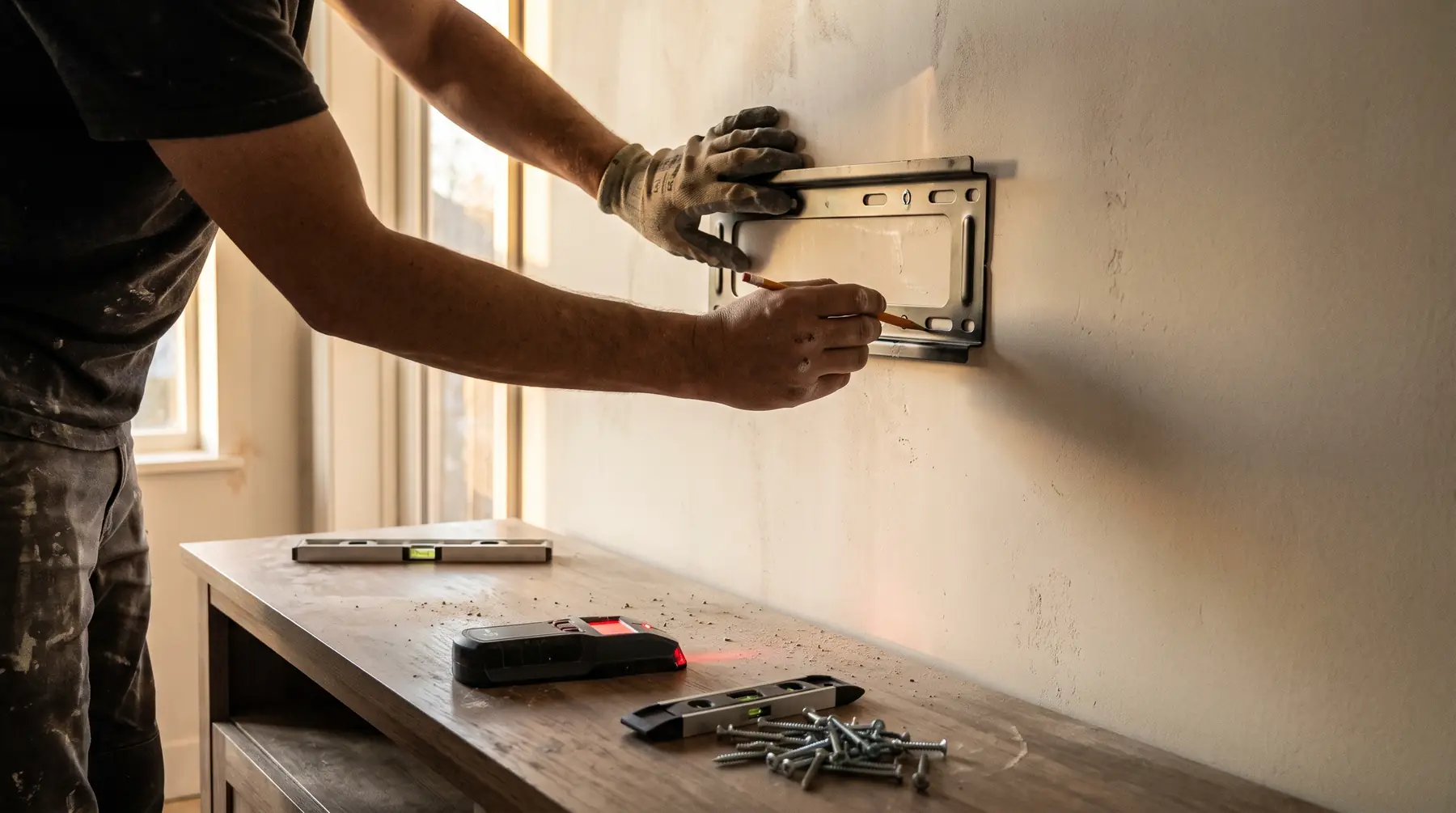
Hands holding a TV bracket flat against a wall and marking the fixing holes
Newer mid-rise framing is concrete and metal stud, not plaster, so the fixing changes and so does what can be cut into. It is worth saying which you have before anybody arrives.

The detail below is here if you want it. You do not need any of it to send us a job.

Downtown walls are the whole job

Most of Los Angeles is wood framing. Lath and plaster in the older neighborhoods, drywall in the postwar tracts. Downtown is neither, and it changes nearly every job on our list.

Brick. The converted buildings in the Historic Core along Spring, Main and Broadway, the Old Bank District, and the warehouses east of Alameda in the Arts District are brick and reinforced concrete. A good number were unreinforced masonry originally and have since been seismically retrofitted. Exposed brick carries weight well, but only with the right sleeve or screw anchor, drilled with a hammer drill and set into the brick itself. The mortar joint is easier to drill and holds far less. It’s slow, dusty work. We come with a hammer drill and the right anchors, not a bag of plastic wall plugs.

Concrete. Ceilings and structural walls in the older conversions are poured concrete, and the newer towers in South Park and the Financial District sit on post-tension slabs. A post-tension slab has steel cable running through it under enormous load, and drilling into one without knowing what’s inside it is not a risk a two-hour job should ever take. We ask first, check what the building will allow, and can usually find another way to get the same result. Nobody should be shrugging and drilling into a slab ceiling.

Metal studs. The apartment and condo towers built from the 2000s onward are concrete structure with metal-stud and drywall partitions inside. From the room side it looks like ordinary drywall. It isn’t. A metal stud is thin steel, and a wood screw driven into it will feel tight on the day and pull loose six months later. The wrong anchor in a steel stud is one of the most common reasons a mount works its way off the wall. It needs the right toggle, rated for the load, and we know the difference by feel.

Two generations of Downtown housing

Almost everything residential here falls into one of two groups, and they hire differently.

The first is the conversions. The 1999 Adaptive Reuse Ordinance let owners turn old office and warehouse buildings into housing, and over its first twenty years it produced more than 12,000 units. That’s the Historic Core, the Old Bank District, Little Tokyo, the upper floors above the Fashion District, and the Arts District warehouses with their brick and heavy timber. Think 1900s to 1920s commercial buildings: exposed brick, concrete ceilings, steel-sash windows, conduit run on the surface because there was nowhere to bury it. Beautiful, and nowhere near standard.

The second is the towers. South Park around Figueroa, Olive and Grand, and the newer buildings in the Financial District, built from the 2000s through today. Concrete frame, metal studs, level floors, square corners, and an HOA or a management office with rules about all of it.

Who lives here matters too. Renters dominate heavily, with a real ownership layer in the South Park towers and the Historic Core lofts, and there is essentially no single-family housing down here at all. People move in and out on short cycles, so the jobs that come up are the ones that come with moving: getting a TV on the wall, hanging curtain rails and mirrors, putting up shelving, building the flat-pack that arrived flat, and patching the holes before an inspection at the end of a lease.

Loft ceilings and the fixture problem

In a lot of converted lofts the ceiling is just the underside of the structure. Concrete, or timber and decking, with services run below it in the open. There’s no cavity, no joist bay, and often no existing ceiling point anywhere near where you’d want a fan or a pendant.

Find that out before you buy anything. A ceiling fan has to be fixed to a box rated for fan support, tied into framing or a brace, because a fan shakes for years. In a conversion, that box may not exist and may not be creatable without an electrician and the building’s permission. A fixture swap where a point already exists is usually straightforward. Creating a new point in a concrete ceiling isn’t a handyman job, and if that’s what yours turns out to be, we’ll tell you before we quote a price for it. That work belongs to a licensed electrician. The ceiling fan and light fixture page covers where that line sits in more detail.

Getting in the building is half the scheduling

Downtown is the one part of the county where the job itself is often the easy part. Access is what moves the date.

  • A certificate of insurance. Plenty of buildings won’t let a contractor past the desk without one naming the building. Tell us early if yours is one of them. It takes a day or two to arrange.
  • HOA or management approval. Condo boards and management offices often want notice, and some have rules about drilling, hours of work, or which walls can be touched at all.
  • The freight elevator. Most buildings run a reservation window, and if a mattress delivery has it booked, your two-hour job is moving to another day. Book the elevator when you book the work.
  • The loading dock, and parking. There’s no pulling up outside with a van full of tools on Spring Street. Dock access or a parking arrangement is a real part of the job, and it’s why Downtown work prices differently from the Valley.

Tell us up front if you rent, if you’re in a condo, or if you manage units in a building. It changes what you’re allowed to drill into and how much notice the building wants, along with when someone can get in.

Two things on our list barely exist down here

It’s worth saying what you don’t need. Our menu has twelve jobs on it, and two of them are close to irrelevant Downtown. If you’re in an interior unit on the eighth floor, you have no gutters and no fence, so gutter clearing and fence and gate repair are not your problem. They belong to the building.

What’s left is the indoor list, and it’s what this housing needs: TV mounting and wall shelving, picture and mirror and curtain hanging, drywall repair and patching, interior door repair, small carpentry, flat-pack assembly, faucet, toilet and disposal swaps, fixture and fan work, weatherstripping and caulking, and small painting jobs between tenants.

When the wall won’t take what you want

Some Downtown buildings restrict drilling outright, particularly into exposed brick that’s part of the building’s historic fabric, and particularly in leases. That doesn’t automatically kill the job, but it does change it. Freestanding TV stands, tension-fit and floor-to-ceiling systems, leaning shelves and no-drill curtain solutions all exist, and we’ll tell you when the wall can’t take what you have in mind, instead of drilling first and apologizing later.

The same honesty applies at the other end of a lease. Anchor holes in drywall patch and paint easily, and a batch of them is a normal, cheap visit. Holes in exposed brick don’t disappear. Ask before, not after.

The license exemption, and why Downtown jobs sit higher in the range

In California there’s a minor work exemption, section 7048 of the Business and Professions Code, that lets small jobs be done without a CSLB contractor license. It’s narrower than most people think, and it isn’t just a price. The work has to be casual, minor or inconsequential. The total for labor, materials and everything else has to come to less than $1,000. The work must not require a building permit. And it can’t be a job split into smaller contracts, or one piece of a larger project. Miss any of those and the job needs a licensed contractor. Two more conditions attach to the person doing the work: the exemption doesn’t cover anyone who advertises or puts out a sign or card that might suggest to the public they’re a contractor, and it doesn’t cover anyone who brings someone else in to do or help with the work.

Most of what gets asked for Downtown comes in under the $1,000 price condition, but closer to it than the same job would elsewhere. A TV mount on a drywall stud wall runs roughly $150 to $300 in labor. The same mount into brick, concrete or a steel stud runs roughly $250 to $450, because it’s slower and takes different tools. Hiding cables adds roughly $100 to $250. These are estimates, not quotes, and we give you a firm price before anything starts.

Two things push a Downtown job past the exemption faster than people expect. One is a fixture you’ve asked us to supply, because the price of the fixture counts toward the $1,000 as well as the labor. Buying the faucet or the fan yourself often keeps the total under it. The other is scope: a full media wall, new circuits, or anything opening up a partition is past what the exemption covers, and that kind of work usually needs a permit as well, which puts it outside the exemption whatever it costs. When that happens, the job needs a licensed contractor or the right licensed trade, and we’ll say so before anyone picks up a tool. Not the same visit with a bigger invoice. We’ll tell you where the exemption stops instead of pretending it’s one number.

What to tell us when you send the job in

  • Your building or at least your part of Downtown, whether that’s the Historic Core, South Park, the Arts District, Little Tokyo or the Financial District.
  • What the wall is: brick, concrete, drywall over metal studs, or not sure. A photo settles it faster than a paragraph.
  • Whether you rent or own, and whether there’s an HOA or a management office involved.
  • What the building needs from us before we’re let in, if you know: insurance certificate, elevator booking, notice period.

That’s enough to price the visit properly instead of guessing at it. Send the list through the estimate form, or read what happens next first if you’d rather see the whole thing. Put everything on the list while you’re at it, even the small stuff. A minimum charge gets paid once whether the visit covers one job or five, and with Downtown access being what it is, a second trip costs more here than almost anywhere in the county.

Where we work

The rest of Los Angeles County

What the walls are made of changes street by street in this city, and it changes the job.

Send us the list

However long it is. You get a price for the visit before anything is booked.

Send the listCall