Los Angeles County, California
Small handyman jobs in Marina del Rey
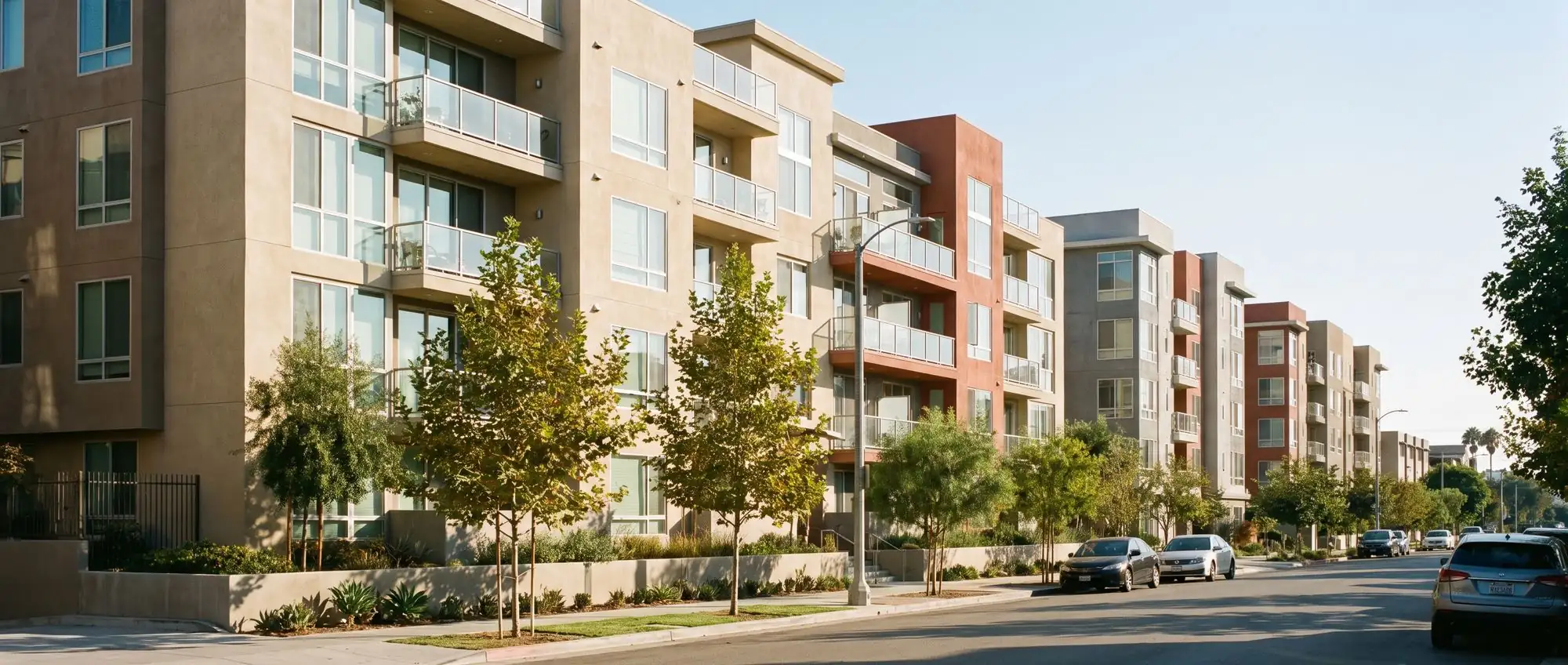
Admiralty Way, Via Marina, the curved towers on Marina City Drive. This is unincorporated Los Angeles County, not the City of LA, which changes the rent rules and the permit counter. It's also almost entirely apartments and condos, nearly all of it standing on land leased from the County.
Best priceguaranteed
Fastand reliable
24/7available
10+experienced handymen
What goes on the list
The jobs, and what they look like done
Most visits are several of these at once. That is the whole economics of small work. The drive costs the same either way.
Small jobs in Marina del Rey are apartment and condo jobs. Behind the paint you get drywall over steel stud, or concrete. No plaster. There’s a garage gate and a service elevator between the street and your door, and a building manager who wants the paperwork settled before anyone carries a drill through the lobby. Tell us what’s on the list and what the wall is, and you get a price agreed before anything starts.
Start with the thing that sounds like paperwork until it costs you a week. Marina del Rey is not part of the City of Los Angeles. It’s a planned, unincorporated coastal community in Los Angeles County, built from the 1960s onward on County land, and the County still runs it. Nothing else we cover works that way. Three things follow from it, and all three come up in real conversations about real jobs.

The detail below is here if you want it. You do not need any of it to send us a job.
Unincorporated county, and the three things that follow from it
- The rent ordinance is the County’s, not the city’s. LA County’s Rent Stabilization and Tenant Protections Ordinance covers rental units in unincorporated areas, in buildings of two or more units, where the certificate of occupancy was issued on or before February 1, 1995. That’s a different line from the City of LA’s October 1, 1978. A 1988 building here is covered. The same building three miles east, inside the city, is not. If it matters to your job, check the current scope with the County Department of Consumer and Business Affairs instead of taking any website’s word for it, ours included.
- Permits and inspections go to LA County Public Works Building and Safety, not LADBS. If a job turns out to need a permit, that’s the counter it goes to, and it’s a different process from the one your friend in Mar Vista went through with the city.
- It’s the Sheriff, not LAPD. The Sheriff’s Department runs a Marina del Rey station and it covers here. A small thing, but it’s a quick way to tell whether the person quoting you has worked in the Marina before or is driving over from somewhere else with a generic price list.
Almost everything here sits on leased land
Nearly every parcel in Marina del Rey is leased from the County instead of owned outright. The ground leases run long. Decades at a stretch, with many of the original ones set at about sixty years, held by the developers and operators who built and run what sits on top of them.
You don’t need to care about lease terms to get a shelf hung. What the leases produce does matter: an unusual share of buildings owned by institutions and run by professional management companies. So the ask before a visit is bigger here than in most of the county. A certificate of insurance naming the building. A service elevator booked into a window. Work hours, often nine to five on weekdays and nothing on Sunday. None of it is an obstacle, and a working pro deals with it every week. Sort it out on Tuesday, though, and not on the morning someone is standing at the gate with a ladder.
What the walls are made of, which here is a short list
Most of this site is about telling plaster from drywall, because most of LA is old. Marina del Rey is the exception. The whole community went up from the sixties on, so the pre-war plaster over wood lath that defines Koreatown or the courtyard blocks of West Hollywood is essentially absent here. Neither is single-family housing, in any quantity. The question in the Marina is never plaster or drywall. It’s drywall, steel stud, or concrete. Get that wrong and you find out about it a year later, when whatever you hung has started to move.
The 1960s garden apartment complexes
The low-rise complexes are the straightforward case. Villa Venetia, out toward the end of Fiji Way, is the type: four three-story buildings, 224 units. Behind the paint is drywall over wood studs at standard spacings. A bracket goes into a stud. A patch disappears once it’s sanded and painted. Prices sit at the low end of every estimate on this site. If you live in one of these, most of what you want doing can be priced over the phone from a photo.
Marina City Club and the high-rise stock
Marina City Club on Marina City Drive was the marina’s first high-rise, built between 1970 and 1978: three curved towers, 600 residences. Concrete structure, metal-stud partition walls, and that combination changes the hardware. A toggle meant for drywall, pulled into a steel stud, will hold a picture. It will not hold a 65-inch television for long. The wrong anchor in a steel stud is the most common reason a TV mount works loose a year after it went up. Concrete needs the right bit and the right sleeve, and it’s loud, which is its own scheduling problem in a building with shared walls. Mid-morning on a weekday, not Saturday at eight.
The newer podium buildings
The newer buildings run along Via Marina, Admiralty Way and Bali Way, plus the finger streets off them: Panay Way, Marquesas Way, Mindanao Way. Most are concrete podiums with metal studs above. Some sit on post-tension slabs, and that one is a stop-and-ask. Nobody should be drilling into a post-tension slab, or fixing anything to a garage ceiling, until the building confirms what’s inside it. A pro who says “I need to check with your management before I put a hole there” is doing the job properly, not stalling.
Renting, owning, or turning a unit over
More than nine in ten households here rent, and the owners who are left are mostly in condos, not houses. So a job in Marina del Rey almost always comes from one of three people, and each one needs something slightly different from us.
- Tenants. Get written sign-off from the manager before anything goes into a wall, particularly in the professionally managed complexes, where the standard lease is specific about it. Say in your message that you rent, so the pro knows to keep the work reversible and can tell you what patching would cost at move-out.
- Condo owners. The HOA sets the rules here, not a landlord, and in the towers it will want a certificate of insurance and an elevator reservation. Ask your building what it needs and pass it on with the job. It’s a normal request and no real pro will blink at it.
- Landlords and unit managers. Turnover work is steady in the Marina: a wall of anchor holes filled and spot-painted, a doorknob-sized hole patched and textured, a tired faucet swapped, a closet door re-hung before the next tenant walks in. If the building has a certificate of occupancy dated on or before February 1, 1995, the County ordinance is in play, so check that before you plan work around a vacancy. Tell us it’s a turnover. Ten small items in an empty unit get priced and scheduled differently from one careful install in an occupied home.
Wind and salt, and where the line sits
This is open water, not a mile inland, and it shows up in the work. Sliding door tracks grit up with sand and salt until the door needs a shoulder. Screen doors come off their rollers. Balcony gate hardware corrodes. Weatherstripping on the ocean-facing side goes hard and stops sealing, and caulking around windows and sliders turns chalky and cracks years earlier than the same bead would in Palms. Cleaning and lubricating a track, replacing rollers, re-hanging a screen, resealing a bead and draft-proofing a slider are all small, cheap, one-visit jobs, and they’re the ones people here put off longest.
The balconies themselves are plainly not ours. California requires exterior elevated elements on buildings of three or more units to be inspected by a licensed professional on a set schedule, under the law introduced as SB 721. Exterior elevated elements means balconies, decks, exterior stairways and walkways. That’s the building’s obligation and a licensed inspector’s job, and the rules have been amended more than once, so confirm the current requirement with your management and not with us. A handyman does not inspect, certify or repair a structural balcony. If your balcony feels soft or the railing moves, that’s a phone call to the building today, not a job to send us.
The jobs that come up most around here
- TV mounting and wall shelving. The most common ask in any apartment, and the one most affected by whether you’ve got drywall, steel stud or concrete behind you.
- Picture, mirror and curtain hanging. Constant in these units, and the wall of glass on the water side means curtain and blind hardware gets asked for more than you’d expect.
- Drywall repair and patching. Anchor holes in a batch before a walk-through, doorknob holes, and the patch left behind when a mount comes down. Texture matching is the hard half, not the filling.
- Interior and closet door repair. Bifolds and sliding closet doors that jumped their track, latches an eighth of an inch out, plus the patio slider track work above.
- Faucet, toilet and disposal swaps. Like-for-like only. In the sixties and seventies stock, expect the angle stop behind the fixture to be seized. It’s the most common surprise on older LA plumbing, and a good pro carries the valve.
- Ceiling fans and light fixtures. Swaps where a box and wiring already exist. In a concrete building the ceiling box is where it is and it isn’t moving, so a fixture that needs a box relocated is an electrician’s job, not ours.
- Weatherstripping, caulking and draft-proofing, small carpentry, flat-pack assembly, small painting. The salt-air list, plus the ordinary business of making a small unit work.
- Floor repair. A squeak is a wood-framed floor problem, and in a concrete tower there is no framing to squeak, so what comes up instead is laminate or vinyl plank lifting at the seams and worn transition strips and thresholds after a run of tenants. Lifting planks run $300-$850. The three-story garden complexes are wood-framed and do squeak like a house, but in any sixties or seventies unit, nine-inch vinyl tile with black mastic under it is an asbestos suspect and not a handyman job.
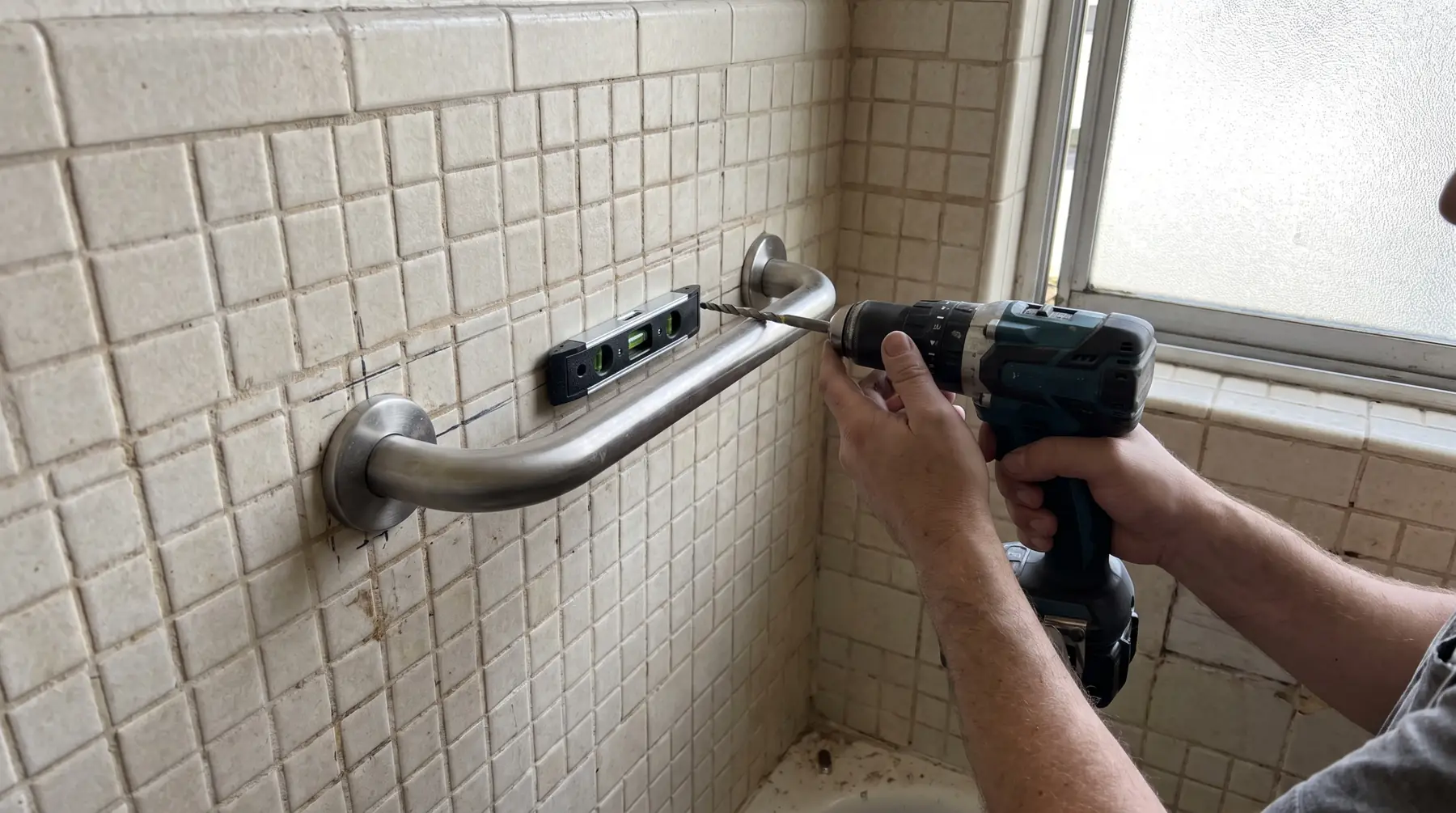
- Grab bars and home safety. A grab bar has to land on something structural, and here that is steel stud or concrete, which is the same anchor question as a TV mount with more weight riding on it. The first bar runs $225-$450 and each extra on the same visit $125-$250, or $325-$650 where it goes into the mud-set tile common in the sixties and seventies bathrooms. Almost everyone here rents, so get the written sign-off before anything goes into a wall, and if there is a water heater in a closet in your unit, California requires it strapped, at $175-$375.
Gutter clearing is the odd one out in the Marina. In a mid-rise or a tower, roof drainage is the building’s problem and never yours. Book it only if you’re in a townhome-style unit with a roofline of your own. If you are, do it from late September through October, before the first storm. The rain season runs roughly October to March, and everyone calls in the same wet week.
Buildings from before 1978, and lead paint
A good share of the housing here went up in the sixties and seventies, which puts it on the wrong side of a federal line. Homes built before 1978 may have lead-based paint, and the RRP rule requires a certified renovator, using contained work practices, for work disturbing more than six square feet of painted surface in a room. Sanding a painted door and jamb, or cutting into a painted wall for a patch, is the kind of work that triggers it. Tell us roughly when your building went up. It decides whether the day needs containment, plastic and a HEPA vacuum instead of a sander and good intentions.
The license question on small jobs
California has a narrow exemption from the CSLB contractor license for work that’s casual, minor or inconsequential. That’s Business and Professions Code section 7048, and it’s more than a price. Every part of it has to hold. The total for labor, materials and everything else comes to less than $1,000. The work doesn’t need a building permit. The job isn’t split into smaller contracts to stay under the number, and it isn’t one piece of a larger project. Section 7048 also takes the exemption away from anyone who advertises or puts out a sign or card that might suggest to the public they’re a contractor, and from anyone who brings in another person to do the work or help with it. Miss any one of those and the exemption isn’t there. The work needs a licensed contractor.
Nearly everything on the list above is small, cheap, one-visit work. Some Marina jobs plainly aren’t: a whole unit repainted between tenants, several doors replaced at once, a slider replaced instead of serviced. When a job runs past $1,000, or needs a permit, it takes a licensed contractor, and we’ll tell you that before anyone starts. Not the same person with a bigger invoice. On fixture jobs, remember the fixture price counts toward the total, so buying the faucet or the toilet yourself is often what keeps a job under $1,000. And if the job grows once someone has seen it, the pro should stop and say so, and you come back to us with what they found before any more work happens. The exemption is narrow enough that plenty of jobs that feel small still call for a licensed contractor. If you’d rather have a licensed contractor either way, say so when you get in touch.
What we won’t take on in Marina del Rey
Saying no to things is more useful than claiming everything.
- Electrical past a fixture swap. New circuits, a new outlet behind the TV, moving a ceiling box, panel work. Licensed electrician, and in a concrete building it’s a bigger job than it looks.
- Plumbing past a like-for-like swap. In a stacked building, opening a wall or touching a shared line isn’t a handyman job and usually isn’t yours to authorize either.
- Roofing, structural work, permits, HVAC, tree work and whole-unit remodels. Real trades, none of them a two-hour visit. Balcony and walkway inspections belong here too.
- Sanding or disturbing paint in a pre-1978 building without a certified renovator.
- Building-wide maintenance contracts. This is one job at a time for one home or one unit, not a standing arrangement covering a portfolio of buildings. In a marina full of professionally managed property, that one needs saying out loud.
If your job is on that list, send it anyway and say so. Being pointed at the right trade is more use to you than being taken on by the wrong one. If it isn’t work we can cover in your part of the Marina, you’ll hear back within about a day with the reason. That’s how the rest of the county works too.
What to tell us when you get in touch
- Your cross streets, or the building name. Fiji Way and Via Marina are different jobs to reach, because parking, gates and elevator hours all differ. Name the block, not just “LA”.
- Roughly when the building went up, or just what it looks like: garden complex, tower, or newer podium building.
- What the wall is, if you know: drywall, steel stud, concrete, or not sure. Not sure is a fine answer.
- Whether you rent, own or manage the unit, and who has to approve the work: a manager, an HOA, or nobody.
- Access. Gated garage, arranged guest parking, service elevator booking and its hours, and on the water side, whether the job needs dock or slip access.
- A photo. It saves more back-and-forth than anything you can type.
That’s usually enough to price the work without a wasted trip. Send us the list and you get a clear price for the visit before anything is scheduled, and if the job turns out bigger than it looked once someone has seen it, you hear that before work starts, not after. There’s more on how a job runs, start to finish, on the how it works page.
Where we work
The rest of Los Angeles County
What the walls are made of changes street by street in this city, and it changes the job.

Send us the list
However long it is. You get a price for the visit before anything is booked.


