Los Angeles County, California
Drywall repair and patching in Los Angeles
Drywall repair and patching across Los Angeles: anchor holes, a doorknob through the wall, a water stain on the ceiling, plaster in an older house. Tell us how big the damage is and how old the house is, and you get a price before anything is scheduled.
The price in writingAgreed before anything is scheduled
One visit, several jobsThe drive costs the same either way
No surprise when we arriveThe number holds unless the wall says otherwise
Across Los Angeles CountyFrom the Valley to the South Bay
What the job looks like
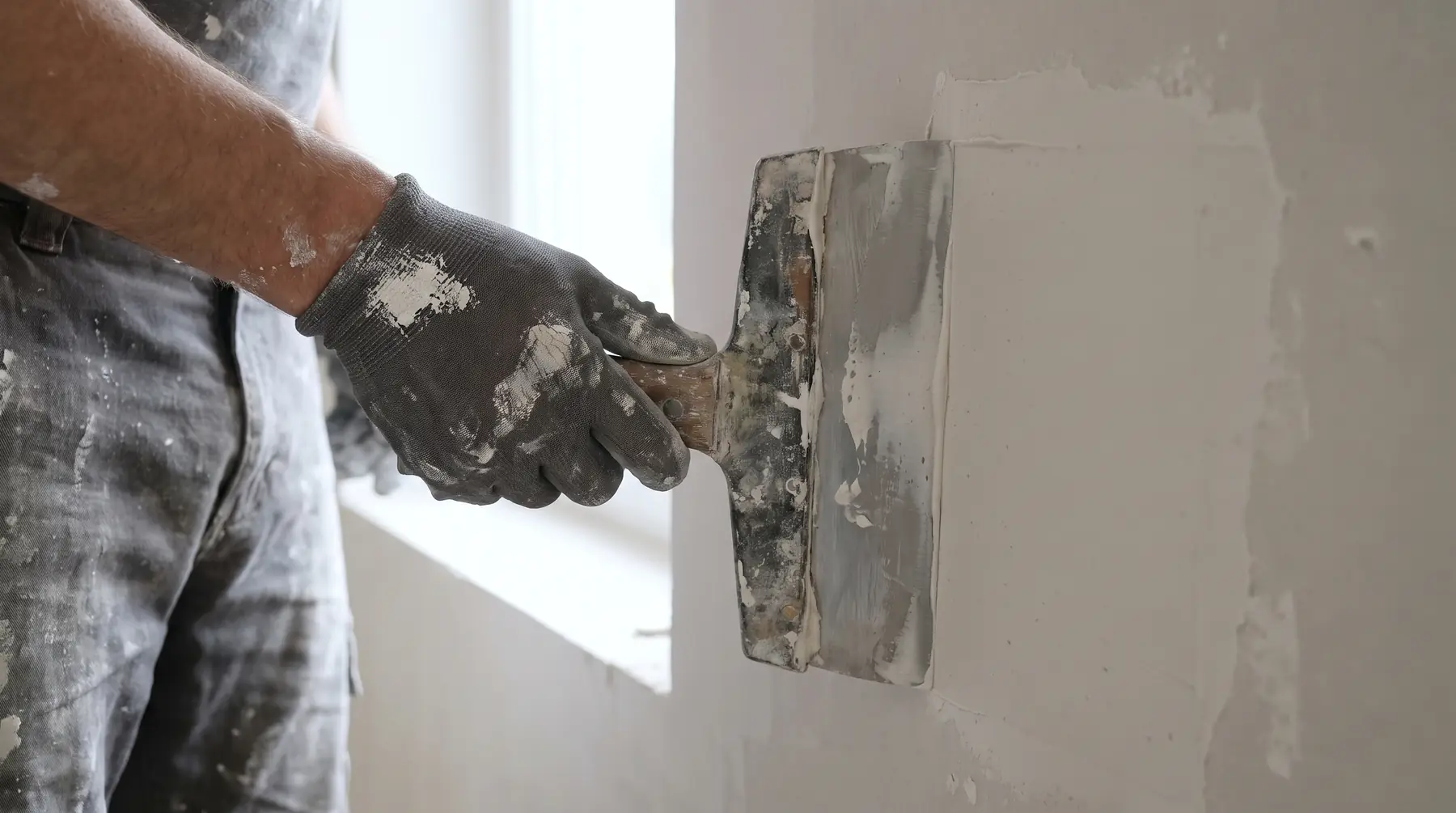
Drywall repair and patching, close up
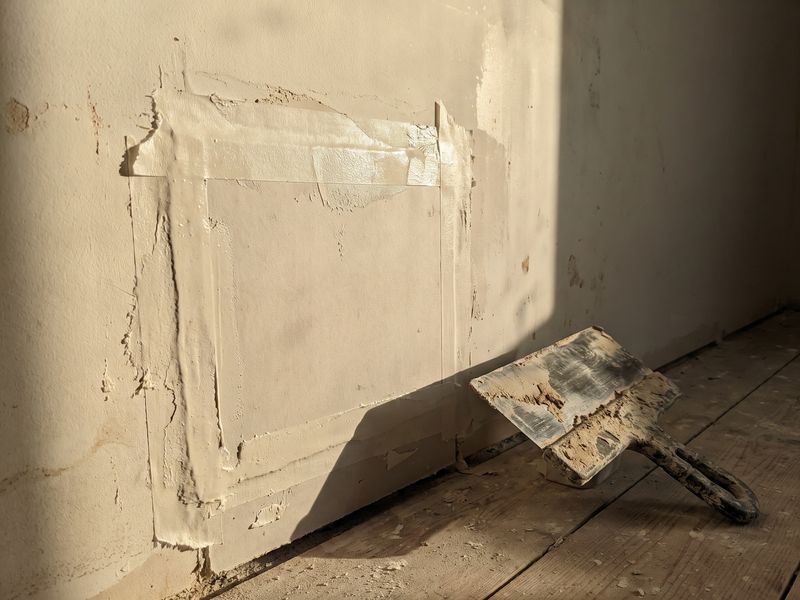
Feathering the edge wide is what makes a patch disappear. Rushing it is what makes it show. 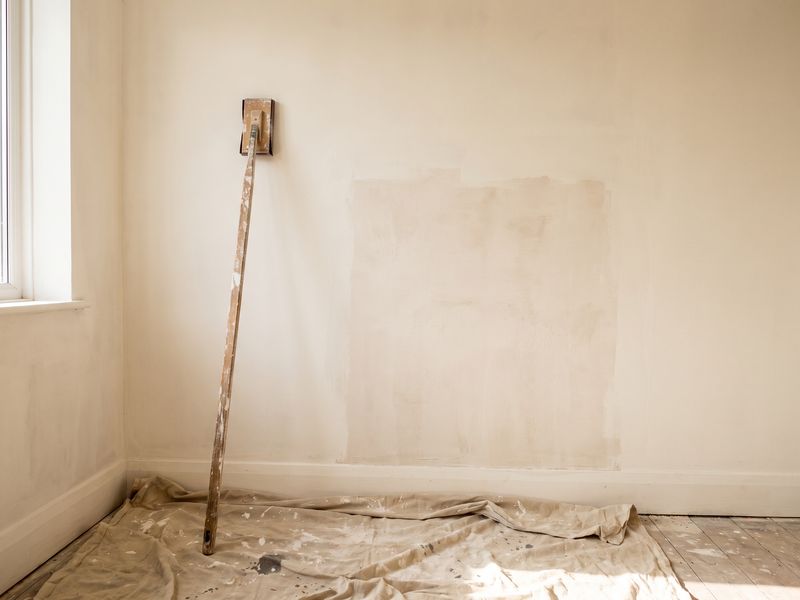
Texture matching is the hard half of this job. Filling the hole is the easy part. 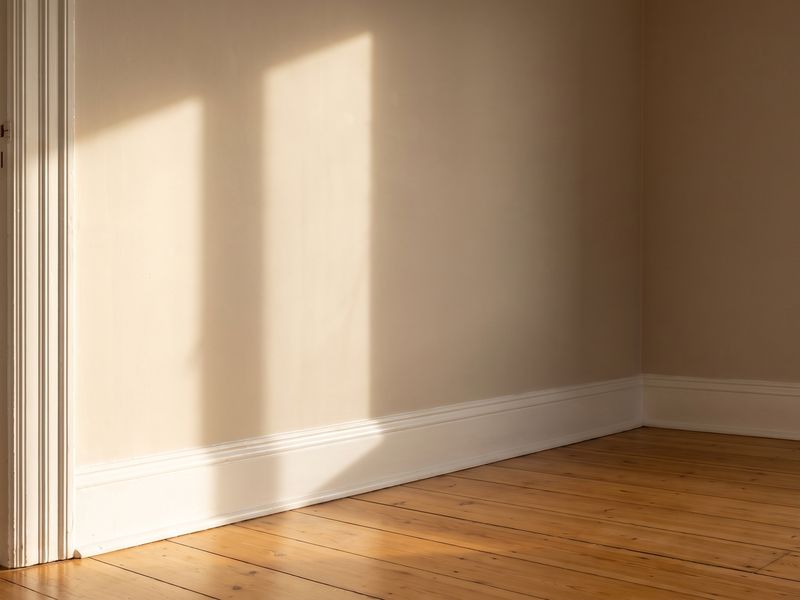
Done properly you cannot find it once the light moves across the wall.


The last tenant left a wall of anchor holes, or there’s a soft brown ring on the ceiling you stopped noticing until you started showing the place. Say if anything got wet, because water changes the order of the work as well as the price.
Four different jobs that all get called “drywall repair”
The size of the hole drives the price, because it changes what has to happen behind it.
Nail and anchor holes. Filler, sand, spot-prime, paint. Minutes of work each. Almost nobody books a visit for one hole, so these get done in a batch. A whole apartment’s worth in one go.
A doorknob-sized hole. Anything up to roughly six inches needs backing behind it before it can be filled, usually a mesh patch or a small piece of board on cleats. Then two or three coats of compound, each one dried and sanded.
A large patch. Once you’re past about a foot, it takes a proper cut-and-replace. Square off the damage, fix the new piece to the studs, tape the seams, then feather the compound wide enough that the repair disappears. It’s a real skill. It’s also where a bad patch gives itself away, as a bulge you can see under raking light.
Water damage. Nobody should close up a wet wall. Find the leak, fix it, let the area dry out, and patch after that. If the staining is on a ceiling below a bathroom, the leak above it gets found and fixed first, and that is usually plumbing.
The plaster question in older LA homes
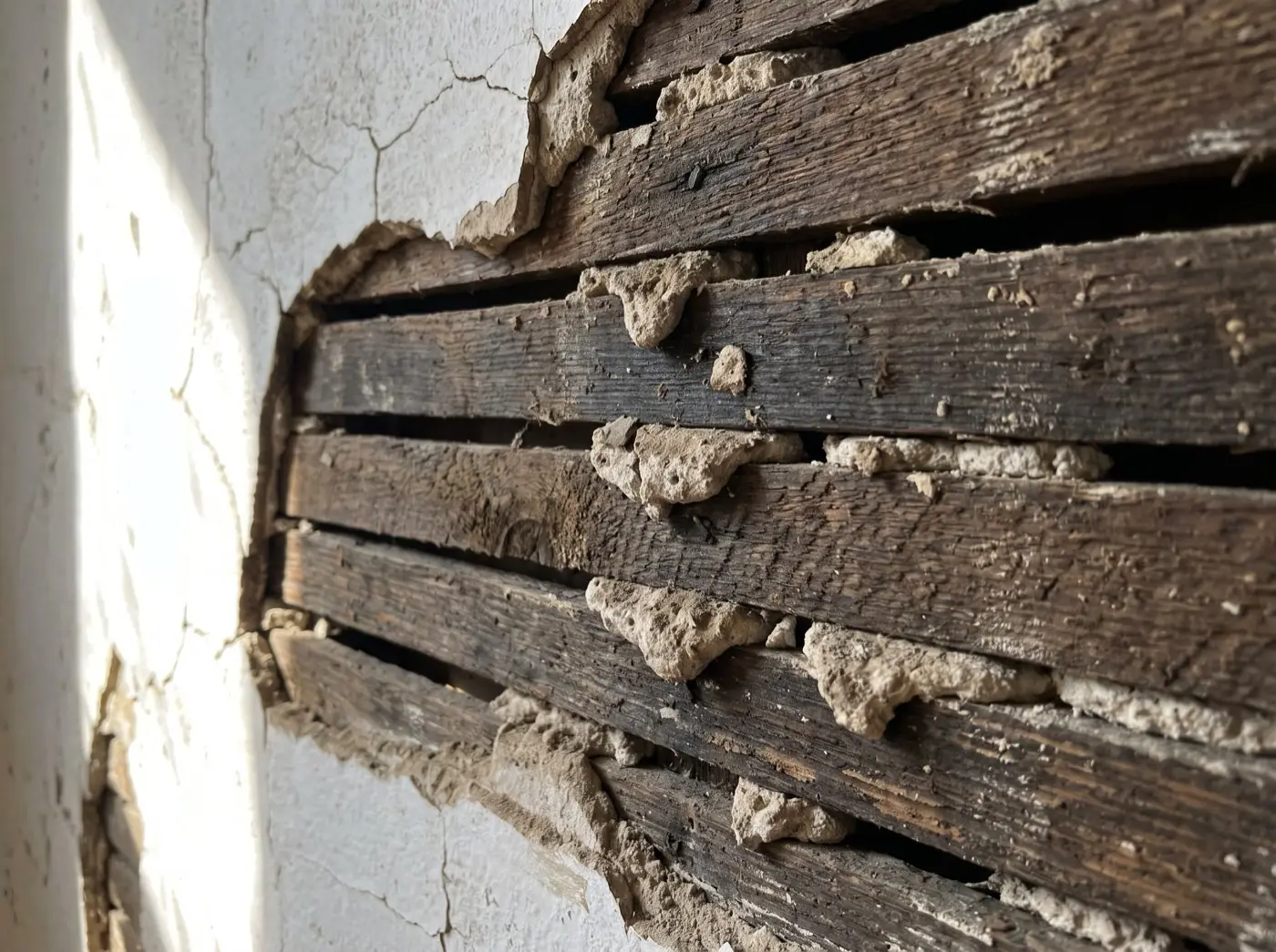
In older LA houses, what looks like drywall is often plaster over wood lath. Thicker, harder and deeper than drywall.
Plaster repair is a different job with different materials. Patch it with drywall compound alone and it tends to crack again within a year, because the plaster around it keeps moving. Done properly, new plaster gets keyed into the lath, or a drywall patch is set to the right depth so the finished surface sits flush with the plaster around it. Mention the age of the house when you get in touch. It changes the materials and the price.
Texture is the part that’s hard
Filling the hole is the easy half. Making the repair vanish is the hard half, and in California that means texture. Orange peel is everywhere. Knockdown is close behind, and older homes turn up skip trowel and hand-troweled plaster finishes.
We match texture by eye, with a spray gun or a knife. Get it slightly wrong and the repair reads as a patch from across the room, even after painting. We work it out on a test board first, and we show you that board before any compound goes on the wall.
Paint is the other half of the illusion. Even with the same paint code, a patch painted on its own often shows, because the wall around it has faded. Painting corner to corner is usually what makes it disappear.
If your home was built before 1978
Homes built before 1978 may have lead-based paint, and sanding or cutting into painted surfaces is what disturbs it. That’s a large share of LA’s housing. For work that disturbs painted surfaces in a pre-1978 home, the federal RRP rule requires a certified renovator using contained work practices once the job disturbs more than six square feet of painted surface in a room, or twenty outside. Tell us if your house is that old. Containment changes how the work area has to be set up, and it belongs in the estimate. Nobody wants it sprung on them the day of the visit.
How long it takes
Small holes are one visit. Anything needing multiple coats of compound means two visits or a long single day, since each coat has to dry before the next one goes on. Water damage adds drying time and can’t be rushed.
What it tends to cost
These are estimates. Use the ranges to plan. You get a firm price in writing before any work is scheduled.
- A batch of nail and anchor holes$150–$300for the visit
- A doorknob-sized hole, textured and painted$200–$400
- A larger cut-and-replace patch$350–$700
- Plaster repair: usually higher than the drywall equivalent.
When a license is required
A single patch often lands under $1,000, but the price on its own doesn’t settle it. A whole-room repair, or anything following a leak, usually won’t qualify, and those are work for a licensed contractor, which we tell you before anything is booked.
Send the whole list if you have one. A hole in the hallway, a row of anchor holes where a shelf used to be, a corner bead someone caught with a vacuum. Drywall work is priced around the visit far more than the patch, so the second and third repairs on the same trip cost a fraction of the first.
Where we work
Across Los Angeles County
What the walls are made of changes street by street in this city, and it changes the job.

Send us the list
However long it is. You get a price for the visit before anything is booked.