Los Angeles County, California
Small handyman jobs in Playa Vista
Every other page on this site starts by warning you about plaster over wood lath and pre-1978 paint. Playa Vista is the one part of Los Angeles where none of that applies. The walls here are metal studs and drywall over a concrete podium, and that changes the anchor, not the job.
Best priceguaranteed
Fastand reliable
24/7available
10+experienced handymen
What goes on the list
The jobs, and what they look like done
Most visits are several of these at once. That is the whole economics of small work. The drive costs the same either way.
Small jobs in a Playa Vista apartment or condo: a TV on the wall, a curtain rail, a closet system, a batch of anchor holes filled before a move-out walkthrough. Send the list, say which building you’re in, and you get a price agreed before anything starts.
Playa Vista is the odd one out. Almost every other Los Angeles neighborhood comes with a warning about plaster over wood lath, settled 1920s door frames and pre-1978 paint. Almost none of that applies to you. Development started in 2002, so there is effectively no old housing stock in Playa Vista at all. No lath. No lead paint. No sixty-year-old angle stop seized behind a vanity. Half the usual problems are gone, and in their place is a set nobody warns you about, because from the inside these look like the easiest walls in Los Angeles.
They aren’t. They’re metal.

The detail below is here if you want it. You do not need any of it to send us a job.
What’s behind the drywall here
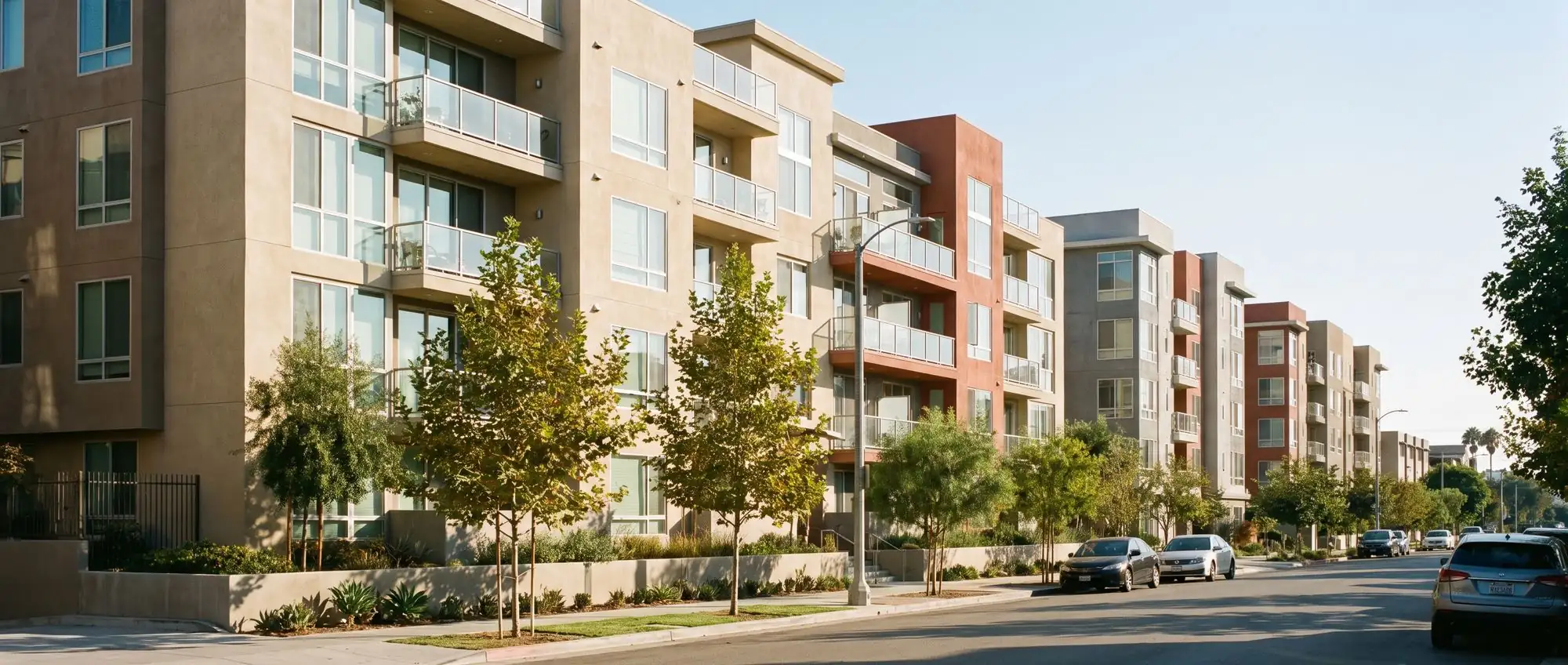
Nearly everything residential in Playa Vista is podium construction. The usual arrangement is four levels of homes sitting on two levels of parking, with a concrete podium deck in between holding the whole thing up. It’s why the neighborhood looks the way it does: long blocks of four- and five-story buildings over a garage you never see from the street.
Inside your unit, the partitions are metal stud and drywall. That’s the most useful thing you can know before you buy a TV mount.
Metal studs are not wood studs
A metal stud is thin steel, usually a bent C-section. A wood screw driven into one bites just enough to feel convincing on the day it goes in. Six months later the TV has crept a quarter inch down the wall, and a year after that the top bracket is holding on with two threads. The wrong anchor in a steel stud is the most common reason a mount works its way off the wall, and it fails slowly enough that nobody catches it.
Nothing about the fix is complicated. It just has to be the right part. Steel framing takes a toggle rated for the load, sized to the weight of what’s hanging on it. We carry them and know the difference by feel when the bit goes through. Someone working off a bag of plastic wall plugs does not. There’s more on the TV mounting page.
Party walls and fire-rated assemblies
The wall between you and your neighbor does more than divide two rooms. In stacked housing it’s a rated assembly, built to a specification for sound and fire, often with resilient channel, insulation and more than one layer of board. You can hang things on it. Opening it up to fish a cable through is another matter, and anyone who cuts into one to hide an HDMI run has quietly undone something the building was required to have.
That comes up constantly, because concealing cables is what everybody wants once the TV is up. On an ordinary interior partition it’s often straightforward. On a party wall or a corridor wall, the honest answer is usually a surface raceway painted to match. Better said before the drilling than after.
The podium, the columns and the concrete
Some of what surrounds you is structure, not partition. Concrete columns, shear walls, the podium deck under the lowest level of homes. Drilling into structural concrete needs a hammer drill, the right bit and the right sleeve, and it means asking the building what’s inside the wall first. Playa Vista is the one place where “what is the wall made of” has a single tidy answer, and that answer still changes the anchor three times inside one apartment.
The buildings, and who’s in them
The housing came in waves and it’s mostly large. The Villas at Playa Vista added a little over 1,500 one- and two-bedroom apartments by early 2016. Fountain Park runs to roughly 1,001 units across two phases. Smaller condo buildings fill in around them, like Serenade, 86 units, completed in 2006. So the neighborhood is overwhelmingly apartments and condos, with almost nothing that looks like a house. Who lives in them splits three ways, and each hires differently.
- Tenants in the big managed communities. Often on one- or two-year leases tied to a job nearby. The work is move-in and move-out work: a TV up, curtain rails, a closet system, a bed built out of four flat boxes, then all of it undone and the holes filled before the walkthrough.
- Owner-occupiers in the condos. Same jobs, longer horizon, and a building with rules. Say you’re in a condo when you get in touch. It changes the booking more than it changes the work.
- Owners renting a condo out. Turnover work comes as a batch, not a single item. Anchor holes filled and touched up, a bathroom door adjusted, a tired faucet swapped. That’s a better visit for everyone than four separate call-outs.
Two layers of HOA, and what that means for a two-hour job
Residents pay into a community-wide parks and landscaping association covering the shared open space and amenities, and on top of that there’s an HOA for your own building. The community also sits inside a Mello-Roos community facilities district, financed by special tax bonds that paid for the infrastructure. The tax side is a conversation for your escrow officer, not for us. The association side is the part that touches a two-hour visit. Four things come out of it.
- A certificate of insurance. Most buildings here want one from the contractor, naming the association, on file with management before anyone is let through. It takes a day or two to arrange, so flag it early.
- Defined work hours. Noisy work is usually restricted to a weekday window, with tighter or no hours at weekends. A hammer drill into concrete is firmly on the noisy list.
- The service elevator. Reservations are normal, and if a move-in has the elevator booked all morning, your two-hour job moves to another day. Book the elevator when you book the work.
- Balcony and shared-wall rules. What may be attached to a balcony railing or an exterior wall is usually spelled out. Read that page before you buy the thing you want mounted.
None of it is a problem. All of it is faster to arrange in advance than at the door.
Parking is a garage, not a street
Unlike most of the county, the access question here isn’t finding a space on the block. It’s the garage: whether there’s guest parking, whether we need a code or a pass, and whether the gate clearance takes a van with a ladder in it. Some don’t. Say what visitor parking looks like when you send the job in. A van with a ladder that can’t clear the garage gate turns a two-hour visit into a longer one.
The jobs that come up most in Playa Vista
There are twelve jobs on our list, and in new-build apartment housing a handful of them do almost all the work.
- TV mounting and wall shelving. The most common ask here by a wide margin, and the one most affected by what’s behind the board. A run of floating shelves has the same anchor problem as a television, just spread out.
- Picture, mirror and curtain hanging. Big windows and sliders mean a lot of rail work, and a heavy mirror on a steel stud needs the same care a TV does.
- Drywall repair and patching. Clean, modern drywall with a light texture or none at all, which is good news for patching and bad news for hiding a sloppy job. Batches of anchor holes before a move-out inspection are the standing Playa Vista job.
- Interior door repair and adjustment. Not settlement here, mostly wear: closet bifolds off their track, a latch an eighth of an inch out, a hinge screw stripped in a hollow-core slab.
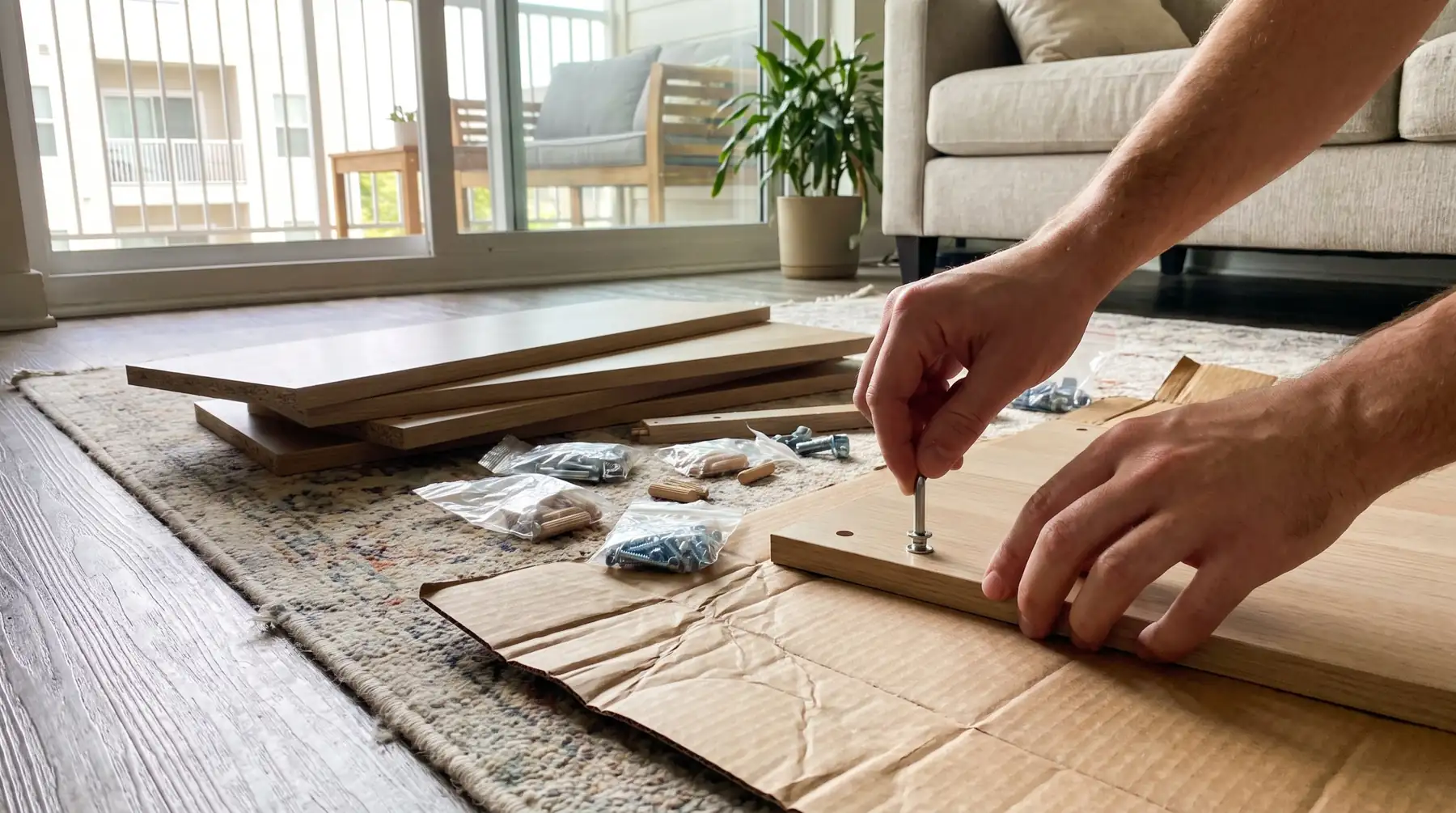
- Furniture and flat-pack assembly. Moves in and out of a thousand-unit community happen every week of the year.
- Faucet, toilet and disposal swaps. Like-for-like only. Newer plumbing has one real advantage: a seized angle stop, the most common surprise on older LA plumbing, is far less likely to be waiting for you behind the vanity.
- Ceiling fans and light fixtures. Fixture swaps where a box and wiring already exist. A fan needs a fan-rated box tied into framing, and in a concrete-and-metal building creating a new point where there wasn’t one is an electrician’s job, not a handyman’s.
- Weatherstripping, caulking and small painting. Mostly a single room, a ceiling, or touch-ups between tenants.
Two things on our list aren’t your problem here
Saying no to things is more useful than claiming everything. Gutter clearing and fence and gate repair are real jobs elsewhere in the county. Here they belong to your association, along with the roof. On the third floor of a podium building you have no gutters, no fence and no roofline of your own, so the right move is a maintenance request to management instead of a quote from us.
Where the license line sits
In California, a job can fall under the minor work exemption in Business and Professions Code section 7048, which means no CSLB contractor license is needed. Everything about the job has to line up first. The work has to be casual, minor or inconsequential. The total for labor, materials and everything else has to come to less than $1,000. It can’t need a building permit. It can’t be part of a larger project, and it can’t be a big job chopped into small contracts. The exemption also doesn’t cover someone who advertises in a way that might suggest to the public they’re a contractor, or who brings in another person to do or help with the work. So there is no single price to check, and anyone who tells you there is has skipped most of the rule. When a job doesn’t sit clearly inside all of that, it needs a licensed contractor, and we’ll get one out to do it. Not the same person with a bigger invoice.
Nearly everything above comes in well under $1,000, but Playa Vista jobs run closer to that than the same job would in a wood-framed building, because the anchors and the drilling take longer. A TV mount into drywall over wood studs runs roughly $150 to $300 in labor. The same mount into a steel stud or concrete runs roughly $250 to $450. Concealing cables adds roughly $100 to $250, and a run of shelving is roughly $100 to $250. A batch of anchor and nail holes filled, spot-primed and touched up runs roughly $150 to $300 for the visit. These are estimates, not quotes. We confirm a firm price before anything starts, and there’s a fuller breakdown on what things cost.
On fixture jobs, remember the fixture price counts toward that under-$1,000 total as well as the labor, so buying the faucet or the light yourself is often what keeps a job on the handyman side of it. And if a job grows past what the exemption covers once we’ve seen it, we stop and say so. Then we get a licensed contractor out to price the bigger job.
What we won’t take on here
- Electrical beyond a fixture swap. A new circuit, a new outlet behind the TV, panel work. Licensed electrician. In a metal-framed building, fishing a new outlet into a wall is not the small job it sounds like.
- Plumbing beyond a like-for-like swap. In stacked housing, opening a wall or touching a shared line usually isn’t yours to authorize in the first place.
- Roofing, structural work, permits, HVAC, tree work, whole-home repaints and remodels. Real trades, none of them a two-hour visit.
- Building-wide maintenance contracts. This is one home and one job at a time, not a standing arrangement across a portfolio of units.
If your job is on that list, send it in anyway and say so. We’d sooner point you at the right trade than take on something that belongs to someone else. If it isn’t work for us, you’ll hear back within about a day with the reason. The rest of the county is on the areas page.
What to tell us when you get in touch
- Your building, or your nearest cross streets. Bluff Creek, Millennium, Pacific Promenade, Runway.
- Which floor you’re on, and whether the building is one of the big managed communities or a smaller condo building.
- What the wall is, if you know: drywall over metal studs, a party wall, or concrete. Not sure is a fine answer, and a photo settles it faster than a paragraph.
- Whether you rent, own, or are turning a unit over between tenants.
- What the association needs before someone is let in: insurance certificate, work-hour window, elevator booking, visitor parking.
That’s enough to get the job priced properly instead of guessed at as a range. Send us the list and you get a clear price for the visit before any work is scheduled. There’s more on what to expect on the how it works page.
Where we work
The rest of Los Angeles County
What the walls are made of changes street by street in this city, and it changes the job.

Send us the list
However long it is. You get a price for the visit before anything is booked.