Los Angeles County, California
Small handyman jobs in Palms, Los Angeles
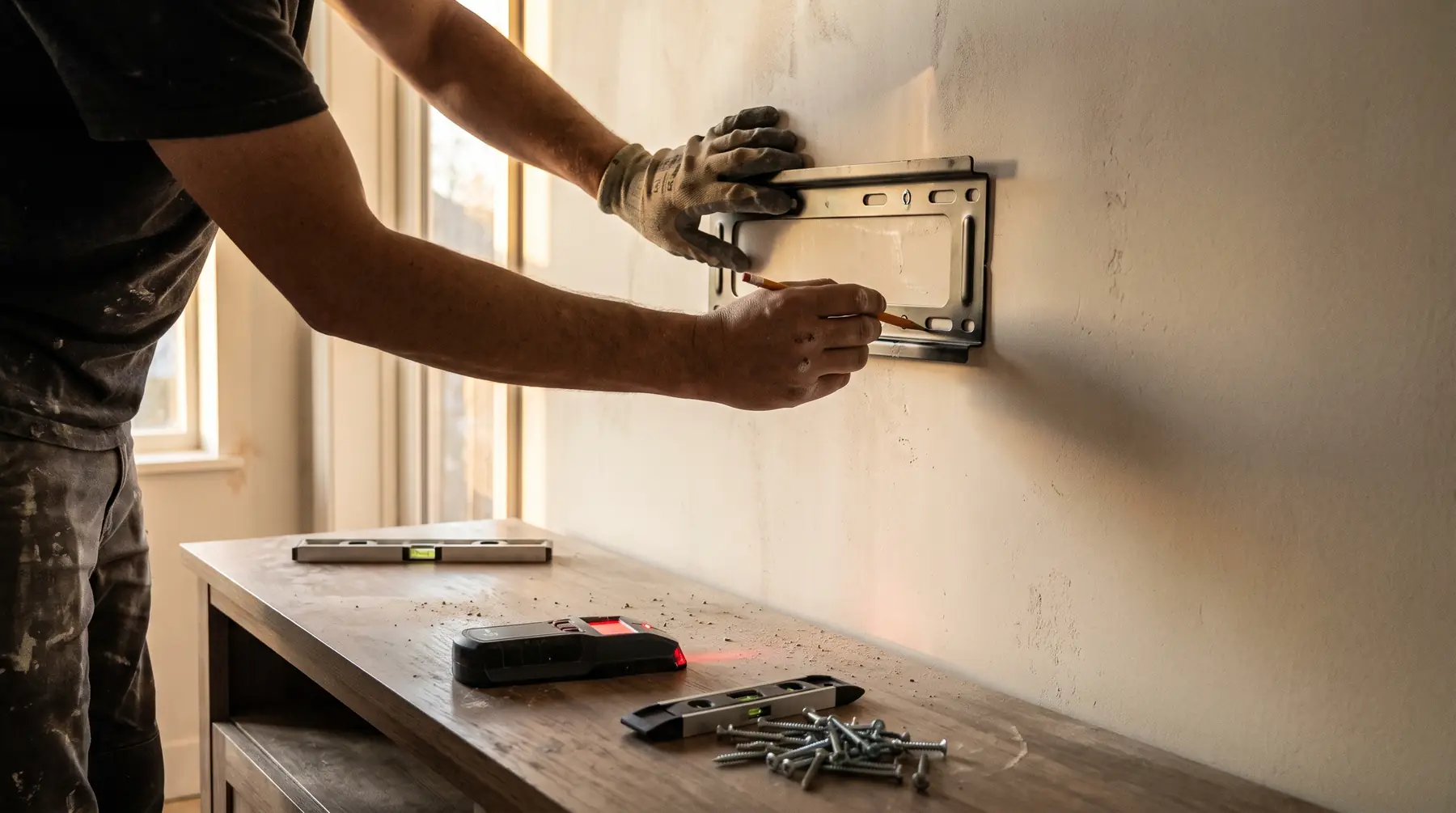
Palms is two square miles, around 42,000 people, and almost all of it rented. Small apartments with no garage, no ladder and no drill in a drawer. TV mounts, anchor holes and flat-pack are most of the work here, and most of it fits into one visit.
Best priceguaranteed
Fastand reliable
24/7available
10+experienced handymen
What goes on the list
The jobs, and what they look like done
Most visits are several of these at once. That is the whole economics of small work. The drive costs the same either way.
Small home repair jobs in Palms. A TV to mount, a wall of anchor holes, flat-pack still in the box, a closet door off its track. Tell us what’s on the list and you’ll have a price for the visit before anything is scheduled.
Palms is a strange, useful little pocket of Los Angeles. Roughly two square miles, somewhere around 42,000 people, and almost all of them renting. About 95 percent of the housing here is renter-occupied, one of the highest shares anywhere in the country, and more than nine in ten units are studios, one-bedrooms or two-bedrooms. Small homes, young households, no garage, no ladder, no stud finder in a drawer somewhere. That’s the shape of list we work on here.

The detail below is here if you want it. You do not need any of it to send us a job.
What the walls in Palms are made of
This matters more than anything else we could tell you about the neighborhood, because it decides whether a TV goes up in an hour or in three.
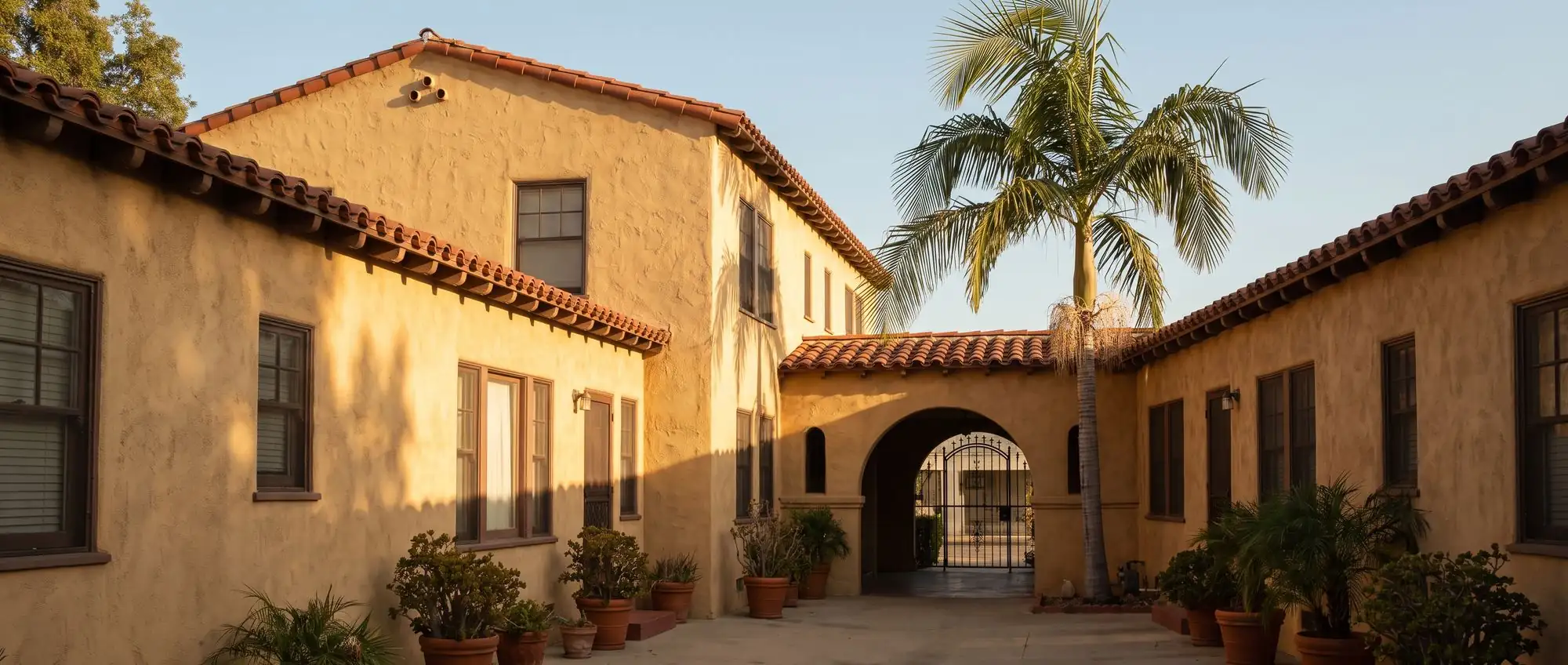
Before the 1960s, Palms was mostly single-family Craftsman and Spanish Colonial bungalows with a few small apartment buildings mixed in. Then the city changed the building rules, most of those lots were redeveloped, and the neighborhood filled with 1960s and 1970s dingbats, two and three stories of wood frame sitting over an open carport. Alongside them came the smaller local variant people call the half-bat, which showed up here in numbers once front-yard landscaping requirements came in. Builders packed them in with as little as five feet between buildings. On top of that sits a newer layer of 2010s and 2020s podium apartments, most of it clustered near the Palms E Line station.
So if you live in a dingbat, a half-bat or one of the newer buildings, your walls are almost certainly drywall over wood studs. That’s the easy version. A bracket into two real studs and you’re done. The catch is in the “almost”. Plenty of these buildings have a party wall or a carport-side wall that behaves nothing like the rest, so we find the real studs instead of trusting a cheap detector and a guess.
The surviving pre-1960 bungalows on the quieter streets, and the older courtyard buildings, are a different animal: plaster over wood lath. Plaster is brittle, the lath holds nothing on its own, and studs sit at odd spacings. It also patches differently. A plaster hole filled with drywall compound alone tends to crack again inside a year, because the plaster around it keeps moving. If your place is one of the old ones, say so when you get in touch. It changes the patching method, the time it takes and the price. There’s more on that on the drywall repair page.
The end-of-month wall problem
A neighborhood that’s 95 percent renters is a neighborhood where people move. Constantly. And moving in and out of an apartment generates a specific, very predictable set of small jobs.
Moving in: the TV needs mounting, the curtain rails need hanging, the flat-pack that came in three boxes needs to become a bed. Moving out: everything that went into the wall has to come back out of it, and the wall has to look like nothing ever happened. A wall of anchor holes is the classic Palms deposit dispute. Nobody books a visit for one hole, so these get bundled. A whole apartment’s worth of holes filled, spot-primed and touched up in a single go. Cheaper, and it’s how we like to work anyway.
That work bunches up hard at the end of the month. If your lease ends on the 31st and you call us on the 28th, you’re competing with everyone else on the block for the same few afternoons. A week or two of notice gets you a wider choice of days and a less rushed job.
Parking, carports and getting someone in the door
Palms is street parking, and it’s tight. That’s not a small detail when we’re turning up with a drill, a level, a bag of anchors and sometimes a ladder. A two-hour job can turn into a three-hour job on the strength of a fifteen-minute circle of Vinton, Regent or Woodbine looking for a space.
So when you call, tell us what the access looks like. Whether there’s a guest space in the carport. Whether the block is permit-only during the day. And if it’s a third-floor walkup, say so, especially when the thing going up the stairs is a 65-inch TV. None of it disqualifies a job. It just means we know what we’re walking into before we get there, and price it once instead of twice.
The same goes for buildings mid-retrofit. A lot of those tuck-under dingbats fall under the city’s soft-story rules, and tenants who’ve already lived through months of framing work under their floor tend to be understandably touchy about anyone else touching a wall. Mention it if that’s your building. The timing and the access are both different.
If you’re the landlord, say so
A lot of the jobs here come from people who don’t live in the unit. Small building owners, condo owners renting a unit out along Motor or National, managers turning over an apartment between tenants.
Tell us that up front. Access, building rules and timing all shift. Working around a tenant’s schedule is a different job from an empty unit, and some buildings want a certificate of insurance on file before anyone with tools comes through the gate, so flag that early. Turnover work also tends to come in a batch: holes patched, a door adjusted, a bathroom resealed, one room repainted, all in one visit. That’s a better job for everyone than four separate call-outs.
The jobs that fit Palms best
In an apartment neighborhood, a handful of jobs do most of the work:
- TV mounting and wall shelving. The single most common apartment job there is, and in a small unit the mount is doing real work. It’s the difference between a living room and a living room with a television in the middle of it.
- Picture, mirror and curtain hanging. Heavy mirrors make a one-bedroom feel bigger. Curtain rails are the job that sits in a closet for a year.
- Drywall repair and patching. Anchor holes, doorknob holes, the mess left behind when a mount comes off the wall.
- Furniture and flat-pack assembly. Beds, desks, shelving units. Bring the box, skip the afternoon.
- Interior door repair. Closet and bifold doors off their track are a standing feature of sixty-year-old apartment buildings. Doors stick because the building has settled, not because the door is wrong, and planing the edge is usually the wrong first move.
- Faucet, toilet and disposal replacement. Like-for-like swaps only, where the supply lines are already there. In older buildings the seized shut-off valve is the most common surprise, so expect that one.
- Ceiling fans and light fixtures. Swapping a builder-grade fixture for something you’d actually choose is one of the cheapest changes you can make to a rental you’ve got permission to alter.
- Small painting jobs. A single room, a ceiling, touch-ups between tenants.
Gutter clearing and fence and gate repair come up here too, but they’re owner jobs, not tenant jobs, and mostly on the older single-family streets instead of the apartment blocks. Rain season runs roughly October to March, so the useful window to book gutters is late September through October, not the first wet week of November.
When a job needs a licensed contractor, and why it matters in an apartment
California law has a minor work exemption, Business and Professions Code section 7048, and some small jobs don’t require a CSLB contractor license because of it. It isn’t a simple price line, though. The work has to be minor, the total for labor and materials has to come to less than $1,000, and it can’t be work that needs a building permit. It also can’t be one slice of a bigger project, or a big job chopped into smaller contracts to stay under the number. And the exemption falls away entirely for someone who hires another person to help with the work, or who advertises in a way that might suggest to the public they’re a contractor. Miss any one of those and the job needs a license.
Nearly everything above is the small, low-cost kind of work that exemption is aimed at. The fixture jobs are where it gets interesting in a place like Palms. The price of the faucet or the toilet counts toward the $1,000, so supplying your own fixture is often what keeps a job’s total under it. Think about that before you ask someone to pick one up for you. Price is only one of the conditions, though. Send us the whole list and we’ll tell you which parts of it sit inside the exemption and which don’t.
Some jobs clearly run past $1,000: a whole apartment repainted instead of touched up, several doors replaced at once. For those, and for anything that needs a permit at any price, the work goes to a licensed contractor. Not the same visit with a bigger invoice. And if a job turns out to be bigger than it looked once we’re standing in front of it, we stop and tell you before anything else happens.
What isn’t handyman work in a building like this
Saying no to things is more useful than claiming everything.
- Electrical beyond a fixture swap. New circuits, panel work, a rewire. Licensed electrician. Older buildings around here often have two wires and no ground, and a fan needs a fan-rated box fixed to framing, so a fixture swap sometimes stops at the ceiling and becomes an electrician’s job.
- Plumbing beyond a like-for-like swap. A re-pipe, a slab leak, anything that opens a wall. Licensed plumber.
- Anything structural, and anything needing permits. That includes the soft-story retrofit itself, which is engineered work and nothing like a handyman job.
- Sanding or disturbing paint in a pre-1978 building. Past six square feet of disturbed paint in a room, the federal RRP rule requires a certified renovator using contained work practices, and a good share of the older Palms stock is old enough to matter. Not a handyman with a sander.
- Roofing, HVAC, tree work, whole-unit remodels. Real trades, none of them a two-hour visit.
If your job is on that second list, tell us anyway and we’ll point you at the right trade.
Sending a job in from Palms
Tell us what the job is, and add the things that change the work: which street you’re on, whether it’s an apartment or one of the older houses, drywall or plaster if you know, what the parking is like, and whether a landlord or an HOA needs to sign off first. A photo saves more back-and-forth than anything you can type.
We work by neighborhood, not by “LA”, because traffic turns a fifteen-mile job into an hour each way and nobody should pay for that. Palms is a short run for us, and a two-hour visit here is a two-hour visit. If it’s a job we can’t cover well, we’ll say so, usually within a day, and say why. You can see how the rest of the county breaks down on the areas page, and what a visit looks like on how it works.
A clear price before any work starts, and the small jobs bundled into one visit instead of four separate call-outs. Send us the list and we’ll get it priced.
Where we work
The rest of Los Angeles County
What the walls are made of changes street by street in this city, and it changes the job.

Send us the list
However long it is. You get a price for the visit before anything is booked.