Los Angeles County, California
Why your hollow-core door won't latch and how to fix it
It is nearly always a hinge, a strike plate, a warped door or a frame that moved. Here is how to tell which, and what fixes each one.
The price in writingAgreed before anything is scheduled
One visit, several jobsThe drive costs the same either way
No surprise when we arriveThe number holds unless the wall says otherwise
Across Los Angeles CountyFrom the Valley to the South Bay
A hollow-core door that won’t latch usually has a misalignment between the latch bolt and the strike plate, and the fix often takes less than fifteen minutes. The cause is almost always one of four things: hinges that have loosened or settled, a strike plate that’s slightly out of position, a door that has warped, or a frame that has shifted. Once you identify which problem you’re dealing with, you can decide whether to handle it yourself or call us.
Common reasons your door refuses to stay closed
Loose hinge screws are the most frequent culprit. Every time someone swings a door open or leans on it, the top hinge carries most of the load. Over time the screws work their way out of the wood, the door sags a fraction of an inch, and the latch bolt no longer lines up with the hole in the strike plate. You’ll notice the door drags at the bottom or requires a push to close.
Strike plate misalignment is the second common issue. The latch bolt is supposed to slide smoothly into the rectangular opening in the strike plate. If the plate sits even an eighth of an inch too high, too low, or too far from the door edge, the bolt catches on metal and the door bounces back open. This happens in older homes where decades of seismic settling have shifted door frames out of square.
Warping affects hollow-core doors more than solid ones because they’re lighter and more flexible. A door stored in a garage before installation, or one in a bathroom with poor ventilation, can bow along its length. The bow pulls the latch edge away from the frame at one corner. You can check for this by closing the door and looking at the gap between the door edge and the frame. If it’s wider at the top than the bottom, or vice versa, you’re seeing warp.
Frame movement is less common but worth considering in houses built before 1960. Three-coat plaster over wood lath expands and contracts with humidity, and the framing underneath can shift. A frame that’s racked even slightly will throw off latch alignment. In hillside construction, soil creep adds another variable. The door may have worked fine for years and then started failing after a particularly wet rain season.
Quick fixes you can try before calling for help
Start by tightening every hinge screw on both the door and the frame side. Use a manual screwdriver for the final turns so you can feel when the screw bottoms out. If a screw spins without grabbing, the hole is stripped. The old fix is to pack the hole with wooden toothpicks dipped in wood glue, let it dry overnight, and drive the screw back in. A faster fix is to replace the short factory screws with three-inch screws that reach past the jamb and bite into the framing stud behind it. This alone solves a surprising number of sagging door problems.
If the hinges are tight and the door still won’t latch, check the strike plate. Close the door slowly and watch where the latch bolt hits. A mark on the strike plate or a shiny wear spot tells you exactly where the contact is happening. If the bolt is hitting high or low, you can sometimes file the strike plate opening a bit larger with a metal file. An eighth of an inch is usually enough.
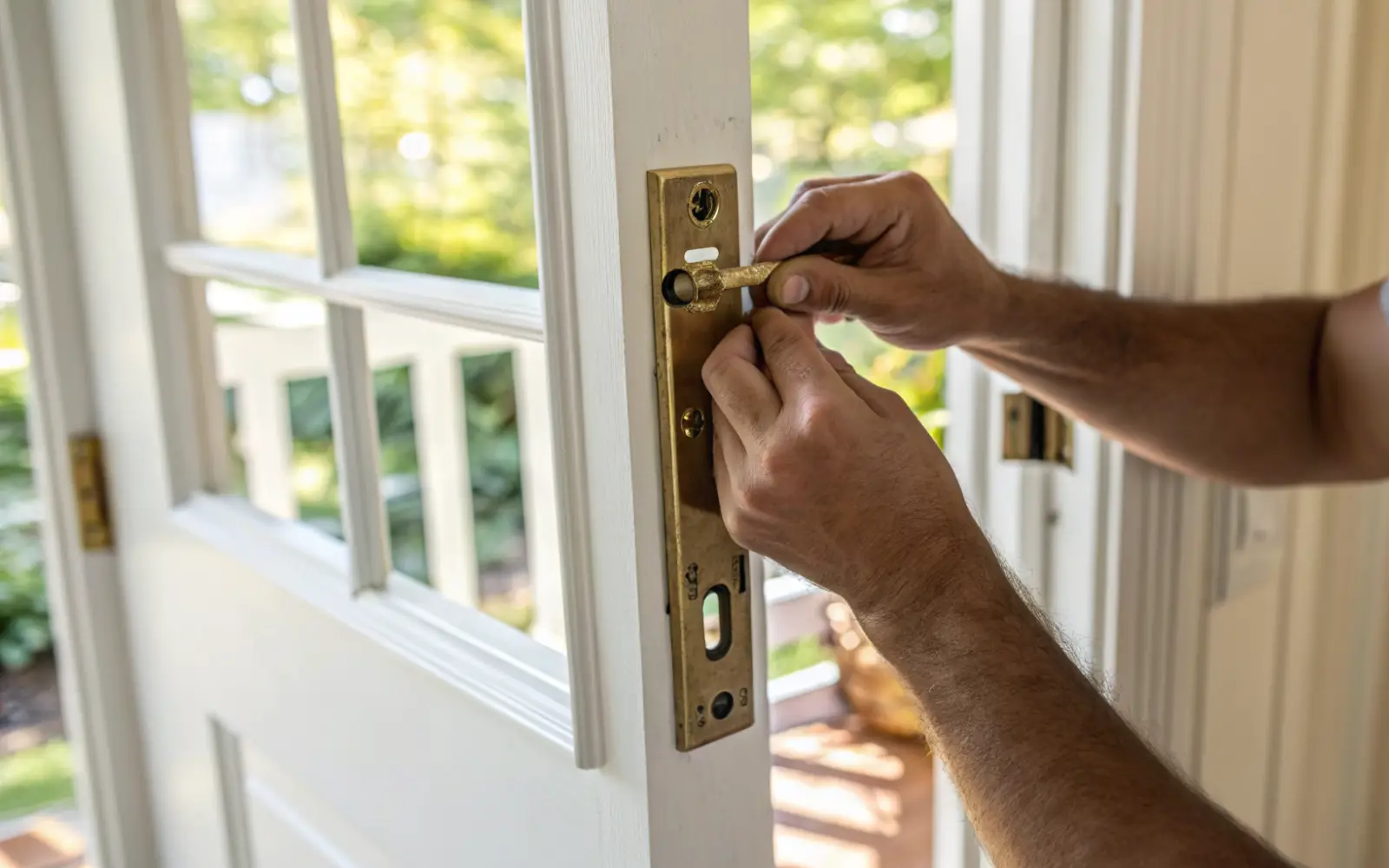
For bigger misalignment, moving the plate itself is the next step. Unscrew it, chisel the mortise a little higher or lower, and reinstall. Fill the old screw holes with toothpicks and glue first so the screws have fresh wood to grip. This is straightforward work, but it does require patience and a sharp chisel.
Warped doors are harder to fix at home. If the warp is mild, sometimes you can adjust the strike plate far enough out to compensate. Severe warping usually means replacing the door. Hollow-core interior doors are relatively inexpensive, so the question becomes whether your time is worth more than the cost of a new slab.
When the problem needs a handyman’s touch
Interior door repair turns into a professional job when the damage goes beyond simple adjustment. If the latch area on the door edge is chewed up or splintered, which happens when people force doors that won’t close, patching a hollow-core door requires gluing in a block of wood and re-drilling the latch hole. It’s doable, but messy. With the right tools it goes quickly.
Frame problems also call for help. If the jamb is split, rotted at the bottom from water intrusion, or twisted badly enough that no strike plate adjustment will work, you’re looking at partial or full frame replacement. In pre-war bungalows and courtyard buildings, the original frames are often Douglas fir that’s harder than what you’d buy today, but decades of paint buildup and minor settling mean the jamb has to come out in pieces. This kind of repair takes experience and a pry bar.
Repeated failure is another sign. If you’ve tightened the hinges twice already and the screws keep loosening, the underlying wood may be too soft or damaged to hold. We can check whether the jamb needs reinforcement or whether a different hinge location makes sense.
For landlords and property managers handling multiple units, having one visit look at all the doors together saves time. A quick assessment of latch alignment across several doors can reveal whether you’re dealing with isolated hardware problems or a building-wide settling issue that affects all your units the same way.
Frequently asked questions
Can a hollow-core door be repaired if the latch area is damaged?
Yes, but it depends on the extent of the damage. Minor splintering can be filled with wood filler and sanded smooth. If the hole is blown out or the cardboard core is crushed, a repair involves cutting out the damaged section, gluing in a solid wood block, and re-boring the latch hole. If the damage covers a large area, replacing the door is often more cost-effective.
How do I know if my door frame is causing the latch problem?
Check whether the gap between the door and frame is consistent all the way around when the door is closed. Use a piece of cardboard or a nickel as a gauge. If the gap is tight at the top and wide at the bottom, or if it varies from side to side, the frame has shifted. You can also use a level on the hinge-side jamb. If it’s noticeably out of plumb over its height, the frame is part of the problem.
Is it worth replacing a hollow-core door instead of fixing it?
If the latch area is badly damaged or the door is warped beyond adjustment, replacement is often the faster and cleaner option. The labor to hang a pre-hung door in an existing frame takes about an hour. Repairing a damaged door can take just as long and may not hold up as well over time. For rental properties where appearance matters, new doors also show better during showings.
If your door still won’t latch after you’ve tried the basics, or if the repair involves frame work you’d rather not tackle, send us the details and get a firm price before anything is scheduled.
Where we work
Across Los Angeles County
What the walls are made of changes street by street in this city, and it changes the job.

Send us the list
However long it is. You get a price for the visit before anything is booked.