Los Angeles County, California
Reasons your ceiling fan wobbles and when it's safe to fix yourself
Most wobbles are loose screws or a blade out of balance. Here is how to tell which, and when the box in the ceiling is the real problem.
The price in writingAgreed before anything is scheduled
One visit, several jobsThe drive costs the same either way
No surprise when we arriveThe number holds unless the wall says otherwise
Across Los Angeles CountyFrom the Valley to the South Bay
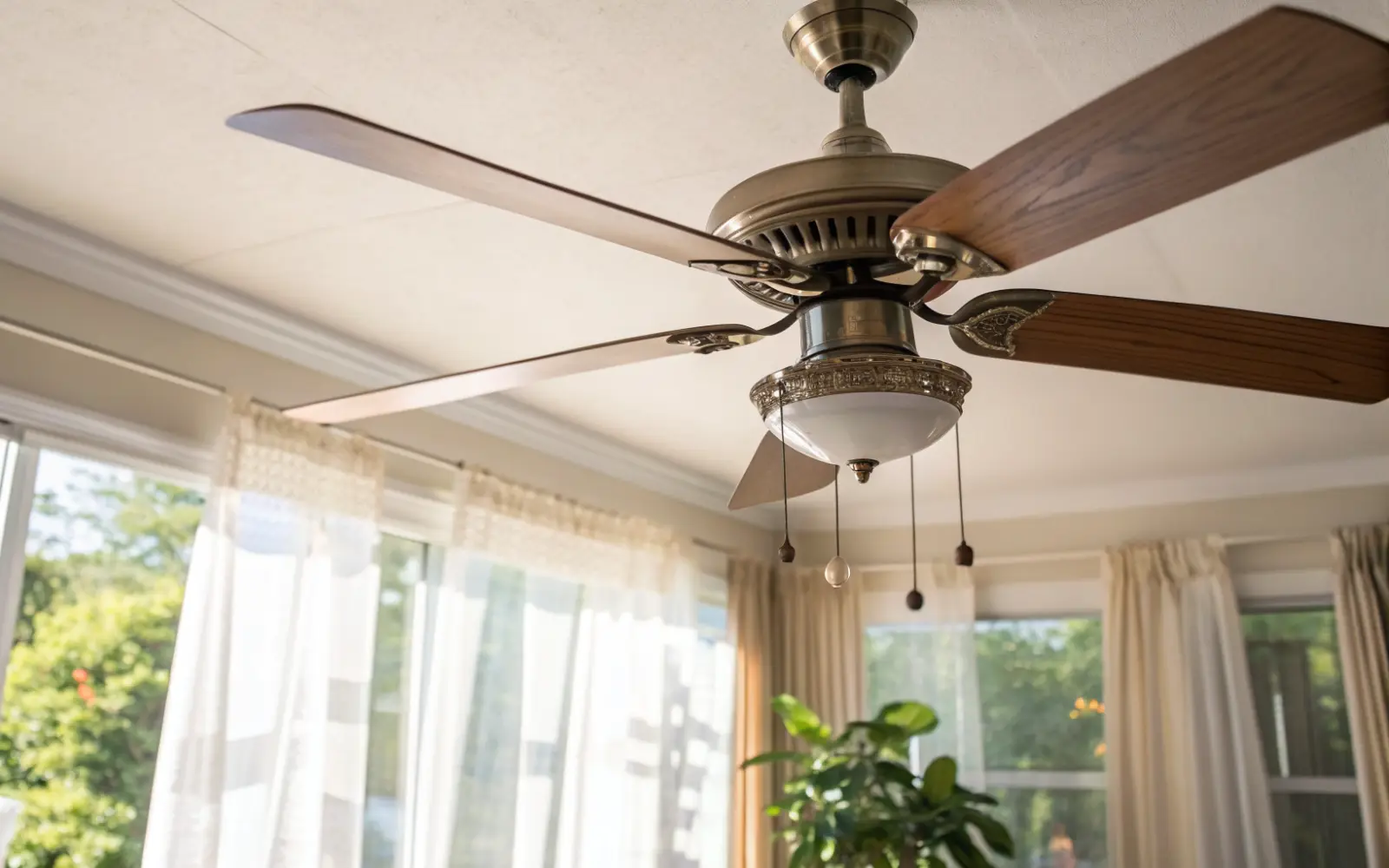
A ceiling fan wobbles because something is out of balance or not secured properly. The cause is usually minor: loose screws, dusty blades, a warped blade, or a mounting bracket that was never tightened correctly. Fixing it yourself is often safe if the fan is mechanically sound and the electrical box is rated for ceiling fans. But if the wobble started suddenly or the fan feels loose at its base, the problem may be structural and worth having inspected.
Common causes behind a wobbling ceiling fan
Most wobbling comes down to a handful of issues. Understanding what causes fan blade balance problems helps you figure out whether you can fix it at the switch or need a visit with a ladder and tools.
Loose screws and hardware
Every ceiling fan has screws connecting the blades to the blade irons, the blade irons to the motor housing, and the motor housing to the mounting bracket. Over time, vibration loosens all of them. In older homes with plaster ceilings, this can happen faster because the fan may have been installed decades ago and the original hardware has fatigued.
A fan that ran smoothly for years and now shakes is often just loose at one of these connection points. The fix is usually a screwdriver and ten minutes on a ladder. Start at the blades and work your way up to the canopy.
Dust and dirt buildup
Dust settles on fan blades unevenly. If one blade carries more buildup than the others, the weight distribution shifts and the fan wobbles. This is especially noticeable in homes where windows do not seal tightly or dust blows in regularly.
Cleaning all the blades with a damp cloth, top and bottom, can restore balance without any other adjustment. Check this before assuming something mechanical is wrong.
Warped or damaged blades
Blades warp over time, especially cheaper composite or particleboard blades common in older apartment stock. Humidity in bathrooms, temperature swings in attic-adjacent rooms, and age all contribute. A warped blade sits at a different angle than the others and throws off the rotation.
Hold a yardstick or level up to the ceiling and measure the distance from the ceiling to the tip of each blade. If one blade sits noticeably higher or lower, it is either warped or the blade iron is bent. Replacement blades are available for most fans, though matching older models can take some searching.
Mounting bracket and electrical box problems
The fan mounting bracket attaches to an electrical box in the ceiling. That box must be rated for ceiling fans, which weigh more and vibrate more than a light fixture. Older homes often have electrical boxes meant for lightweight fixtures. A box rated only for a light fixture may hold a fan for years, then start to loosen as the screws work their way out of the framing.
If the canopy moves when you push the fan gently, the bracket or the box may be failing. This is a safety concern, not a minor nuisance.
Quick fixes you can try safely
You do not need electrical knowledge to address most wobbles. These steps involve no wiring and are safe for any homeowner comfortable on a ladder.
Tighten everything
Turn the fan off at the switch and wait for the blades to stop completely. Check every visible screw: blade screws, blade iron screws, and the screws holding the canopy to the ceiling. Use a screwdriver that fits properly. Do not overtighten, but make sure nothing is loose. This alone fixes a majority of wobbly ceiling fans.
Clean the blades
Wipe down each blade with a damp microfiber cloth. Pay attention to the top surface, which collects the most dust. If you have not cleaned the fan in months, you may be surprised how much buildup there is. Let the blades dry before turning the fan back on.
Use a blade balancing kit
A blade balancing kit costs a few dollars at any hardware store. It includes a plastic clip and a set of small adhesive weights. Clip the plastic piece to the center of one blade and run the fan on medium speed. Move the clip to each blade in turn, running the fan each time. The blade that reduces the wobble most is the one that needs weight added.
Stick a weight to the center of that blade, on the top surface where it will not be visible. If the wobble persists, add a second weight or move the first one closer to the tip. This process takes trial and error but works well for minor imbalances.
Check blade alignment
Measure from the ceiling to the tip of each blade. If one is off, you may be able to bend the blade iron slightly to correct it. Do this carefully. Metal blade irons can be adjusted, but bending them too far will crack the paint or weaken the metal.
Signs it needs more than a quick fix
Some ceiling fan shaking indicates a problem beyond what a homeowner should tackle without help.
The canopy moves
If the decorative cover at the ceiling shifts when you push the fan body, the mounting bracket or electrical box is not secure. This is a structural issue. Continuing to run the fan risks further loosening and, in extreme cases, the fan pulling away from the ceiling.
The wobble persists after troubleshooting
If you have tightened everything, cleaned the blades, and used a balancing kit, and the fan still wobbles, the motor bearings may be worn or the fan may have been installed incorrectly from the start. Repair at this point involves removing the fan and inspecting components that are not accessible while it is mounted.
Unusual sounds accompany the wobble
Grinding, clicking, or scraping sounds suggest internal mechanical problems. The motor may be failing, or a part inside the housing may be loose. Running a fan in this condition can cause further damage.
The electrical box is not rated for fans
If you can see the electrical box and it is a standard round box without a rating stamp for ceiling fans, the installation does not meet current standards. Replacing the box requires turning off power at the breaker and working with wiring. In California, electrical work past a like-for-like fixture swap goes to a licensed electrician. That license is a state one from the CSLB, so it does not change between LA City, the county and the other cities. What does change locally is whether the work needs a permit, and who inspects it.
FAQ
Can a wobbling ceiling fan fall from the ceiling?
It is possible, though uncommon. A fan mounted to an electrical box not rated for its weight can work itself loose over time. The wobble accelerates the loosening. If the canopy moves or you see gaps between the mounting hardware and the ceiling, stop using the fan and have it inspected. A properly installed fan with a rated box and secure bracket is unlikely to fall.
How do I know if my fan blades are warped?
Measure the distance from the ceiling to the tip of each blade. Use a yardstick or tape measure held at the same point for each blade. If one blade is noticeably higher or lower than the others, it is likely warped or its blade iron is bent. You can also sight along the blade from the side. A warped blade will have a visible curve or twist.
Is it safe to run a ceiling fan that wobbles slightly?
A minor wobble, especially in an older fan, is common and usually not dangerous as long as the mounting is secure. But any wobble puts extra stress on the motor, bearings, and mounting hardware. Addressing it extends the life of the fan and prevents a small problem from becoming a larger one.
If your ceiling fan wobbles and the quick fixes did not solve it, or if the mounting feels loose, it is worth having us take a closer look. Send us the details and you will get a firm price before anything is scheduled.
Where we work
Across Los Angeles County
What the walls are made of changes street by street in this city, and it changes the job.

Send us the list
However long it is. You get a price for the visit before anything is booked.